


Operation Absolute Resolve
In the early morning of January 2, 2026, U.S. joint forces conducted a quick raid (The National Interest, 2026) on the presidential compound in Caracas, Venezuela, abducting the Venezuelan President Nicolás Maduro and his wife. Several locations, mostly around Caracas, were also bombed to prevent Venezuela’s air defenses from responding. Maduro was soon charged with a number of new criminal offenses, in addition to others from 2020 (NBC Miami, 2026).
The operation, codenamed Absolute Resolve, was a long time coming (AP News, 2026 January). Political signaling and maneuvering had shaped the information environment long in advance. Months of training, intelligence, and matériel were committed in preparation. Over 150 aircraft flew overhead, and sundry vessels were stationed in the Caribbean to support the execution. Paramilitary forces from the CIA were said to have been inserted into Venezuela since August 2025 to conduct surveillance and fine-tune the planning.
By all metrics, Operation Absolute Resolve was a stunning technical success. According to Venezuelan media , approximately 80 people were killed, almost half of whom were Cuban security forces (El Diaro, 2026). Two of the dead were civilians. The United States by contrast only suffered several wounded soldiers.
It was, by some measurements, the second shortest war in human history (Wikipedia). From the time open hostilities began to the time U.S. forces exited, two hours and twenty-eight minutes had elapsed. The raid itself lasted just six minutes. The political and economic repercussions will endure for much longer.
In the immediate aftermath, Venezuela quickly inaugurated a new President, Delcy Rodríguez, who has been cooperating with the U.S. government at all levels (Time, 2026). Flights between the two countries have begun, and international investment is being pledged to boost the local economy and extract natural resources.
Yet among some of President Rodríguez ‘countrymen, she struggles to assert her legitimacy. New elections for Venezuela have not yet been scheduled (Latin Times,2026). The U.S. has also experienced political fallout at home and abroad, and complaints about alleged violations of international law (Scheffer, D. J., 2026, January 6) . Furthermore, replacing the chief executive is not the same thing as reforming its institutions and political culture (Anderson et al. 2026). This is an ongoing challenge for the American President at home as well (U.S. News & World Report. 2026, August 3).
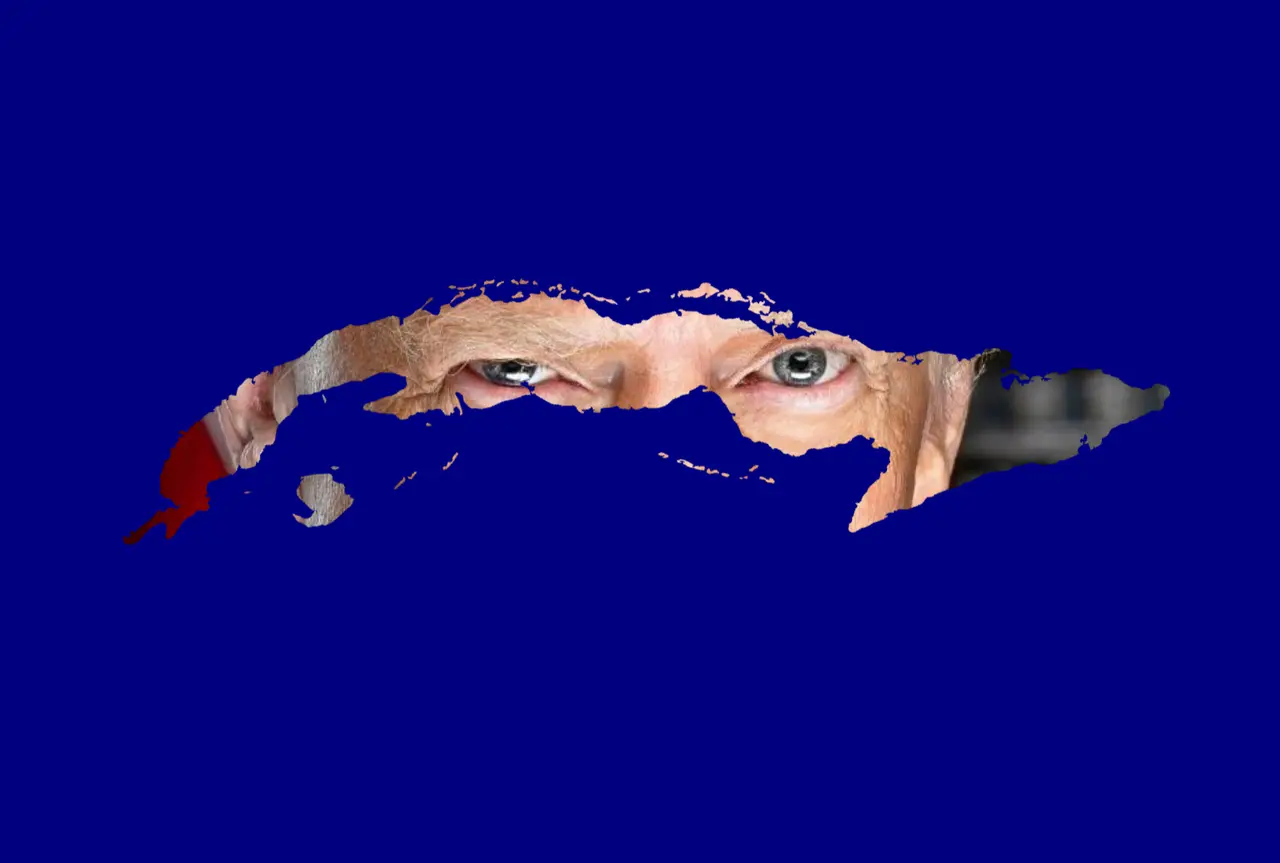
All Eyes On Cuba
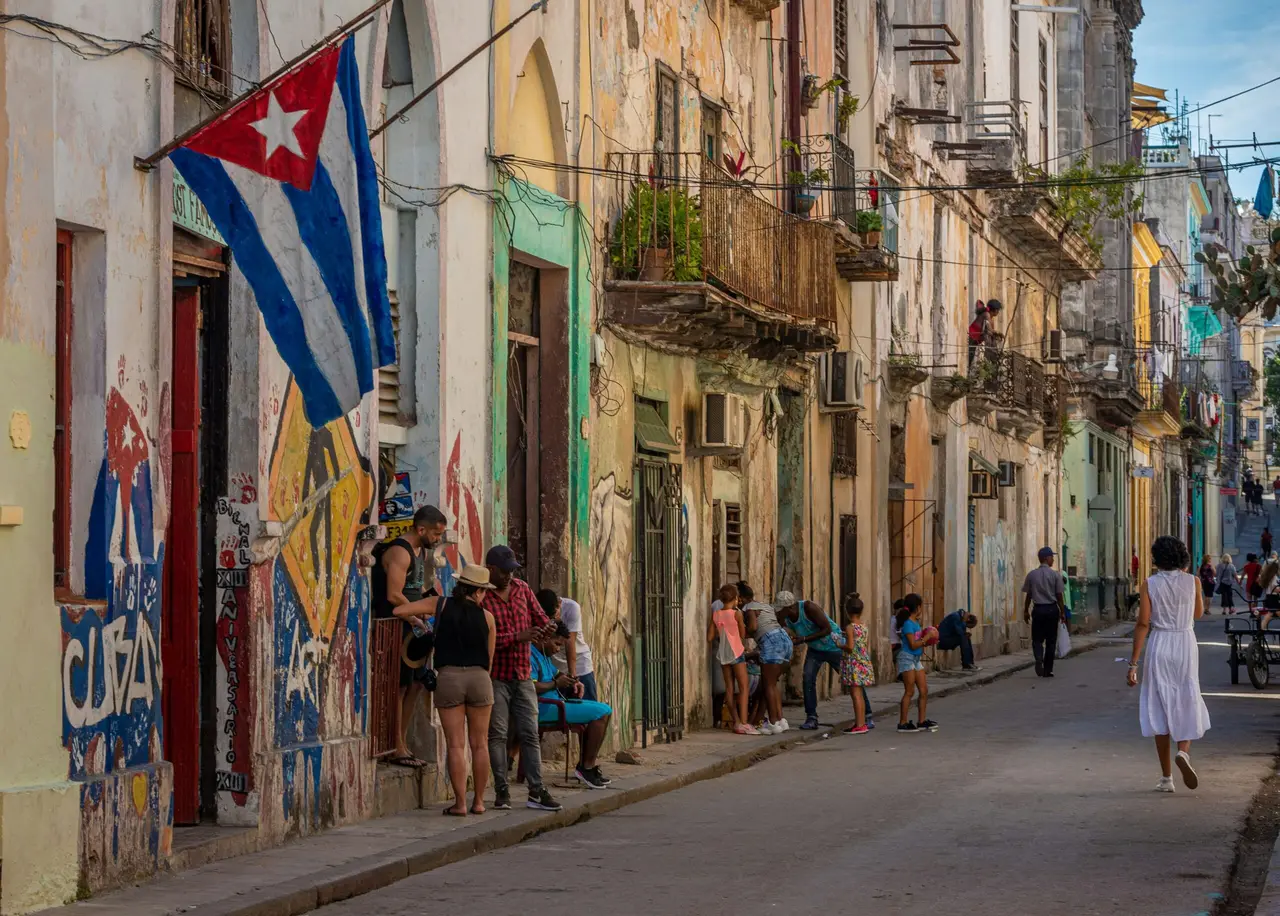
Following the success in Venezuela, President Trump turned his attention to Cuba’s communist government, a bugbear to the U.S. government since the communist takeover of the island in 1959. In the years afterwards, there followed a series of events that escalated their feud: the failed 1961 Bay of Pigs invasion (John F. Kennedy Presidential Library and Museum), the near-apocalyptic Cuban Missile Crisis (Center for Arms Control and Non-Proliferation, 2022, October) in 1962, and over 600 failed assassination attempts (Ruiz S, 2026) mounted by the CIA against Cuba’s President, Fidel Castro. Over sixty years of trade embargos against Cuba followed, and remain in effect today (Oliver, I., & Nodarse Venancio, M.,2022)
Now new fears and hopes are emerging that the United States will try to effect a regime change on Cuba; the two countries are fewer than 100 miles (160 km) apart (excluding Guantanamo Bay) (Torres, 2021). Reports emerged of a secret CIA task force (New York Times, 2026) to monitor the situation in Cuba, conduct cyber operations, and implement clandestine influence operations. The objective is alleged to be limited to pressuring Cuban politicians and elites—and not mounting armed regime change. Yet those familiar with the CIA’s checkered history in Latin America would be excused for anticipating more action being taken (New York Times, 2025).
The economic situation of Cuba has been very fragile since the COVID-19 pandemic, with the country needing UN aid to fight shortages of food and energy (Ráth, A. 2024). But for the past seven months, Cuba has been suffering under more than the usual trade embargo. Weeks after President Maduro was captured, President Trump ordered a blockade of oil to Cuba (Executive Office of the President, 2026 29 January). The measure allows the United States to impose an ad valorem duty or tax on the goods from any country providing Cuba with oil, directly or indirectly. The effect of the oil blockade has been that few countries are now willing to deal with Cuba, pushing it to the edge of collapse.
Some countries are still willing to help the regime though. Historically, Cuba developed deep trading ties with Russia, but as it is embroiled in the war in Ukraine, supplies of crude oil are nowhere near sufficient levels (Capote, R. A. (2026). Although Russia has vowed not to abandon Cuba and condemned tougher sanctions on the island, it did not step up its assistance (Reuters, 2026).
Power outages have become the new normal (Fortune, 2026) across Cuba. Nationwide blackouts are common, (AP News, 2026) and getting worse. To fill the energy demand, China has helped construct solar farms (Wall Street Journal, 2026) on the beleaguered island, though solar power currently supplies 10% of the island’s total energy demand. A devastating hurricane could bring catastrophe to the island, though meteorologists say this year’s Atlantic hurricane season will be weak, (Borenstein, S. 2026, May) as a result of the historic El Niño (Lapointe, E. (2026, August) developing this year.
Cuba’s public transportation, tourism, and their economy writ large, have completely stalled. Visa and Mastercard suspended all operations in Cuba following American pressure (Yahoo Finance,2026). U.S. vessel traffic has increased around the island, though U.S. officials carefully refrain from using the term “blockade” due to its connotations in international humanitarian law.
On the other hand, despite a lot of hard talk, there appear some signs of thawing from the Communist Party of Cuba when it comes to economics. In June, the Central Committee of the Party approved a series of economic reforms reducing the number of civil servants and stimulating the private sector by expanding the possibility of having a private business that can employ up to 100 people and attracting capital from Cubans living abroad towards a set of new sectors (Le Monde, 2026, June). Miguel Diaz Canel, the General Secretary of Cuba’s Communist Party, has admitted that the gravity of the situation required these reforms.
These economic reforms appear to shift Cuba towards a sort of market socialism. However, it is yet to be seen whether they would appease in any way the Trump Administration or provide any respite to a collapsed economy.
Trump announced that “the policies, practices, and actions of the Government of Cuba constitute an unusual and extraordinary threat, which has its source in whole or substantial part outside the United States, to the national security and foreign policy of the United States.” (Executive Office of the President, 2026, January 29). The U.S. State Department claimed links between Cuba and a series of left-wing protest groups across decades of American history (The Hill, 2026 July). The U.S. has also indicted former Cuban President Raúl Castro on charges relating to the downing of two planes in 1996 (NPR 2026, May).
The Calm Before the Storm?
Many Cubans now fear that the indictment presages an upcoming armed intervention, like in Venezuela (TheGuardian,2026 May). This could be more evidence for the so-called “Donroe Doctrine,” wherein President Donald Trump asserts American power more broadly across the Americas (NPR,2026 June). Some writers claim that an unconventional war is already happening (The Hill,2026, August). Yet some insiders have recently claimed that the Trump administration is eschewing military action in favor of economic pressure, in the hopes of shaping the ground for a grassroots political uprising on the island (National Post,2026). Cuba has a population of approximately 10,000,000. As it is highlighted, it is unclear how the local population would react to an intervention by the United States (TheGuardian, 2026, August) Cuba’s military relies on aging technology, and so, in case of intervention, the degree of resistance will likely depend on the willingness of the Cuban society to put up a fight—including granting legitimacy to a new Cuban regime.
Observers say several scenarios, (Americas Quarterly,2026) ranging from political concessions to armed coercion. If U.S. forces prove capable in planning and executing a tactical victory in Cuba, they may still struggle with translating that triumph into a lasting political and strategic achievement. Walking softly can often be more important than carrying a big stick.
Bibliography
Americas Quarterly. (2026). Cuba’s crisis: Four near-term scenarios. https://www.americasquarterly.org/article/cubas-crisis-four-near-term-scenarios/
Anderson, S. R., Brockwehl, A., Escobari, M., Felbab-Brown, V., Gross, S., O’Hanlon, M. E., Piccone, T., Saunders, E. N., Talmadge, C., Victor, D. G., Wirtschafter, V., & Zvobgo, K. (2026, January 5). Making sense of the US military operation in Venezuela. Brookings Institution. https://www.brookings.edu/articles/making-sense-of-the-us-military-operation-in-venezuela/
Associated Press. (2026, January 4). How the US captured Venezuelan leader Nicolás Maduro. AP News. https://apnews.com/article/trump-maduro-venezuela-presidential-palace-blowtorches-7969152ae48510003fe9cbde92f3c102
Associated Press. (2026, January 20). Cubans face sixth blackout as energy grid collapses under US pressure. AP News. https://apnews.com/article/cuba-blackouts-trump-crisis-energy-e07f716bdfcd7a786197afdcc8a166ec
Borenstein, S. (2026, May 21). WATCH: NOAA forecasts milder Atlantic hurricane season thanks to El Nino. PBS NewsHour. https://www.pbs.org/newshour/nation/watch-noaa-forecasts-milder-atlantic-hurricane-season-thanks-to-el-nino
Capote, R. A. (2026, August 18). Two hundred days under siege: The silent suffocation of a people.Granmahttps://en.granma.cu/mundo/2026-08-18/two-hundred-days-under-siege-the-silent-suffocation-of-a-people
Center for Arms Control and Non-Proliferation. (2022, October 14). The Cuban Missile Crisis. https://armscontrolcenter.org/the-cuban-missile-crisis/
El Diario. (2026, January 4). Fuentes independientes difunden cifra de fallecidos por bombardeos en Venezuela ante falta de reportes oficiales [Wayback Machine web archive]. https://web.archive.org/web/20260106141825/https://eldiario.com/2026/01/04/fuentes-independientes-difunden-cifra-fallecidos-bombardeos-venezuela-ante-falta-reportes-oficiales/
Executive Office of the President. (2026, January 29). Executive Order 14380: Addressing threats to the United States by the government of Cuba. The White House. https://www.whitehouse.gov/presidential-actions/2026/01/addressing-threats-to-the-united-states-by-the-government-of-cuba/
Torres, M.A (2021,February 22). Guantanamo Bay’s quasi-colonial status: From leasehold to detention camp. NYU Journal of International Law and Politics. https://nyujilp.org/guantanamo-bays-quasi-colonial-status-from-leasehold-to-detention-camp/
John F. Kennedy Presidential Library and Museum.. The Bay of Pigs. https://www.jfklibrary.org/learn/about-jfk/jfk-in-history/the-bay-of-pigs
Lapointe, E. (2026, August 14). ‘Super’ El Niño could push Earth’s temperature 13 years ahead of the current warming trend. Gizmodo. https://gizmodo.com/super-el-nino-could-push-earths-temperature-13-years-ahead-of-the-current-warming-trend-2000798669
Latin Times. (2026, August 28). Venezuela’s rivals sign their first real deal since Maduro’s capture: Still no election date. https://www.latintimes.com/venezuelas-rivals-sign-their-first-real-deal-since-maduros-capture-still-no-election-date-598564
Le Monde. (2026, June 18). Cuba rolls out reforms that further open the economy to the private sector. https://www.lemonde.fr/en/international/article/2026/06/18/cuba-rolls-out-reforms-that-further-open-the-economy-to-the-private-sector_6754620_4.html
List of conflicts by duration. (2026, July 24). In Wikipedia. https://en.wikipedia.org/wiki/List_of_conflicts_by_duration
National Post. (2026, August 14). U.S.-Cuba sanctions. https://nationalpost.com/news/world/us-cuba-sanctions
NBC 6 Miami. (2026, January 3). These are the charges Maduro and his wife face following their capture. https://www.nbcmiami.com/news/national-international/these-are-the-charges-maduro-and-his-wife-face-following-their-capture/3743104/
NPR. (2026, June 7). Transcripts: nx-s1-5849218. https://www.npr.org/transcripts/nx-s1-5849218
NPR. (2026, May 20). U.S. indicts former Cuban leader Raúl Castro. https://www.npr.org/2026/05/20/g-s1-122383/us-cuba-raul-castro-indictment
Oliver, I., & Nodarse Venancio, M. (2022, February 4). Understanding the failure of the U.S. embargo on Cuba. Washington Office on Latin America. https://www.wola.org/analysis/understanding-failure-of-us-cuba-embargo/
Ráth, A. (2024, December 1). Cuba at crossroads: An economic crisis from a geopolitical perspective. EPIS Think Tank. https://epis-thinktank.com/publications/cuba-at-crossroads
Reuters. (2026, April 10). Russian diplomat: Moscow will not abandon Cuba, will help with energy. https://www.reuters.com/world/russian-diplomat-moscow-will-not-abandon-cuba-help-with-energy-2026-04-10/
Ruiz, S. (2026, August 17). Rigged shells, poison pens, the mob: Inventive ways the CIA tried to kill Fidel Castro. We Are The Mighty. https://www.wearethemighty.com/history/rigged-shells-poison-pens-the-mob-inventive-ways-the-cia-tried-to-kill-fidel-castro/
Scheffer, D. J. (2026, January 6). Maduro’s capture and international law: The Noriega precedent. Council on Foreign Relations. https://www.cfr.org/articles/maduros-capture-and-international-law-noriega-precedent
The Guardian. (2026, May 21). US indicts Raúl Castro over 1996 downing of civilian planes. https://www.theguardian.com/world/2026/may/21/cuba-us-attack-raul-castro-indictment
The Guardian. (2026, August 5). Cuba’s ‘true believers’ cling to revolution 73 years after Moncada. https://www.theguardian.com/world/2026/aug/05/cuba-true-believers-revolution-moncada
The Hill. (2026,August 14). Senate Cuba War Powers resolution faces critical hurdle . https://thehill.com/opinion/international/6027922-senate-cuba-war-powers-resolution/