

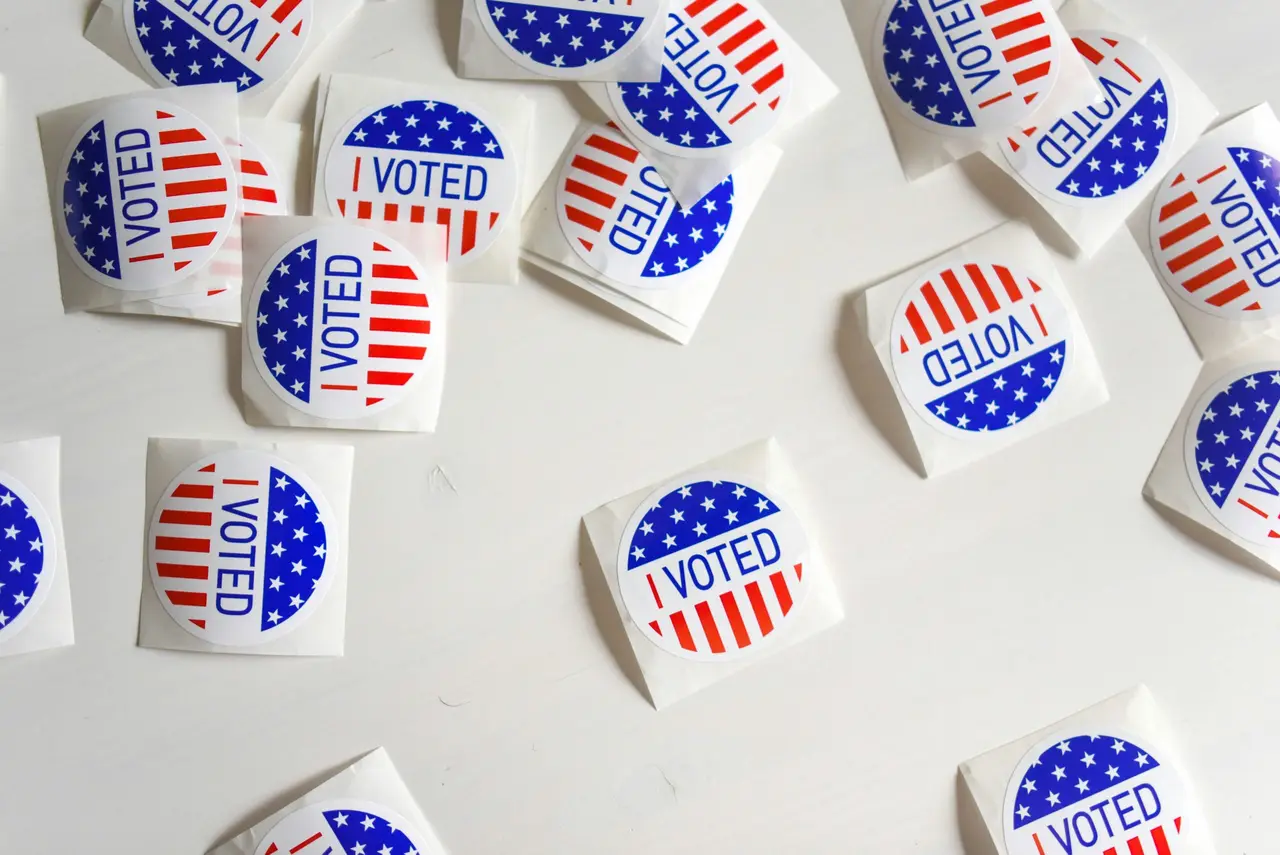

The US Midterms, happening on November 3rd, 2026, will decide control of Congress during Trump’s second term. Democrats seem favoured to retake the House while the Senate might stay Republican. But how do the Midterms work, why do they matter, and what are the prospects regarding this year’s elections?
What are the midterms?
The U.S. electoral system is a constant point of debate. The Electoral College, gerrymandering, and midterms are just a few of the many unique elements of how U.S. citizens elect their representatives, and these elements inspire both doubts and curiosity among political science scholars, journalists, and the wider public.
Midterm elections, the subject of this article, take place roughly halfway through a president’s four-year term. Like all federal elections, they happen on Election Day, the first Tuesday of November. These elections determine every one of the 435 House of Representatives seats, along with 33 or 34 of the Senate’s 100 seats. The general idea behind this is based on the assumption that by exchanging only a part of the Senate every two years, the knowledge and experience necessary for the Senate to be the more stable and knowledgeable part of Congress is preserved and passed down.
At the state level, 34 states choose their governors to four-year terms during these midterm cycles. Beyond governorships, many states also fill seats in their state legislatures during midterms.
Midterms are also seen as a referendum regarding the sitting president’s performance halfway through his term, and it is not often that the president’s party performs well during them. Since the introduction of midterms, only eight times has the current president’s party not lost seats during them.
As of August 31st, as per Bloomberg Government (2026), the GOP remains in control of the House of Representatives with 218 seats, while Democrats hold 214 seats. One seat belongs to an Independent who usually sides with Republicans, and two seats are vacant. The Senate also has a Republican majority of 53 seats, while Democrats have 45 seats and the two independent seats usually caucus with them.
It’s too early to draw definitive conclusions for the possible results, but based on the history of midterms and current support levels for the president and the Republican Party, it seems unlikely that the GOP will hold onto both the Senate and the House of Representatives. The Senate may well stay Republican, since some forecasts, like the one from Cook Political Report (The Cook Political Report, 2026), suggest the battle slightly favours the GOP, though it remains largely a toss-up. The House of Representatives, meanwhile, is expected to flip in favour of the Democrats (Soler, 2026).
What are the issues?
This year’s midterms are likely to boil down to a handful of key issues, according to outlets like The Economic Times (ET Spotlight, 2026) and The Week (Schwartz, 2026). Among the most prominent are the rising cost of living, the expansion of data centres and AI companies, gas prices, immigration, the war with Iran alongside continued U.S. backing of Israel’s actions in Gaza, and, finally, Donald Trump himself, whose approval ratings have been sliding (Beaumont, 2026).
Of these, the cost of living has emerged as the primary concern. For over a year, polling has shown that voters consistently rank it as the single most important factor shaping their midterm decisions (Lange and Layne, 2026). That anxiety is not happening in vain, since the living costs have climbed in part because of surging gas prices tied to tensions with Iran, as well as the rapid expansion of data centres, which have driven up energy bills for nearby communities (Kearney, 2026). Meanwhile, Trump’s dismissive attitude towards the issue has done little to help the GOP make the case that it’s the party best equipped to address it.
Another vulnerability for Republicans is the data centres, infrastructure the party has largely supported, or at the very least made no serious effort to block, and that is now facing a wave of criticism for reasons varying from environmental to ethical concerns. Given their size, these facilities are often built in rural areas, which means their impact falls disproportionately on conservative communities. And for many of these voters, that impact is pushing them away from the Republican Party rather than toward it.
Immigration, as always, ranks among the most consequential issues in any election cycle, but this year it raises a particular question: will Trump’s base rally behind him because of his hardline immigration agenda, including the sweeping authority he’s granted ICE officers? Or will more moderate supporters turn away, given how unpopular ICE’s actions have become, as they tear apart communities and leave residents living in fear?
War in Iran, the main driver of rising gas prices, goes against Trump’s campaign promise of ending the conflicts that the U.S. had been engaged in prior to his election and focusing on a more isolationist, “America First” foreign policy. The war is unpopular among voters, not only because it’s driving up the cost of living, but because it signals that the current administration isn’t following through on its campaign promises or listening to its constituents, who are urging the administration to end the conflict (Catalani and Sloan, 2026) and redirect resources and attention back to domestic issues. This is taking a toll on Trump’s approval rating, which sits at an all-time low, with 58.2% of voters disapproving of his performance and 38.5% approving (Silver and McKowan-Dawson, 2026).
Lastly, the growing tensions within the Democratic Party over their ties with Israel and the American Israel Public Affairs Committee (AIPAC) might also be one of the crucial decision-making factors in the 2026 midterms, as blue voters are increasingly reluctant to support politicians who receive support from the Committee. However, this dissatisfaction is also present among Republican voters, who would, similarly to the war with Iran, like their country to stay out of foreign conflicts and focus on internal affairs.
Who is running?
One of the most closely watched races this cycle is unfolding in Michigan, where Democratic candidate Abdul El-Sayed holds a 5-point lead over his Republican rival, Mike Rogers. Few contests capture voters’ growing anti-AIPAC sentiment as clearly as this one. El-Sayed has built his campaign in part on refusing financial support from the Committee, and he’s been outspoken about withholding U.S. backing for Israel. An interesting point of his campaign was his previous support from popular left-wing streamer and podcaster Hasan Piker. However, once that endorsement proved more of a liability than an asset, especially after Francesca Hong, another candidate supported by Piker, lost her primaries in Wisconsin (Caldwell, 2026), El-Sayed distanced himself from Piker altogether.
In Texas, Democratic state Rep. James Talarico leads Republican Attorney General Ken Paxton by 50% to 44%, according to a Marist poll (2026), with 4% of voters still undecided and 2% voting “other”. Paxton’s history may prove to be his biggest obstacle. During his political career, he’s faced multiple fraud charges, a civil enforcement action, an impeachment trial and suspension from office, as well as allegations of an extramarital affair that led to divorce, all of which could weigh heavily on the conservative voters’ decisions. Still, Texas hasn’t voted blue since the 1980s, and Talarico may find it difficult to win over enough conservative voters to flip the seat.
Other changes might happen in Florida, where Democratic state Rep. Angie Nixon is tied with Republican Sen. Ashley Moody, both around 45%, with 7% of voters undecided in the latest survey from St. Pete Polls (2026), and in Alaska, where Democratic former Rep. Mary Peltola leads Republican Sen. Dan Sullivan 46% to 41% among all likely voters, according to a new AARP poll (2026).
What do voters fear?
Americans are heading into the midterms with anxieties surrounding the integrity of the process itself. A recent Gallup poll (2026) found that their biggest worry is political leaders pressuring election officials to alter results, a fear that isn’t without precedent, given what unfolded after the 2020 presidential election. Close behind is concern over the improper handling of ballots, likely fueled by ongoing anxieties around mail-in voting, a practice President Trump recently and unsuccessfully challenged before the Supreme Court (Chidi, 2026). Voter intimidation at polling places closes the list of top concerns.
Notably, the worry splits along partisan lines. Democrats are far more likely to fear leaders tampering with results, while Republicans are more focused on whether ballots are being properly handled. That divide illustrates just how closely voters’ concerns track the narratives pushed by their own parties.
What are the stakes?
For Republicans, the midterms will be a referendum on their governance so far, but they’ll also help determine how the second half of Trump’s presidency unfolds, shaping his ability to formulate both domestic and foreign policy.
For Democrats, the stakes look different. The midterms could be a chance to exert greater influence over the direction of U.S. politics, laying the groundwork for the next elections, strengthening the party’s position, and protecting their base from legislation they see as harmful.
However, there’s another layer of stakes for the Democratic Party’s left flank. If progressive candidates, such as El-Sayed, perform well, it could signal a broader shift in voter preferences and reshape the party’s overall direction and priorities going forward.
References
AARP. (2026). 2026 Alaska U.S. Senate general election poll.
Beaumont, T. (2026). Trump’s sliding approval ratings pose challenges for Republicans ahead of midterms. Associated Press.
Bloomberg Government. (2026, August 31). Balance of power in the U.S. House and Senate. https://about.bgov.com/insights/congress/balance-of-power-in-the-u-s-house-and-senate/
Caldwell, L. (2026). Left-wing influencers and Democratic primary dynamics: Lessons from Wisconsin. The Washington Post.
Catalani, M., & Sloan, R. (2026). Voter pushback mounts over U.S. foreign conflict involvement. Reuters.
Chidi, G. (2026). Supreme Court turns away challenges to mail-in voting practices. The Guardian.
ET Spotlight. (2026, August). Key economic and social issues shaping the 2026 U.S. midterm elections. The Economic Times.
Gallup. (2026). American election integrity fears split along party lines. Gallup News.
Kearney, L. (2026). How data centers and energy demands are impacting rural utility bills. The Wall Street Journal.
Lange, J., & Layne, N. (2026). Cost of living dominates voter concerns as 2026 midterms approach. Reuters.
Marist Poll. (2026). Texas U.S. Senate race: Talarico vs. Paxton. Marist Institute for Public Opinion.
Schwartz, A. (2026). The major policy battles driving the 2026 midterm campaigns. The Week.
Silver, N., & McKowan-Dawson, D. (2026). Presidential approval ratings tracker. Silver Bulletin.
Soler, C. (2026). Forecasting the House: Why Democrats hold the edge in 2026. Politico.
St. Pete Polls. (2026). Florida statewide election survey results.
The Cook Political Report. (2026). 2026 Senate race ratings. https://www.cookpolitical.com/ratings/senate-race-ratings