


Whoever can sustain persistent, reliable situational awareness in the High North will hold a significant advantage in crisis management, early warning, and rapid-response operations.
Frozen Frontlines: NATO Expansion, Russian Force Rebalancing, and the New Militarization of the Arctic
by Brayden Blaylock
Introduction: The Arctic After Ukraine
The militarization of the Arctic has entered a new phase. While the region has long held strategic value because of nuclear deterrence, sea-based second-strike capabilities, and access to the North Atlantic, developments since Russia’s full-scale invasion of Ukraine have transformed the High North into a central theatre of renewed great-power competition. NATO’s enlargement through Finland and Sweden has fundamentally altered the strategic geography of the Arctic, turning what was once a fragmented northern flank into an increasingly integrated operational space (Boulègue 2024; Middleton 2025). At the same time, Moscow has adapted its Arctic posture rather than reduced it, rebalancing its force design toward naval, nuclear, and grey-zone capabilities since some land units were depleted in Ukraine (Boulègue 2024).
Recent military developments highlight this shift. Russia’s large-scale “July Storm” naval drills across the Arctic and Pacific, involving more than 150 vessels and unmanned systems, demonstrated that the Kremlin continues to view the Arctic as a critical domain for force projection and bastion defence (Reuters 2025). Meanwhile, NATO allies have expanded cold-weather exercises, surveillance deployments, and critical infrastructure monitoring across Norway, Finland, and the Barents approaches (Fouche 2026; Stravidis 2026).
This article argues that Arctic militarization should no longer be understood simply as the expansion of bases and troop deployments. Instead, it is a multidomain transformation driven by NATO enlargement, Russian strategic force rebalancing, hybrid pressure on critical infrastructure, and the diffusion of drone and surveillance lessons from Ukraine into Arctic warfighting doctrine. The Arctic is no longer a peripheral strategic zone; it is becoming a frontline laboratory for twenty-first-century deterrence (Friis 2025; Stensrud and Østhagen 2024).
NATO’s New Arctic Geography
The accession of Finland in 2023 and Sweden in 2024 to NATO marks the most significant shift in Arctic security since the end of the Cold War. By bringing both Nordic states into the Alliance, seven of the eight Arctic nations now fall under NATO’s collective defence framework. This expansion has fundamentally reshaped the strategic geography of the High North, enhancing NATO’s strategic depth, improving reinforcement and logistics corridors, and strengthening allied control over the interconnected Nordic–Baltic–Arctic region.
From a military standpoint, Finland adds immediate operational value through its extensive land border with Russia, its highly capable reserve force, and its long-standing institutional expertise in operating in Arctic and sub-Arctic environments (Greaves 2021; Friis 2025). Sweden’s integration enhances allied control over the Baltic Sea approaches and strengthens logistical links to Norway’s northern bases. Together, these accessions increase strategic pressure on Russia’s Kola Peninsula which is home to the Northern Fleet and a core pillar of Moscow’s sea-based nuclear deterrent (Åtland, Nilsen, and Pedersen 2024).
Karsten Friis’s work on military signalling in the European Arctic demonstrates that post-2022 deterrence dynamics are increasingly shaped by posture, signalling, and readiness rather than overt confrontation (Friis 2025). NATO’s expanded northern presence therefore functions as both a military capability and a political message: the Alliance intends to deny Russia uncontested freedom of manoeuvre in the High North. Recent force movements support this interpretation. Allied air patrols have intensified, radar modernization projects have accelerated, and rotational deployments in northern Norway, Finland, and Iceland have expanded as component elements of a coherent Arctic defence architecture (Fouche 2026). The result is a transformed strategic map in which the Arctic is now embedded within NATO’s wider northern deterrence posture rather than treated as a peripheral theatre requiring separate management.
The implications for operational planning are considerable. The GIUK (Greenland–Iceland–United Kingdom) gap which has long been a critical chokepoint for Atlantic access, is now a key focus point of allied cooperation and interoperability. Finland’s northern territory extends NATO’s surveillance and operational reach along Russia’s Arctic flank, while Sweden’s Gotland and northern air infrastructure strengthen the Alliance’s ability to project force across the Baltic-Arctic theatre. What was once a fragmented collection of national Arctic policies has begun to transform into something approaching an integrated alliance posture.
Russia’s Rebalanced Arctic Posture
Contrary to assumptions that the war in Ukraine has weakened Russia’s Arctic military relevance, Moscow’s Arctic strategy is better characterized as strategic rebalancing rather than retrenchment. Russia’s core Arctic priorities remain intact: securing the Arctic Zone of the Russian Federation, protecting the Northern Sea Route, and preserving the nuclear survivability of the Northern Fleet (Boulègue 2024). The principal adaptation lies in command restructuring and force redistribution rather than strategic abandonment.
While several Arctic-trained brigades suffered significant attrition after redeployment to Ukraine, strategic assets on the Kola Peninsula have been deliberately preserved. These include ballistic missile submarines, long-range aviation support infrastructure, early warning radar networks, and anti-access/area-denial systems (Zysk 2026). The Arctic remains central to Russian second-strike credibility, making it too strategically valuable to be weakened by wartime priorities (Åtland, Nilsen, and Pedersen 2024). Russia’s 2025–2026 Arctic naval exercises included anti-submarine warfare, drone defence, and long-range strike simulations and indicated that Moscow continues to prioritize naval readiness and maritime denial in Arctic chokepoints such as the GIUK and Bear gaps (Reuters 2025) (See Fig.1).
At the same time, Russia’s perception of vulnerability has increased. Ukrainian drone strikes reaching Olenya air base in the Russian Arctic exposed significant weaknesses in rear-area defence and demonstrated that even Arctic sanctuaries are no longer immune from long-range precision threats (Boulègue 2024). This reality is likely to incentivize further Russian investment in Arctic early warning systems, electronic warfare capabilities, and layered air defence, reinforcing rather than dismantling the Kola Anti-Access/Area Denial (A2/AD) architecture (Greaves 2021).
Russia’s Arctic militarization should therefore be understood as strategic adaptation under wartime pressure: fewer conventional ground forces, but stronger emphasis on nuclear survivability, maritime denial, and grey-zone coercion. The bastion defence concept of protecting the strategic submarine fleet’s operating areas, remains the keystone of Russia’s Arctic posture, and the Ukraine war has, if anything, elevated the relative importance of the northern nuclear deterrent as conventional forces face ongoing strain.
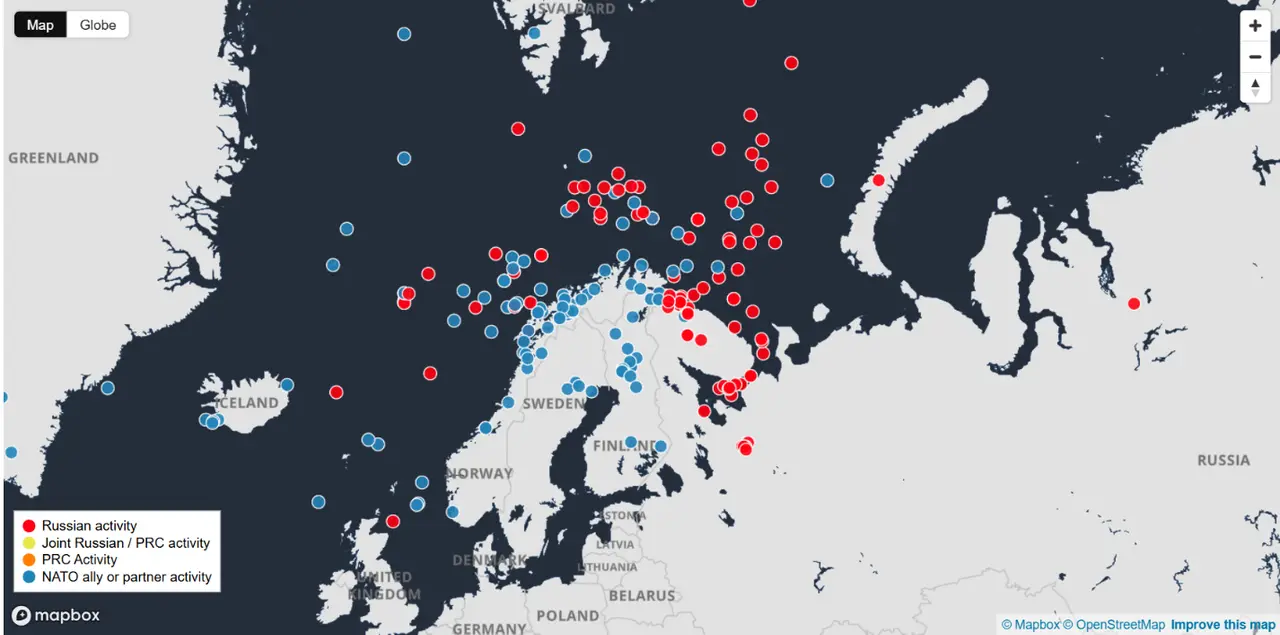
Fig. 1 “Arctic Military Activity Tracker” (Center for Strategic and International Studies [CSIS] 2024)
Hybrid Militarization and Critical Infrastructure
One of the most consequential contemporary developments in Arctic security is the rise of hybrid militarization. The region is increasingly contested not only through traditional force, but through means of sabotage, vulnerabilities to seabed infrastructure, electronic warfare, and deliberate legal ambiguity (Zysk 2026; Åtland, Nilsen, and Pedersen 2024). This dimension of Arctic competition is below the threshold of armed conflict but above the level of routine diplomatic friction (Zysk 2026). These activities are characteristic of Russia’s broad use of grey zone tactics employing legal ambiguity, deniable operations, and coercion to advance its strategic objectives while avoiding conventional armed conflict (Hoffman 2007).
The work of Stensrud and Østhagen (2024) on Svalbard illustrates how Russia uses grey-zone tactics and contested legal narratives to exert pressure without triggering a NATO response. The Svalbard Treaty of 1920 creates structural ambiguity around military activity, resource access, and civilian-commercial presence on the archipelago (Ibid 2024). Russia in turn, has exploited this ambiguity through a pattern of symbolic and material pressure. In this sense, Svalbard has become a case study in the legal and political aspects of hybrid Arctic competition.
Critical infrastructure is particularly exposed across the broader region. Fiber-optic cables, seabed sensors, offshore energy corridors, and satellite ground stations across Norway, Iceland, and Greenland represent high-value, difficult-to-defend targets for coercive disruption (Stensrud and Østhagen 2024). Incidents of suspected cable damage in Nordic waters have been linked to Russian-affiliated vessels conducting anchor-dragging manoeuvres and have pushed NATO to expand its maritime domain awareness and infrastructure surveillance operations (Taub 2024). NATO’s ability to coordinate intelligence and military communications across the northern theatre now depends directly on the security of undersea data infrastructure.
Electronic warfare presents another major change in Arctic security. GPS jamming incidents in Lapland and Finnmark show how hybrid pressure can degrade both military and civilian systems while maintaining plausible deniability, including commercial aviation safety (Traficom 2026). These tactics blur the boundary between peacetime competition and pre-conflict shaping operations, complicating deterrence signalling and crisis management.
The strategic point is significant: rather than simply sending more troops and equipment, Arctic militarization increasingly works by targeting the systems that armies depend on to move and communicate. Data cables, logistics nodes, fuel corridors, and intelligence-sharing networks are all potential targets. Defending them requires a deterrence strategy that works even when no shots are being fired.
The Drone and Surveillance Revolution in Arctic Warfare
The war in Ukraine has accelerated the transfer of drone warfare and persistent surveillance concepts into Arctic defence planning. This is particularly significant for NATO, whose future northern operations will depend on the capacity to monitor vast distances with limited permanent physical presence. This is made even more difficult because of the Arctic’s punishing environment characterized by extreme cold, limited infrastructure, GPS unreliability, and prolonged periods of darkness or polar illumination. This simultaneously increases the value of unmanned systems while imposing severe engineering and operational constraints on their use.
Drones operating in Arctic conditions offer distinctive advantages across a range of missions, including maritime domain awareness, convoy overwatch, search and rescue support, electronic warfare mapping, and infrastructure monitoring. Cold Response and related NATO exercises in Norway have increasingly incorporated UAV survivability testing, thermal signature reduction, and drone detection countermeasures (Stavridis 2026). Ukraine has provided a modern war laboratory, where drone ubiquity has fundamentally redefined concealment, mobility, and force protection across all domains (Watling and Reynolds 2023).
For Russia, Arctic drone integration is also expanding. The July Storm exercises explicitly tested unmanned maritime and aerial systems in Arctic conditions, reflecting a broader doctrinal convergence in which both NATO and Russia seek to offset environmental challenges through automation and ISR fusion (Reuters 2025). Norwegian drone bases in the High North, combined with satellite-based persistent surveillance architectures, are extending the Alliance’s situational awareness in the Barents approaches and along the Northern Sea Route.
The strategic significance of this development cannot be overstated. Whoever can sustain persistent, reliable situational awareness in the High North will hold a significant advantage in crisis management, early warning, and rapid-response operations (Johnson-Freese 2016). In this sense, surveillance infrastructure and autonomous systems are becoming as strategically consequential as traditional hard-power assets such as submarines, bases, and forward-deployed brigades. The Arctic drone competition is not merely a technological race; it is a contest over real-time intelligence structures on which deterrence depends.
Policy Outlook: Toward Managed Deterrence
The current militarization of the Arctic increases the risks of miscalculation, unintended escalation, and accidental confrontation between nuclear-armed states. Yet deterrence in the region remains not only necessary but urgent, given the strategic centrality of the Kola Peninsula and the North Atlantic Sea lines of communication. The central policy challenge is not to choose between deterrence and stability, but to pursue a more managed deterrence with a policy capable of signalling resolve while minimizing the risks of escalation.
This article suggests five policy priorities moving forward in Arctic security.
First, NATO should prioritize the creation of an Arctic ISR-sharing system between Norway, Finland, Sweden, Denmark, Canada, and the United States. Persistent gaps in shared maritime domain awareness create the ambiguity that hybrid actors exploit. Multilateral sensor networks and common operational pictures can reduce the probability of misidentification and crisis mismanagement.
Second, critical undersea and orbital infrastructure must be explicitly incorporated into deterrence planning and crisis management policy. Protecting fibre-optic cables, satellite uplinks, and Arctic communication nodes is now as strategically important as defending airfields and port facilities. NATO’s 2025 review of critical infrastructure protection represents a necessary beginning, but implementation remains incomplete.
Third, communication channels with Russia on Arctic issues should be kept open and, where possible, expanded. Even amid sustained strategic competition, direct military hotlines covering the Barents and Norwegian seas are essential. Without them, the risk of an incident spiralling out of control through simple miscommunication will increase. The 1972 Incidents at Sea Agreement (INCSEA) demonstrated that practical military deconfliction mechanisms could be maintained even during periods of intense strategic rivalry (SIPRI 2024; United States and Union of Soviet Socialist Republics 1972).
Fourth, legal ambiguity surrounding Svalbard and Arctic maritime access should be addressed through sustained diplomatic engagement before grey-zone pressure creates irreversible facts on the ground. Clearer norms around dual-use research platforms, civilian maritime activity, and undersea infrastructure protection would reduce the space available for hybrid exploitation.
Fifth, the Alliance should invest in cold-weather drone survivability and ISR resilience, ensuring that the lessons of Ukraine are properly integrated into Arctic defence. The Arctic operating environment presents unique technical challenges that require dedicated research and development investment rather than straightforward technology transfer from temperate-zone systems.
Ultimately, the Arctic’s future security order will depend on whether competing states can sustain a balance between credible deterrence and sufficient transparency to prevent misperception. Without this balance, the Arctic risks becoming a zone of permanent strategic instability and a frontier where great-power competition unfolds with insufficient guardrails. Managing that risk is one of the defining security challenges of the coming decade.
Bibliography
Åtland, Kristian, Thomas Nilsen, and Torbjørn Pedersen. 2024. “Bolstering the Bastion: The Changing Pattern of Russia’s Military Exercises in the High North”. Scandinavian Journal of Military Studies. 7 (1): 145–160.
Boulègue, Mathieu. 2024. “Russia’s Arctic Military Posture in the Context of the War against Ukraine.” The Arctic Institute, October 31, 2024. https://www.thearcticinstitute.org/russias-arctic-military-posture-context-war-against-ukraine/
Center for Strategic and International Studies (CSIS). 2024. Arctic Military Tracker. Accessed July 27, 2026. https://arcticmilitarytracker.csis.org/.
Fouche, Gwladys. 2026. “What Are the Military Assets in the Arctic?”. Reuters. January 21, 2026. https://www.reuters.com/business/aerospace-defense/what-are-military-assets-arctic-2026-01-21/.
Friis, Karsten. 2025. “Arctic Spillover? Military Signalling in the European Arctic Before and After the Full-Scale Invasion of Ukraine.” Scandinavian Journal of Military Studies 8 (1): 240-255. https://doi.org/10.31374/sjms.375.
Greaves, Wilfrid. 2021. "National Security and the High North: Post-Cold War Arctic Security Policy in Norway." In Breaking Through: Understanding Sovereignty and Security in the Circumpolar Arctic, edited by Wilfrid Greaves and P. Whitney Lackenbauer. Toronto: University of Toronto Press.
Hoffman, Frank G. 2007. Conflict in the 21st Century: The Rise of Hybrid Wars. Arlington, VA: Potomac Institute for Policy Studies.
Johnson-Freese, Joan. 2016. Space Warfare in the 21st Century: Arming the Heavens. London: Routledge. https://doi.org/10.4324/9781315529172.
Middleton, Alexandra. 2025. “Militarization of the Nordic Arctic: Demographic, Economic and Environmental Implications.” The Arctic Institute. March 17, 2025.
Reuters. 2025. “Russia Begins Major Naval Drills in the Pacific and Arctic Oceans and the Baltic Sea.” July 23, 2025. https://www.reuters.com/business/aerospace-defense/russia-begins-major-naval-drills-pacific-arctic-oceans-baltic-sea-2025-07-23/.
Stavridis, James. 2026. "Russia's Arctic Units Were Wrecked in Ukraine, but NATO Is Already Bracing for Their Comeback." Business Insider, February 18, 2026. https://www.businessinsider.com/russia-arctic-units-wrecked-in-ukraine-nato-bracing-for-comeback-2026-2.
Stensrud, Cecilie Juul, and Andreas Østhagen. 2024. “Hybrid Warfare at Sea? Russia, Svalbard and the Arctic.” Scandinavian Journal of Military Studies 7 (1): 111–130. https://doi.org/10.31374/sjms.233.
Taub, Ben. 2024. "Russia’s Espionage War in the Arctic." The New Yorker, September 9, 2024. https://www.newyorker.com/magazine/2024/09/16/russias-espionage-war-in-the-arctic.
Finnish Transport and Communications Agency (Traficom). 2026. “Interference Affecting Mobile Communications and Satellite Navigation Services Continues in Finland.” April 21, 2026. https://www.traficom.fi/en/news/interference-affecting-mobile-communications-and-satellite-navigation-services-continues-finland.
United States and Union of Soviet Socialist Republics. 1972. Agreement on the Prevention of Incidents On and Over the High Seas. Signed at Moscow, May 25, 1972. https://2009-2017.state.gov/t/isn/4791.htm
Watling, Jack, and Nick Reynolds. 2023. Meatgrinder: Russian Tactics in the Second Year of Its Invasion of Ukraine. London: Royal United Services Institute (RUSI).
Zysk, Katarzyna. 2026. “Svalbard’s Deterrence Gap.” Survival 68 (1): 91–108. doi:10.1080/00396338.2026.2620293.

