


France’s 2027 presidential campaign took a new turn on Saturday as Jean-Luc Mélenchon presented his programme at a rally in Le Bourget, near Paris.
The La France Insoumise candidate renewed his call for France to withdraw from NATO, beginning with its integrated military command, and argued for more independent foreign policies. His manifesto also considers confronting European Union rules that could obstruct his domestic agenda, while ruling out leaving the EU.
On the economy, Mélenchon promised to raise the monthly net minimum wage to €1,700, restore retirement at 60 for workers with 40 years of contributions, and freeze prices on essential goods. He says stronger household spending would help revive growth.
The proposals come as France faces weeks of protests over living costs, and public services. They expose a sharp debate over both the country’s economic priorities and its international alliances, months before voters choose a successor to Emmanuel Macron.
Mélenchon Unveils 2027 Programme, Renewing Call for France to Leave NATO
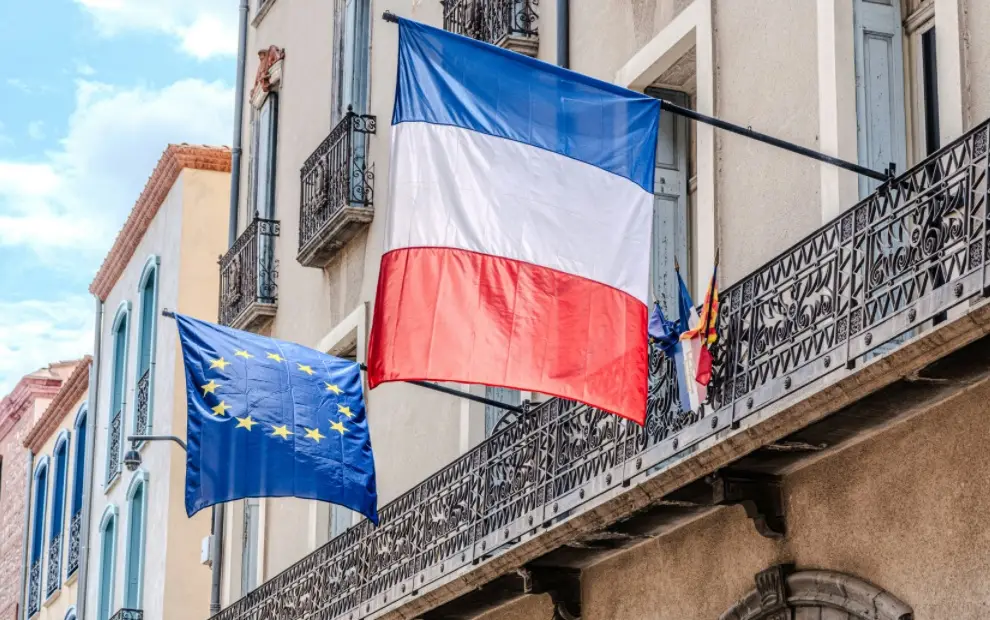
France and EU flags
Key Insights
They expose a sharp debate over both the country’s economic priorities and its international alliances.
Written by Filippo Perini
Edited by Sophia Nistor
09 November 2026 · 08:51 CETUpdated 09 November 2026 · 08:51 CET
Cite this brief
Perini, F. (2026). Mélenchon Unveils 2027 Programme, Renewing Call for France to Leave NATO. EPIS Insight · Europe.
Continue Reading
France’s Fiscal Strain and Defence Spending
Billions for Defense, Strikes at Home: France’s Budget Dilemma
In late October, France was paying more to borrow than Greece and Italy. Now, as unions demand higher wages and more investment in public services, it is adding €36 billion to its defense budget. How long can France keep paying for both?

Franco-Ukrainian Defense Industrial Cooperation
Beyond Aid: Could Ukraine Be Preparing France for War?
The scheme combines €150 million in EU guarantees and €13 million in grants to mobilize over €480 million in Bpifrance financing and establish 30 partnerships with Ukrainian defense startups, helping French firms enter Ukraine and access combat-tested innovations amid Europe’s preparations for po…

French Politics
Over 500,000 Sign Petition to Shut Down French News Channel CNews
A petition targeting CNews has reached a parliamentary threshold, reopening France’s debate over media accountability and freedom of expression.

Security Policy and the Right to Protest
The Price of Public Order: Is France Putting the Right to Protest at Risk?
After the 17 and 24 October protests, the Senate adopted a bill making members of a group jointly liable for damage, while CCI France called for a ban on demonstrations. Where does human rights law set the limits?