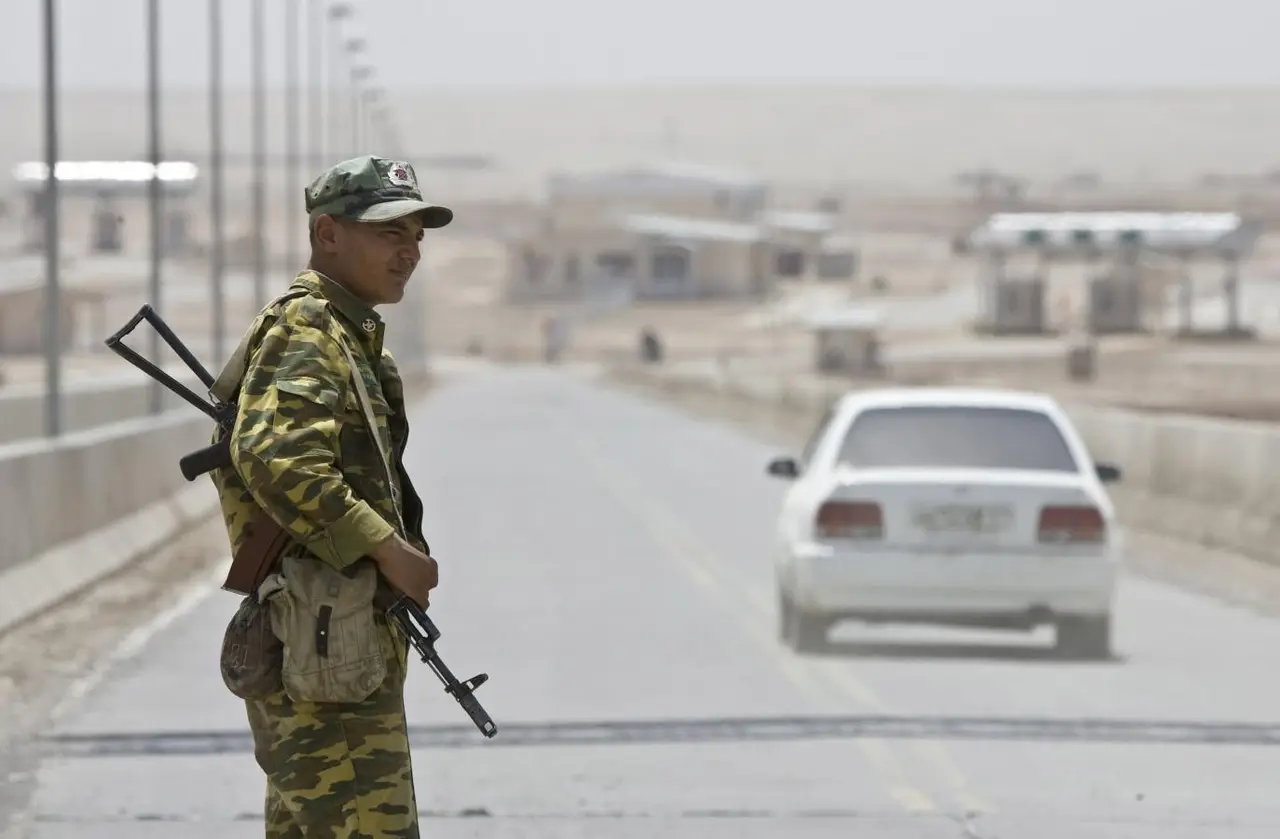


1. Why Security Matters: The Tajik–Afghan Border
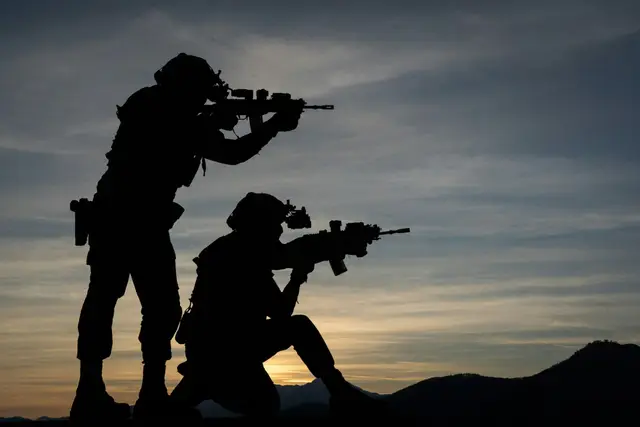
The security of Central Asia is inextricably linked to the stability of the Tajik–Afghan border. Stretching approximately 1,344 kilometres through rugged mountainous terrain, especially along the Panj River and the Baedakhshan region, this frontier constitutes the region’s most vulnerable external boundary. Since the Taliban’s return to power in Afghanistan in August 2021, the border has remained a focal point of concern due to the determined presence of extremist groups, most notably Islamic State Khorasan Province (ISKP), as well as ongoing cross-border drug and arms trafficking (Umarov, 2025; Norov, 2026).
Recent incidents have emphasised the fragility of the situation. In late 2025, a series of attacks launched from Afghan territory in Badakhshan resulted in the deaths of several Chinese workers in Tajikistan, while early 2026 saw further clashes involving Tajik border forces and heavily armed Afghan drug‑smuggling groups operating along the frontier. Confrontations occurred when smugglers attempted to cross the border carrying narcotics and weapons, leading to exchanges of automatic fire between Tajik security personnel and militarised trafficking networks (Rahmati, 2026a; Norov, 2026; HTN World, 2026). These developments have strengthened the perception among regional actors that instability in Afghanistan can rapidly spill over into Central Asia, threatening not only Tajikistan but the broader security architecture of the region.
2. How Tajikistan Tries to Diversify Its Security Sources
The Tajik-Afghan issue motivates Tajikistan to diversify its security sources. On one side, there is an intention to promote cooperation between Central Asian countries, not necessarily including stronger actors like Russia or China and at the same time it suggests the intention to build relationships based on mutual trust and solidarity.
Despite longstanding tensions along borders between Tajikistan, Uzbekistan and Kyrgyzstan, bilateral and trilateral accords – the latest being Kyrgyzstan and Tajikistan in March 2025 – and the delimitation of Fergana Valley, helped reduce tensions and border contentions (Zhanaltay, 2025). This contributed to fostering a more favourable environment for intergovernmental cooperation to address common problems.
On 23 and 24 September 2026, a regional meeting of border authorities was held in the Issyk-Kul region in Kyrgyzstan: delegations from Kyrgyzstan, Kazakhstan and Tajikistan discussed the need to enhance cooperation between each country’s border agencies. The aim is to facilitate the exchange of intelligence, conduct joint training exercises and improve mechanisms for collaboration on border security to develop concrete solutions to the Tajik-Afghan border issue (Nurmaganbetova, 2026). It is perceived as a broader cause of concern for other countries as well, risking the spread of Islamist radicalisation and drug trafficking in the region. (Eurasianet, 2026).
However, as of now, their collaboration remains limited, and the countries involved do not necessarily share the same strategic interests.
Another form of diversification is bilateral and multilateral relations involving external actors, driven partly by interest in strategic resources and rare materials. However, Western actors like the US and NATO resized their security involvement after their withdrawal from Afghanistan in 2021. Currently, their engagement focuses mostly on soft-security issues, crisis management, countering illegal trafficking and terrorism. The US State Partnership Program promotes military training, joint exercises and professionalisation of security forces. Within this framework, Tajikistan and Virginia have conducted joint training since 2003. (U.S. Department of State, 2025). It remains oriented to soft security, training and capacity-building, rather than a sustained military presence.
Turkiye adopts a policy that uses the rhetoric of Turkic cooperation to hold bilateral accords with Kazakhstan from 2020 and Uzbekistan from 2022 on defence and military cooperation. In 2023, Ankara signed two Military and Financial Cooperation Agreements with Tajikistan – a non-Turkic state – for the purchase of weapons, ammunition and drones. (Asia+, 2024). However, their ties remain limited to arms procurement and training, rather than a broader, sustained relationship. Evidence does not yet suggest an ability to provide a security alternative comparable to Russia’s contribution, and Tajikistan cannot extensively rely on any of these actors for its own safety.
As a result, despite ongoing diversification efforts, Moscow continues to occupy a central position in Tajikistan’s security architecture, while China is emerging as an increasingly important security stakeholder. This raises broader questions about the opportunities and limitations of Russia’s role as the region’s primary security guarantor in an evolving regional security landscape.
3. Russia’s Role
Russia regards these developments with special alarm. Moscow has long viewed the security of Central Asia as directly connected to its own national security, given the geographic proximity of the region to Russia’s southern borders. On 16 October 2026, Foreign Minister Sergey Lavrov explicitly warned that radical groups seek to use Afghanistan as “a kind of springboard for transferring terrorist activity to Central Asia and Russia”, identifying Islamic State Khorasan Province (ISKP) as the principal threat (Lavrov, 2026). Defence Minister Andrey Belousov has similarly identified the strengthening of the Tajik-Afghan border as one of Moscow’s top regional defence priorities (Rahmati, 2026b).
These concerns are reinforced by Russia’s institutional commitments within the Collective Security Treaty Organization (CSTO) and by its historical role as the primary external guarantor of stability in Tajikistan, a position that dates back to the Tajik civil war of the 1990s (Umarov, 2025). As a full CSTO member since 1992, Tajikistan relies on the organisation for collective defence guarantees and coordinated border‑security assistance, which further anchors Russia’s role in the country’s security architecture. At the same time, Russia faces a clear dilemma. More direct intervention would reinforce its status as security guarantor, yet it would also create new military and political risks while the war in Ukraine continues (Umarov, 2025). Personnel from the 201st Russian Military Base, Russia’s largest military installation outside its own territory and the occupied territories of Ukraine, stationed permanently in Tajikistan since the 1990s, have reportedly been redeployed, limiting Moscow’s capacity to assume additional commitments along the Afghan border (Umarov, 2025). The recent border clashes therefore expose a growing gap between Russia’s ambition to remain Central Asia’s leading security provider and its reduced capacity to fulfil that role.
To preserve its influence despite these constraints, Russia has pursued a multi-layered strategy aimed at maintaining its primacy in regional security affairs. Central to this approach is the continued operation of the 201st Russian Military Base in Tajikistan. Russian leaders, including President Vladimir Putin and Defence Minister Belousov, continue to portray the base as a key guarantor of security for both Tajikistan and the wider region. It has also repeatedly been placed on high alert in response to perceived threats from Afghanistan (Rahmati, 2026b).
Beyond its military presence, Moscow has institutionalised its role through the CSTO. In November 2024, the organisation approved a five-year targeted intergovernmental programme specifically designed to strengthen the Tajik-Afghan border. Implementation began in 2025, with the first substantial deliveries of weapons, military equipment and technical border-protection systems expected in the autumn of 2026 (AtlasPress, 2026; Norov, 2026). Russian Foreign Ministry officials, including Alexander Sternik, confirmed in early October 2026 that Moscow continues to monitor the border closely and is actively ensuring the timely delivery of the necessary materiel under both the CSTO programme and Tajikistan’s longer-term military modernisation plan extending to 2042 (AtlasPress, 2026; Rahmati, 2026a).
Bilateral mechanisms further reinforce Russian influence. In March 2025, the defence ministries of Russia and Tajikistan formalised a Strategic Partnership Programme in the military and military-technical spheres for the period 2026-2030, accompanied by an implementation plan running to 2028 (Fergana Agency, 2025; Kommersant, 2025). This framework supports ongoing arms transfers, joint training and the construction of modernised border infrastructure financed with Russian support. Through this combination of permanent military presence, multilateral institutional frameworks, sustained materiel support and high-level political coordination, Russia seeks to retain its position as the principal security actor in Tajikistan despite growing resource constraints and the emergence of alternative partners (Umarov, 2025).
4. China’s Role
Alongside Russia, China holds strategic and security interests, particularly the protection of Xinjiang from cross-border threats and the security of its economic investments. In Tajikistan, attacks from Afghanistan killed five Chinese citizens working at a Chinese road project. Further instabilities and contentions could threaten the integrity of Chinese interests. This explains an increasing commitment to Tajik security issues.
Global Security Initiative (GSI) provides a framework that justifies the CCP’s military engagement in Central Asia for counterterrorism purposes. Through it, China has intensified military equipment production, creating technological dependencies that serve both economic and strategic objectives in the region. Kazakhstan and Uzbekistan have received drone systems, Turkmenistan has acquired missile defence technology, and Kyrgyzstan uses Chinese anti-stealth radar systems. The most evident commitment remains in Tajikistan, where China installed a military facility near the Wakhan Corridor. (Sung, 2023). Especially after the Ukraine invasion, Tajikistan progressively increased economic and security exchanges with China, further diversifying its security sources. (Umarov & Norov, 2026). China’s presence, therefore, expands the range of actors available to provide security for Tajikistan.
5. Conclusion
Overall, the Tajik-Afghan border highlights the security issues for Tajikistan, namely the threats from extremist groups and illegal trafficking. Regional initiatives of coordination and partnership have been taken in response. As of now, however, Russia’s presence in the region remains the most relevant. Notwithstanding new frictions and shifts in priorities, Russia holds institutional, military and political relations with Tajikistan that were consolidated through the years and still remain central.
China does not show a comparable ability to replace Russia’s contribution, nor a match in the depth of the institutionalisation of their relations. In fact, despite having other priorities that come before Central Asian security, Russia is still capable of keeping the balance stable as it is, and it preserves established security arrangements that other actors have not replicated. Therefore, China represents a potential additional source but not a substitute for Russia’s role in regional security. Even though diversification of sources is happening, it does not question Russia’s centrality. As the Tajik-Afghan case showed, it is not possible to state – at least not yet – that diversification of security sources is becoming a threat to Russia’s role as the main security provider in the region.
References
Asia+. (2024, April 18). Tajik parliament endorses two military cooperation documents signed with Turkiye. https://asiaplus.news/en/2024/04/18/tajik-parliament-endorses-two-military-cooperation-documents-signed-with-turkiye/
AtlasPress. (2026, October 5). Russia continues military deliveries to bolster Tajikistan-Afghanistan border. https://atlaspress.news/en/2026/10/05/russia-military-equipment-tajikistan-afghanistan-border-security/
Eurasianet. (2026, September 24). Border services of Kazakhstan, Kyrgyzstan and Tajikistan look to enhance cooperation. https://eurasianet.org/border-services-of-kazakhstan-kyrgyzstan-and-tajikistan-look-to-enhance-cooperation
Fergana Agency. (2025, March 19). Russia and Tajikistan Sign Strategic Partnership Program at Defense Ministry Level. https://en.fergana.agency/news/137060/
HTN World. (2026, January 30). Tajik border clash with armed Afghan smugglers highlights regional security risks. https://htnworld.com/tajik-border-clash-armed-afghan-smugglers-regional-security/
Kommersant. (2025, March 17). Москва и Душанбе утвердили программу военного стратегического партнерства [Moscow and Dushanbe approved a programme of military strategic partnership]. https://www.kommersant.ru/doc/7585409
Lavrov, S. (2026, October 16). Foreign Minister Sergey Lavrov’s remarks at a plenary session of the CSTO, CIS and SCO Conference on Security in Central Asia and Afghanistan, Moscow, October 16, 2026. Ministry of Foreign Affairs of the Russian Federation. https://mid.ru/en/foreign_policy/news/2155127/
Norov, K. (2026, February 2). CSTO sends weapons to Tajikistan to secure Afghan border. https://thediplomat.com/2026/02/csto-sends-weapons-to-tajikistan-to-secure-afghan-border/
Nurmaganbetova, Z. (2026, September 23). Kyrgyzstan, Kazakhstan and Tajikistan strengthen border cooperation. https://qazinform.com/news/kyrgyzstan-kazakhstan-and-tajikistan-strengthen-border-cooperation-15a62d
Rahmati, F. (2026a, October 5). Russia continues military support to Tajikistan over Afghanistan border security. https://www.khaama.com/russia-continues-military-support-to-tajikistan-over-afghanistan-border-security/
Rahmati, F. (2026b, September 9). Russia prioritizes strengthening Tajikistan-Afghanistan border security, defense minister says. https://www.khaama.com/russia-prioritizes-strengthening-tajikistan-afghanistan-border-security-defense-minister-says/
Sung, C. (2023). The Global Security Initiative in Action: Beijing’s Military Footprint in Central Asia. https://gssr.georgetown.edu/the-forum/regions/asia/the-global-security-initiative-in-action-beijings-military-footprint-in-central-asia/
Umarov, T. (2025, December 19). Afghanistan–Tajikistan border clashes pose a dilemma for Moscow. https://carnegieendowment.org/russia-eurasia/politika/2025/12/tajikistan-afghanistan-tension-russia
Umarov, T., Norov, R. (2026, August 27). Tajikistan and Russia: The Syndromes of Missed Opportunity and Neglected Attention. https://ridl.io/tajikistan-and-russia-the-syndromes-of-missed-opportunity-and-neglected-attention/
U.S. Department of State. (2025, January 20). U.S. Security Cooperation With Central Asia. https://www.state.gov/u-s-security-cooperation-with-central-asia
Zhanaltay, Z. (2025, May 13). Historic Agreement on Kyrgyz-Tajik Borders. https://eurasian-research.org/publications/historic-agreement-on-kyrgyz-tajik-borders