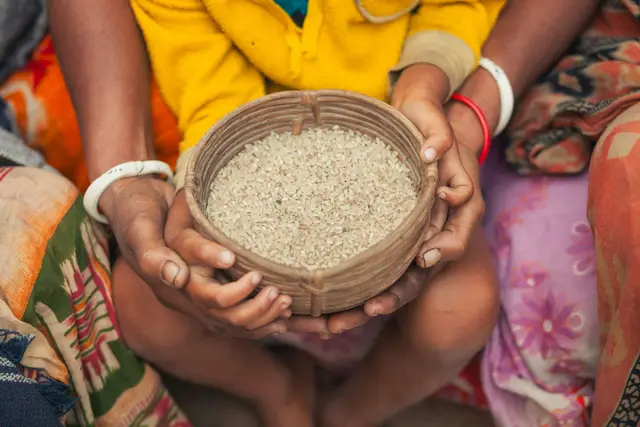

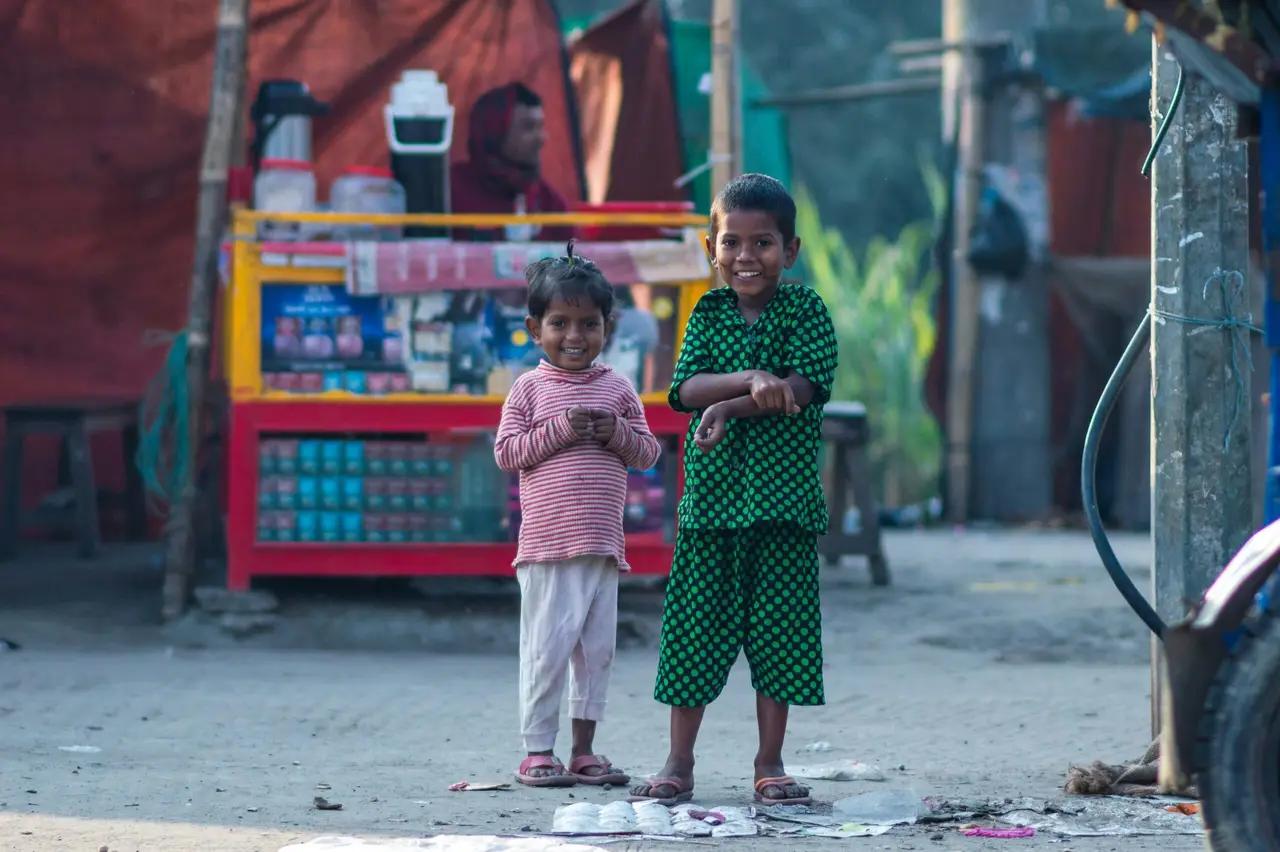

White buckets, ragged clothing, and bare feet. This is one of the first things that you will notice in the streets of Dakar if you have never been there before. They come up to you and mumble something you probably will not understand unless you speak Wolof, Mandinka, Fula, or another West African language. But it is easy to understand what is happening: they are begging for money.
These are the Talibé children, and what they endure every day under the sunlight is a distinct social, religious and cultural phenomenon. While this analysis is not intended to speak in the name of all Talibés, as many of them live a very different life, it will expose and deconstruct Senegalese politics as well as the religious and cultural meanings of begging, and historical attempts to tackle this issue throughout the years.
1. Understanding basic concepts
Talibés, which means disciples in Wolof, are predominantly male students between the ages of 4 and 18 who have been enrolled by their parents at Quranic schools called daraas. Talibé children can be found in urban and rural settings in countries including Senegal, Guinea-Bissau, Mali, Ghana, etc (MacLeod, 2023). In these daraas, they learn the Quran under the tutelage of a marabout, or sëriñ daraas, a religious or spiritual leader. However, children in daraas are forced to work and beg for several hours on a daily basis. While their functioning has always rested on the shoulders of the children, it has evolved over time.
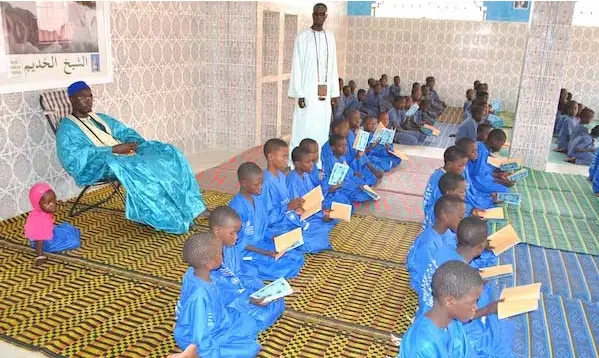
Quranic teaching to children is not new; it has existed for centuries (Perry, 2004). But in the late nineteenth century, Quranic schools proliferated, especially in rural areas. Children recited all day long, but also worked the land during the rainy season and begged for food in the towns they resided in to sustain the daraa by stocking food. At this time, marabouts were not paid and largely depended on the askaka of neighbours, that is, the charity Muslims are expected to bestow on the needy (ibid.). For many families, sending their children to daraas meant an opportunity to become somebody and get closer to Allah. However, many of these children received physical punishment if they did not recite the Quran properly. In fact, many tried to run away, but when arriving at their homes, parents would threaten them as they had not fulfilled their religious duties, considering them a dishonour to the family (Lahti, 2019).
Postcolonial dynamics changed the situation of daraas, as urban migration began to increase and Quranic schools were excluded from state funding since Senegal had adopted a secular system (Ndiaye, 2015). This social, political and economic post-independence shift forced many Quranic schools to become urban, and since there was no land to work, most of the time Talibés started to spend more time begging for food and money (Perry, 2004). This changed the demographics of Talibés too, with most children now sent from rural settings and an increase in the number of children from neighbouring countries. While there are no official statistics, Amnesty International (2022) reported that there were 200,000 Talibés in Dakar, out of which 25% were beggars.
2. Reporting violations
The Talibé phenomenon, and particularly the practice of begging, gained international attention in the 90s (Perry, 2004; Lahti, 2019; MacLeod, 2022). Narratives from international NGOs, such as Amnesty International (AI) and Human Rights Watch (HRW) (Lahti, 2019), linked child begging with abuse, exploitation and human trafficking. The spread of images of children under inhuman conditions of life started to concern the Global North’s child activists and advocacy groups as well as the public eye (ibid). Since then, many projects and initiatives have attempted to eradicate child begging by framing it differently.
As explained before, Talibés can be found in both rural and urban settings. However, as the number of child beggars is currently higher in urban settings, we will focus on them. Both local and international NGOs have reported that many Talibés are constantly mistreated by their marabouts through beatings, confinement, enchainment, malnourishment or starvation if they do not meet the pre-established daily quota when begging or do not recite the Quran properly (Ouedrago, 2021; Centre for Human Rights (University of Pretoria) & La Rencontre Africaine pour la Défense des Droits de l’Homme, 2014). In January 2022, a 10-year-old Talibé died from injuries caused by a beating from his teachers for not learning the day’s lesson (AI, 2022). Cases of sexual abuse have also been reported, usually from older Talibés (HRW, 2010).
This adds to the unsanitary conditions of many daraas, which in many cases lack adequate toilets, roofing, beds, clothing and food (AI, 2022). Moreover, as many Talibés spend most of their day begging barefoot in the streets surrounded by scabies, rats, cockroaches, stranded animals and trash, the chances of encountering severe health issues and catching diseases, including malaria, skin infections, dengue and oral issues, are very high (Perry, 2004). Many of these children do not have access to medical treatments and/or are not adequately treated. As they are also left to beg in the streets unattended, Talibés are highly exposed to other dangers (HRW, 2010)
3. Failed attempts to end child begging
Economic exploitation through forced street begging, physical and psychological abuse, cross-border trafficking of children, denial of education or extreme neglect are all violations of child’s rights under international law, including the UN Convention on the Rights of the Child (1989), the International Labour Organisation’s Worst Forms of Child Labour Convention (1999), the African Charter on the Rights and Welfare of the Child (1990), and the Palermo Protocol (2000). Senegal has ratified all of these treaties, and therefore is under the obligation to take all necessary steps to ensure all children in Senegal enjoy their rights (Carr, 2012). Nevertheless, Senegal must yet become a contracting party and ratify the Hague Convention on the Protection of the Child (1996).
A law was passed in 2005 with the goal of combating human trafficking, especially Talibés coming to Senegalese daraas from neighbouring countries. The “Loi No. 2005-06 relatif à la lutte contre la traite des personnes et les pratiques assimilées” states that “anyone who organises begging of others with a view to profiting therefrom (…) shall be punished by imprisonment of 2 to 5 years”. However, this law was not implemented until 2010, after the United States threatened with aid cuts if efforts to end child begging in the country were not put in place (Boiro & Einarsdottir, 2024). Despite this, there has been little enforcement, and few marabouts have been imprisoned under this law (Al, 2022; HRW, 2010).
Since then, there has been an attempt to introduce a national framework to regulate daraas —Decree No. 2024-957—, which would include them in the education system, enable them to receive state funds, tackle infrastructure issues and limit certain practices against children (Parisella, 2025). Both initiatives remain blocked in Parliament as religious leaders lobby against the latter by framing it as an anti-Islamic attack (AI, 2022).
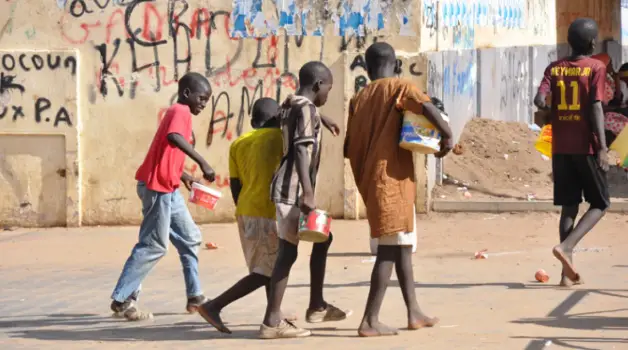
Nevertheless, between 2016 and 2018, the government under Macky Sall’s presidency launched the two-phase “Retrait des enfants de la rue”, which aimed to reduce the number of child beggars from the streets but also modernise daraas and introduce them into the education system through a hybrid model (MacLeod, 2023). In the first phase, children were picked up from the streets and sent back to their daraas. The government faced criticism from advocacy groups as they had not been consulted for the development of the initiative, had not allocated enough resources, and had actually rewarded marabouts by sending Talibés back to their marabout.
After its failure, the government decided that, in the second phase, children would be picked up, Talibés would be separated, and they would be sent to daraas previously preapproved by the state. This phase also had a low impact and was highly critiqued because marabouts had not yet been persecuted. In fact, in this last phase, marabouts were differentiated as either good or bad religious leaders, and based on that, some daraas were deemed as positive (MacLeod, 2023).
Overall, the project had little effect on ending child begging. The lack of interministerial coordination, the exclusion of NGO expertise, the lack of allocated resources, and a conflicting view on daraas themselves set the stage for a large failure that, to today has not countered the increasing number of Talibes in the streets (MacLeod, 2023). This failure leads us to ask ourselves: why send children to daraas in the first place, and what is the social significance of daraas?
4. Begging as a custom
While many think poverty would be the main reason for parents to enrol their children in daraas and avoid feeding an extra mouth, this is an oversimplification of reality. While some theories have resorted to demographic and economic reasons, such as waiting for children to become adults and therefore becoming the workforce, these have been largely refuted (Boiro & Einarsdottir, 2016), and the focus has been put on the role of religion and culture. It is paramount to understand how religion interacts with other cultural factors to avoid falling into simplistic views of begging as pure parental negligence.
Begging or almsgiving has been a part of West African culture for a long time. Anthropologists and researchers have explained how parents believe sending their children to daraas is beneficial to the family, as they seek to establish a connection with a powerful brotherhood under an instrumentalist perspective, but also to the child itself, as learning the Quran means acquiring a certain degree of social status and prestige, even if it entails begging to learn the values of humility and gratitude (Perry, 2004). Nonetheless, this interpretation of the metaphor of slavery, which is central to the Muslim conception of the relationship between individuals and god, is more cultural than religious, and is deeply embedded in West African institutions —this phenomenon does not happen in Arab countries— (ibid). However, many parents do not approve of Talibé treatment and are aware of the mistreatment they endure. Indeed, many report that some marabouts do not care about children and only search for their economic benefit through child exploitation (Boiro & Einarsdottir, 2024).
This double view on Talibés has led to a division within the public discourse, one that criticises marabouts as human traffickers, and parents as abettors, especially when it is cross-border, while others defend the tradition and state that not all marabouts are evil child exploiters and focus on regulating and modernising daraas so children are better provided for (Lahti, 2019). These competing narratives and discourses have impregnated the public sphere, both at a national and international level. International and some local organisations put pressure on the government for tangible actions, while internal religious groups curb any state-level full intervention from happening (Parisella, 2025). To further understand why governmental action has been limited, we must grasp how religion interacts with politics.
5. Religious influence in politics
In many West African societies, including Senegal, state laws coexist with custom and religious laws, such as Sufism in the case of Senegal (Parisella, 2025; Kuenzi, 2019). Customs do not necessarily have a purely Islamic origin; they also stem from traditions prior to Islamisation, and interact with both Islamic and state laws. However, state laws clash with certain traditions and create a confusing state of affairs.
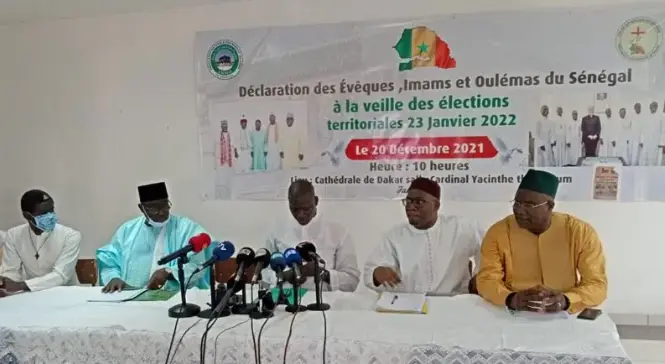
As Parisella (2025:21) states, Sufi groups hold such great social and political power in Senegal, having the ability to mobilise masses in the name of faith, that hierarchy between state and religious authorities is ambiguous. State authorities tend to seek religious support, especially ahead of elections, and refrain from challenging religious leaders, especially on this matter (ibid). When two marabouts were arrested in 2010 after Act 2005-06 was passed, public outcry managed to liberate them from prison (MacLeod, 2023). Not only are they able to escape judicial proceedings, but they are also capable of controlling public attention and diverting the public eye from economic issues, such as corruption or economic stagnation, to other social issues, such as homosexuality.
It is in this context that the often-used argument of Westernisation is utilised to counter social movements such as the fight for women’s rights and child rights. Attempts to end Talibés are considered by many religious leaders as an international interference, and they use this against opposition groups, such as activists or political parties (Coudou, 2008). By weaponising religion and faith, marabouts lobby against laws of their interest by framing them as anti-Islamic —even if the Quran prohibits such practices. Thus, the government is pressured both internally and externally, leading it to pass laws that appease local religious leaders and tackle international criticism (Boiro & Einarsottir, 2024; Parisella, 2025).
6. The eternal dilemma
How can child begging be reduced? Is religion the problem or are initiatives not accounting for key social factors? One of the issues of child rights activism in Senegal can be explained with the concept of “NGOisation”, which refers to the professionalisation and bureaucratisation of grassroots organisations (Lang, 2012). NGOs have been largely criticised for the questionable benefits for those who are allegedly rescued. They have secured generous grants to cover operating costs, organised forums and have launched nationwide campaigns, but children continue to beg. (Lahti, 2019)
Another issue is the mix of approaches that both NGOs and the government have utilised to frame and tackle child begging. One criminalises religious leaders and frames them as child traffickers, ignoring the social significance daraas have in Senegalese society, and the other one emphasises socioeconomic factors and calls for modernising daraas (Lahti, 2019). This dancing between discourses is visible in both state actions, such as not prosecuting marabouts, and NGOs, who recognise that not all marabouts are child exploiters or traffickers, economically depend on child begging, and that criminalising them would worsen the problem.
Both frameworks have failed to tackle child begging, even if their goal is the same. The issue is when both NGOs and the government attempt to implement initiatives only halfway, both due to operational costs but also religious lobbying. If marabouts are criminalised, daraas would have to close since they are economically dependent on child begging, and children would have to face stigmatisation by their families for not fulfilling their religious duties (Boiro & Einarsdottir, 2024). But if daraas are introduced into the national education system, religious leaders will lobby against it and accuse it of an anti-Islamic attack.
While begging can be considered as violence against children, it cannot be judged through a Eurocentric lens: it must be contextualised and explored from a local perspective. Only by framing begging as a practice that has a cultural significance among Senegalese, and more broadly, West African, can a solution be found. This does not necessarily imply ending child begging, as we have analysed, is not currently plausible. But a mid-point can be found. Alternative rites of passage, economic support to vulnerable families, basic health and safety measures in daraas, or a stronger legal framework are some of the actions that could be prioritised, ones that consider begging as an embedded social custom, but also protect children’s physical and mental integrity.
References
African Union. (1990). African Charter on the Rights and Welfare of the Child. Adopted July 11, 1990.
Amnesty International (2022). The State must move from commitment to strong action to protect talibé children, December 22nd. Available at: https://www.amnesty.org/en/latest/news/2022/12/senegal-letat-doit-passer-des-engagements-aux-actes-forts-pour-proteger-les-enfants-talibes/
Boiro, H. & J. Einarsdottir (2024). Begging for Knowledge in Senegal: Conflicting Understandings and Interests of the Dominant Anti-Trafficking Approach and Quranic Education. Social Sciences, 13(6). https://www.mdpi.com/2076-0760/13/6/288
Carr, B. (2012). Forced begging in Senegal. The Monitor. Summer 2012. Available at: /api/wp-media/2017/07/2-carr.pdf
Centre for Human Rights (University of Pretoria) & La Rencontre Africaine Pour la Défenses des Droits de l’Homme (RADDHO) v Government of Senegal. Communication No. 003/Com/001/2012. African Committee of Experts on the Rights and Welfare of the Child, decision of 15 April 2014.
Coudou, B. (2008). Senegal. Homophobia and Islamic Political Manipulations. Occasional Paper, Vol 1, No. 8. http://www.arsrc.org/downloads/others/codou.pdf
Hague Conference on Private International Law. (1996). Convention on Jurisdiction, Applicable Law, Recognition, Enforcement and Co-operation in Respect of Parental Responsibility and Measures for the Protection of Children. Concluded October 19, 1996
Human Rights Watch (2010). Off the Backs of the Children. April 15th. https://www.hrw.org/report/2010/04/15/backs-children/forced-begging-and-other-abuses-against-talibes-senegal
International Labour Organization. (1999). Worst Forms of Child Labour Convention, 1999 (No. 182). Adopted June 17, 1999
Kuenzi, M. (2018). Education, Religious Trust, and Ethnicity: The Case of Senegal. Master’s Thesis, University of Nevada, USA.
Lahti, S. (2019). A Tale of Two NGO Discourses: NGO Stories of Suffering Qur’anic School Children in Senegal. In Disadvantaged Childhoods and Humanitarian Intervention, Palgrave MacMillan, Oxford, UK. https://link.springer.com/chapter/10.1007/978-3-030-01623-4_5
Lang, S. (2012). NGOS, Civil Society and the Public Sphere. Cambridge University Press.
MacLeod (2022). Daaras and development discourses: Three interventions targeting the practice of begging by talibés in urban Senegal. PhD Thesis, SOAS University of London. https://soas-repository.worktribe.com/OutputFile/378701
MacLeod, S. (2023). “Save the #Talibés”: A State-Led Intervention to Remove Children from the Street in Dakar, Senegal. Journal of Human Trafficking.
https://doi.org/10.1080/23322705.2023.2263303
Ndiaye, P. (2015). Aumône et mendicité: un autre regard sur la question des talibés au Sénégal. Cahiers de la recherche sur l’éducation et le savoir, 14, 295-310.
https://journals.openedition.org/cres/2848#text
Ouedrago, F. (2021). The Plight of Talibé Children in Senegal. Harvard Human Rights Journal, April 27th. Available at:
Parisella, C. (2025). Exploring the influence of religion on the politics of addressing forced child begging in Senegal. Master’s Thesis, McGill University. https://escholarship.mcgill.ca/concern/theses/5138jm28t
Perry, D. (2004). Muslim Child Disciples, Global Civil Society, and Children’s Rights in Senegal: The Discourses of Strategic Structuralism. Anthropological Quarterly. Vol. 77, No. 1, pp. 47-86. https://www.jstor.org/stable/4149868
United Nations. (1989). Convention on the Rights of the Child. Adopted November 20, 1989.
United Nations. (2000). Protocol to Prevent, Suppress and Punish Trafficking in Persons, Especially Women and Children, supplementing the United Nations Convention against Transnational Organized Crime. Adopted November 15, 2000.