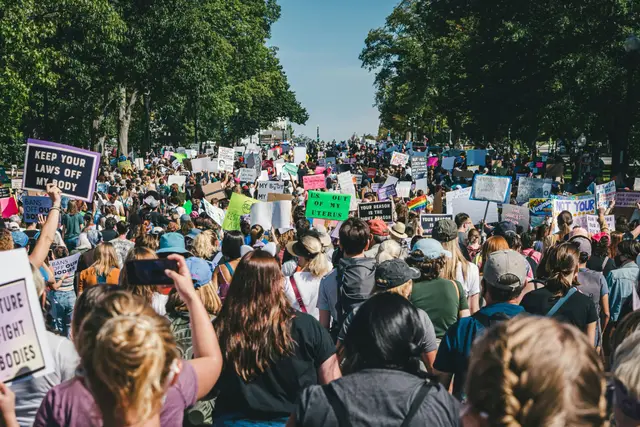


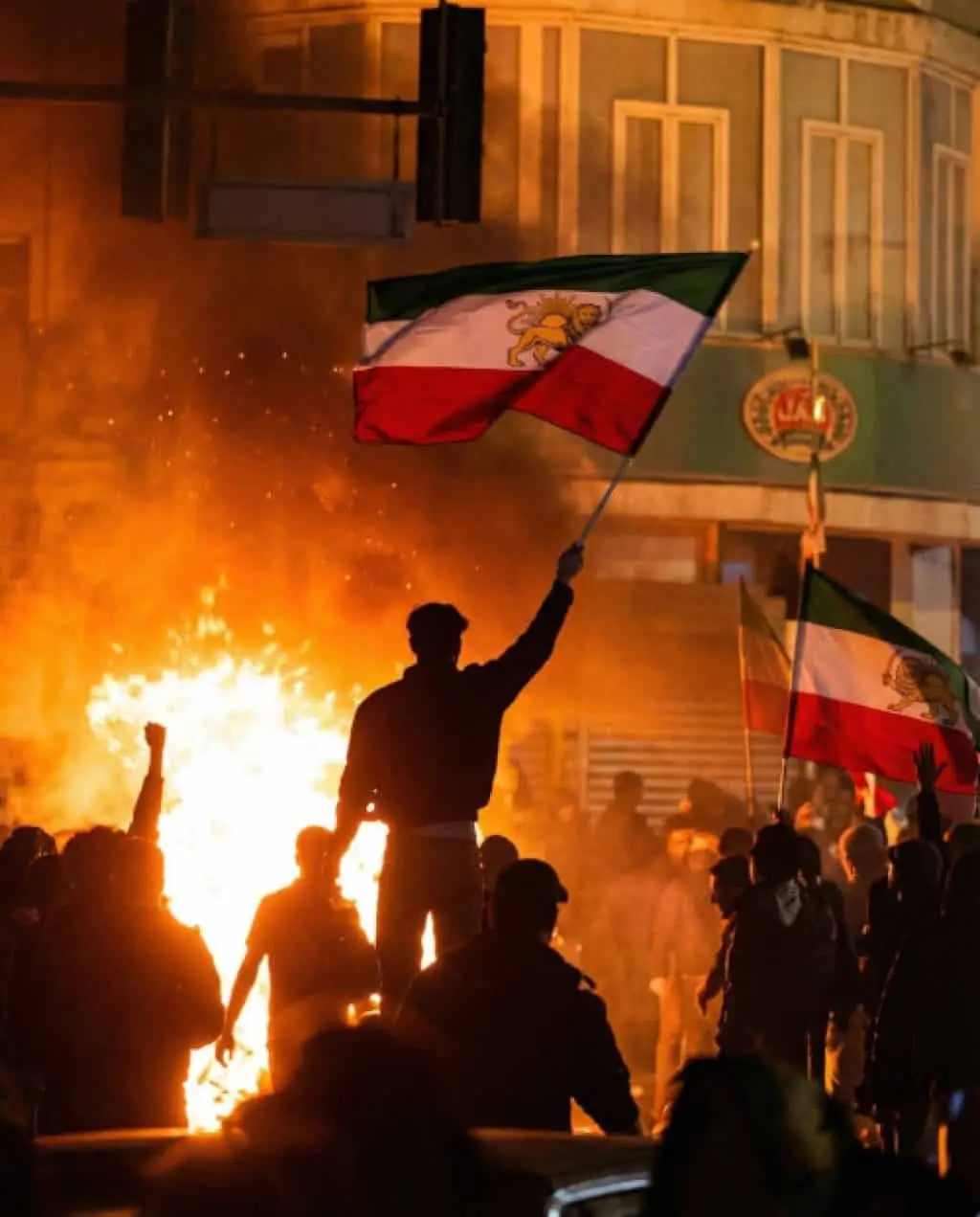


The current wave of Iranian protests is best grasped as the culmination of years of political, economic, and social frustration. Previous major protest cycles included the 2009 Green Movement (disputed election), the 2017–18 demonstrations (economic grievances), and the 2019 fuel-price protests, all of which were met with heavy repression (Ziabari, 2022).
The most significant recent uprising began in September 2022 after the death of Mahsa Amini while in the custody of Iran’s morality police, known as Gasht-e Ershad (Mahdavi, 2026). Initial protests focused on compulsory hijab laws and women’s rights but rapidly broadened into a nationwide movement challenging the political system itself under the slogan “Woman, Life, Freedom.” Women, students, and young people played a leading role, and demonstrations spread across much of the country.
Key triggers that repeatedly reignited protests included funerals and 40-day memorials for those killed, reports of government crackdowns, executions of protesters, and broader grievances over economic hardship, corruption, and political repression. The state responded with arrests, internet restrictions, and force, reducing the protests by 2023, but the movement remains an important symbol of opposition and demands for social and political change (Wintour, 2022).
Background to the Protests
Key causes: political, social, economic factors
The reformist politician Mohammad-Javad Haghshenas accepted the groups of young people were sometimes small, but said the protests were “like an iceberg in the Arctic Ocean, 10% of which is visible, but the bulk of it, which forms its core, is underwater.
“Iranians have learned that protests should not be concentrated in a specific place or limited to a specific class. All academic levels and cultural, sports, artistic elites, celebrities, join this movement,” he said. “This process is irreversible. The issue of morality police, guidance patrol and some taboos has practically collapsed. If the government does not want to understand these realities, it will deal a serious blow to the country, to itself, to the people, and to the future of Iran.” (Wintour, 2022).
Notable triggering events
Official state news agencies focused on an unrelated protest that left as many as 15 people dead and 30 injured after three extremists fired at pilgrims inside the Shah Cheragh, or Emperor of the Night shrine, in Shiraz.
Protesters appeared to have taken control on Thursday of Mahabad, a heavily Kurdish city of about 200,000 people close to the border with Iraq.
The unrest boiled over when a 35-year-old Kurdish man named as Ismaeli Maludi was shot dead on Wednesday, reportedly by direct fire from government forces, according to Hengaw, a Norway-based group that monitors rights violations in Iran’s Kurdish regions. Another protester was shot in nearby Sanandaj (Wintour, 2022). Following the shooting, reports state anti-dictator crowds attacked a police station, chanting ‘death to the dictator’.
Reported Deaths and Use of Force
Statistics on deaths and injuries
The latest wave of protests in Iran began on 28 December 2025, initially among merchants in Tehran’s markets who closed their businesses in protest against rising inflation and the continuing decline of the Iranian rial.
The demonstrations quickly evolved into a broader anti-government movement, spreading across all 31 provinces and more than 200 towns and cities. Protesters reportedly chanted slogans against the Iranian regime and the Supreme Leader, with unrest reaching its peak on 8 January 2026. The scale of the protests made them the largest nationwide demonstrations in Iran since 1979.
On 8 January 2026, the Iranian authorities imposed a near-total communications blackout, blocking internet access and telephone services and significantly restricting the flow of information both within Iran and internationally. Information about events during this period has largely been obtained through limited communications via Starlink satellite equipment, outbound telephone calls that resumed from 13 January 2026, and accounts from individuals who subsequently left the country.
Even though there are substantive claims regarding Iran’s violation of international human rights, documenting such claims have been difficult due to government restrictions on information. Iranian authorities have limited internet, blocked social media applications and imposed a ban on foreign and domestic media coverage. Such measures make it harder for journalists and NGOs to verify information from affected regions. Lack of independent access to sites of protests led to numerous reports relying on eyewitness testimonies, videos and images circulation online, and information gathered by local activists. Organisations like Amnesty International and Human Rights Watch use various verification techniques to confirm evidence gathered, however due to the restrictions access to complete and accurate data remains a challenge. As a result, actual numbers of deaths, injuries and arrests could vary and be higher than estimates.
Journalists, activists and human rights defenders face personal threats when trying to report about the ongoing events, such as arrests, detentions, intimidation or prosecution for performing duties granted to them under the international law. Such responses by the Iranian government create an environment of fear that discourages people from documenting or speaking publicly about abuses. These challenges combined reduce transparency and make it harder for the international community to assess the full extent of situations and hold perpetrators accountable.
The authorities responded with a severe crackdown. Verified footage reportedly showed security forces using batons and firearms against protesters. Following this response, protest activity declined sharply, with substantially fewer demonstrations recorded between 11 and 13 January and only isolated incidents reported thereafter.
Casualty estimates vary considerably. By mid-January 2026, reported deaths ranged from approximately 12,000 to 20,000, the majority being protesters. One human rights organisation reported that, as of 28 January 2026, there had been 6,221 confirmed deaths, including 5,858 protesters, with a further 17,091 deaths under investigation and more than 11,000 people seriously injured.
The same organisation reported 42,324 arrests, 261 cases of televised forced confessions, and 11,026 summonses to security institutions as of 28 January 2026. It further stated that the authorities were conducting a large-scale arrest campaign in the aftermath of the protests.
Reports also indicated that more than 800 protesters were sentenced to death, although these executions were reportedly halted following threats of intervention by the United States. It remains unclear whether the Iranian authorities intend to carry out these sentences.
In addition to demonstrations within Iran, several anti-regime protests took place in the United Kingdom between 3 and 17 January 2026, attracting crowds ranging from approximately 100 to 1,000 participants.
As with all protection claims, each case must be assessed on its individual facts, and the burden remains on the individual to establish a well-founded fear of persecution or a real risk of serious harm (GOV.UK, 2026).
Relevant Human Rights Framework
Right to Life
The right to life is one of the most fundamental human rights and is protected under Article 6 of the International Covenant on Civil and Political Rights (ICCPR) (United Nations, 1966). This right requires states not only to refrain from the arbitrary deprivation of life but also to take positive measures to protect individuals from unlawful killings. The use of lethal force by state authorities is permitted only in exceptional circumstances where it is strictly necessary and proportionate.
In the context of the Iranian protests, allegations of deaths resulting from the actions of security forces raise serious concerns regarding compliance with the right to life. Reports of protesters being killed during demonstrations have prompted scrutiny from international human rights organisations and United Nations mechanisms. Where state agents are implicated in deaths, international human rights law requires prompt, independent, and effective investigations to establish accountability.
Freedom of Expression
Freedom of expression is protected by Article 19 of the ICCPR and encompasses the right to seek, receive, and impart information and ideas through any media. This right is essential for democratic participation and enables individuals to voice political opinions, criticise government policies, and advocate for social change (United Nations, 1966).
The Iranian protests were characterised by public criticism of government policies and political leadership. Measures reportedly taken by the authorities, including internet shutdowns, restrictions on communications, censorship, and the arrest of journalists and activists, have raised concerns regarding restrictions on freedom of expression. While states may impose certain limitations on this right, such restrictions must be lawful, necessary, and proportionate to a legitimate objective under international law.
Freedom of Peaceful Assembly
Furthermore, in United Nations (1966), the right to peaceful assembly is protected under Article 21 of the ICCPR and allows individuals to gather collectively to express opinions, advocate for causes, or protest government actions. Peaceful protests are widely recognised as a legitimate exercise of civil and political rights.
The demonstrations that occurred across Iran represented the exercise of this right by large numbers of individuals expressing economic, social, and political grievances. International human rights standards require states to facilitate peaceful assemblies and protect participants from violence. Any restrictions imposed on assemblies must be necessary and proportionate. Allegations of excessive force, mass arrests, and the suppression of demonstrations have therefore generated concerns regarding the protection of this right during the protests.
International Human Rights Agreements
Iran is a State Party to ICCPR, which imposes legally binding obligations to respect and protect rights including the right to life, freedom of expression, freedom of assembly, freedom of association, and protection from arbitrary detention. Iran is also a party to other international human rights treaties, including the International Covenant on Economic, Social and Cultural Rights (ICESCR).
These treaties provide the primary legal framework through which the actions of states are assessed by the international community. Allegations of excessive use of force, arbitrary arrests, restrictions on communication, and limitations on civil liberties during the protests are therefore frequently evaluated against Iran’s obligations under these international agreements
Role of the United Nations Human Rights Council
The United Nations Human Rights Council (UNHRC) plays a central role in monitoring and addressing human rights concerns worldwide. The Council can hold special sessions, adopt resolutions, mandate fact-finding missions, and appoint independent experts to investigate alleged human rights violations.
In response to developments in Iran, United Nations bodies and independent experts have repeatedly expressed concern regarding allegations of unlawful killings, arbitrary detention, restrictions on fundamental freedoms, and the treatment of protesters. Through investigations, reporting mechanisms, and international scrutiny, the Human Rights Council seeks to promote accountability and encourage states to comply with their international human rights obligations. Although the Council does not possess direct enforcement powers, its findings can influence international diplomatic responses, sanctions policies, and broader efforts to promote human rights protections.
Why These Actions May Violate Human Rights
Use of Excessive Force
International Human Rights Law allows states to use force only when necessary and proportionate towards a legitimate objective. Under Article 6 of the International Covenant on Civil and Political Rights (ICCPR), individuals have the inherent right to life; therefore, states have the duty to protect their citizens against arbitrary deprivation of life. In addition, the UN Basic Principles on the Use of Force and Firearms by Law Enforcement Officialsstate that law enforcement officers should only use lethal force to protect life. Therefore, allegations about the unlawfulness behind state personnel using lethal force against unarmed protesters and, hence, reports of Iranian security forces using live ammunition against protestors have raised serious questions regarding Iran’s commitment to these treaties.
Targeting of unarmed civilians
Given that civilians are exercising their right to peacefully demonstrate, the use of lethal force may violate protections given under the ICCPR, particularly Article 6 – right to live – and Article 21 – Right of Peaceful Assembly -. Human Rights organisations, NGOs and media agencies documented many cases regarding women, students and minors among those who have been killed or injured by the Iranian state officials (BBC, 2026; Iran International, 2026; Amnesty International, 2026). Iran is also a party state of the Convention on the Rights of the Child, which gives the state a legal duty to provide special protection to minors, ensuring their survival and development. Given that Iranian citizens and minors have been targeted for participating under peaceful demonstrations, a right that they have, such actions could result in serious breaches of international human rights law.
Suppression of Dissent
Restrictions imposed on protestors, journalists and activists also raised questions about several international instruments. The Universal Declaration of Human Rights protects freedom of opinion (Art. 19) and freedom to assemble peacefully (Art. 20). These legal protection mechanisms are reinforced and supported through the ICCPR and widely regarded as fundamental principles of democratic participation by many.
Restrictions such as but not limited to internet shutdowns, censorship measures and restrictions on communications have been criticised by numerous international organisations. Access to information is viewed as essential tools to ensure freedom of expression, affirmed by the UN Human Rights Council.
Lack of Due Process and Accountability
States are required to investigate alleged unlawful killings and provide remedies to victims per international law. These obligations drive both from the ICCPR and Universal Declaration of Human Rights. Furthermore, allegations of mistreatment of detainees raise concerns under the Convention Against Torture. Although Iran hadn’t ratified the convention, the prohibition of torture and cruel, degrading behaviour toward detainees are an accepted principle of customary international law, meaning it applies regardless of ratification.
The absence of transparent investigations into reports has led many observers to argue that international standards regarding justice, protection of human rights and accountability may not have been respected and met in Iran.International Response
Statements and Measures by Governments
The killing of protesters led to widespread international criticism. Multiple governments including the US, Canada, the UK, and EU member states have condemned use of force by Iranian authorities against demonstrators. States have argued that Iran has the duty to respect its obligations under the international human rights law, especially those regarding ICCPR.
Several states have imposed sanctions on the Iranian regime, security forces and institutions that are believed to be involved in suppression of protestors. Sanctions increase asset freezes, travel bans, etc. The EU, the US, the UK and Canada introduced measures against key Iranian officials. However, effectiveness of sanctions is being debated. Supporters argue sanctions create political pressure and help with accountability, whereas critiques claim sanctions have limited impact if Iranian authorities don’t change their behaviour.
Statements and Measures by International Organisations
United Nations Officials and independent experts have called Iran to stop using violence against protestors, and release individuals detained for protesting as well as respecting rights regarding to life, freedom of expression and peaceful assembly. The UNHRC established an international fact-finding mission on Iran in November 2022. Their mandate was to investigate alleged human rights violations, examined reported abuses, collecting evidence and identifying patterns of violation.
Challenges in Verification and Reporting
Even though there are substantive claims regarding Iran’s violation of international human rights, documenting such claims have been difficult due to government restrictions on information. Iranian authorities have limited internet, blocked social media applications and imposed a ban on foreign and domestic media coverage. Such measures make it harder for journalists and NGOs to verify information from affected regions.
Lack of independent access to sites of protests led to numerous reports relying on eyewitness testimonies, videos and images circulation online, and information gathered by local activists. Organisations like Amnesty International and Human Rights Watch use various verification techniques to confirm evidence gathered, however due to the restrictions access to complete and accurate data remains a challenge. As a result, actual numbers of deaths, injuries and arrests could vary and be higher than estimates.
Journalists, activists and human rights defenders face personal threats when trying to report about the ongoing events, such as arrests, detentions, intimidation or prosecution for performing duties granted to them under the international law. Such responses by the Iranian government create an environment of fear that discourages people from documenting or speaking publicly about abuses. These challenges combined reduce transparency and make it harder for the international community to assess the full extent of situations and hold perpetrators accountable.
Conclusion
Killings of peaceful protestors demonstrate a serious human rights concern, setting a precedent of non-compliance even for jus cogens norms. Reports regarding use of force, arbitrary arrests and restrictions on fundamental rights of expression suggests violation of various principles of human rights. This situation underlines the significance of protecting human rights especially during authoritarian turns, political unrest and public dissent.
Accountability and transparency are crucial in order to ensure justice for victims and preventing future abuses. Independence of investigations, having access to reliable information, and the ability to cooperate with international human rights mechanisms and institutions are necessary in order to start establishing the true facts and identifying the responsible. Without meaningful and functioning accountability mechanisms, there are serious concerns regarding impunity, and continued violations are likely to keep going on.
Looking forward, the international community can keep monitoring developments of events in Iran through mechanisms like UNHRC, rapporteurs and international organisations specialising in human rights. Continued diplomatic pressures, pushing for independent international investigations, and advocating for protection of liberties may play an important role, however lack of non-binding mechanisms with enforcement power makes room for development less likely.
References
Amnesty International. 2026. ‘Iran: Deaths and injuries as authorities unleash protest bloodshed’. Accessed 07/06/26.
Anadolu Agency. 2025. ‘European nations condemn repression of anti-government protests in Iran’. Accessed 07/06/26.
Article 19. 2020. ‘HRC44: UN Resolution on Freedom of Expression’. Accessed 07/06/26.
BBC News. 2022. ‘Iran protests: What sparked them and how have they developed?’.Accessed 07/06/26.
Council of the European Union. n.d. ‘Sanctions against Iran’. Accessed 07/06/26.
GOV.UK. 2026. ‘Country bulletin Iran: protests of December 2025 to January 2026 (accessible)’. Accessed 07/06/26.
Iran International. 2026. ‘More Iranian Teenagers At Risk of Execution, Rights Groups Warn’. Accessed 07/06/26.
Iran International. 2026. ‘Canada Condemns Execution of Protesters in Iran’. Accessed 07/06/26.
Madhavi, P. 2026. ‘What are Iran’s morality police? A scholar of the Middle East explains their history’, The Metropolitan.
OHCHR. 1966. ‘International Covenant on Civil and Political Rights’. United Nations Human Rights.
OHCHR. 1984. ‘Convention against Torture and Other Cruel, Inhuman or Degrading Treatment or Punishment’. United Nations Human Rights.
OHCHR. 1990. ‘Basic Principles on the Use of Force and Firearms by Law Enforcement Officials’. United Nations Human Rights.
OHCHR. 2026. ‘Iran: UN experts demand transparency and accountability following nationwide protests’. Accessed 07/06/26.
OHCHR. n.d. ‘Independent International Fact-Finding Mission on the Islamic Republic of Iran’. United Nations Human Rights.
Radio Free Europe/Radio Liberty. 2025. ‘Iran Executions, Protesters, Trump, Human Rights’.Accessed 07/06/26.
Reporters Without Borders (RSF). 2026. ‘Media blackout in Iran: Journalists isolated and information stifled’. Accessed 07/06/26.
Reuters. 2026. ‘UK condemns Iran leadership over brutal killing of protesters’. Accessed 07/06/26.
State Department. 2026. ‘Sanctioning Iranian Government Officials for Suppression of Peaceful Protest’. Accessed 07/06/26.
T.M.C. Asser Instituut. n.d. ‘Customary Law’. Accessed 07/06/26.
The Iran Primer. 2022. Ziabari, K. ‘Iran’s 2022 Protests in Context’.
The Guardian. 2022. Wintour, P. ‘Iran Protests Reignite at Funerals and Commemorations for Those Killed’.
UNICEF. 1989. ‘Convention on the Rights of the Child’.
United Nations. 1948. ‘Universal Declaration of Human Rights’.
United Nations. 1966. ‘International Covenant on Civil and Political Rights’. United Nations Human Rights.
United Nations News. 2026. ‘[UN News article on Iran]’. Accessed 07/06/26.
Visualisations
Cloud, S and Maidenberg, M. 2022. ‘Iranian Protesters Struggle to Activate Elon Musk’s Starlink and Circumvent Internet Restrictions’. The Wall Street Journal. Iranian Protesters Struggle to Activate Elon Musk’s Starlink and Circumvent Internet Restrictions – WSJ. Accessed 16/07/26.
Morris, L. 2018. ‘More than 1,000 detained in crackdown against Iran protests, right groups say, The Washington Post. More than 1,000 detained in crackdown against Iran protests, rights groups say – The Washington Post. Accessed 16/07/26.
– Hizmete Özel / Kişisel Veri İçermez –