



Climate change is the greatest challenge of our time. Rising global temperatures and more frequent extreme weather events impact political stability and economic development. While climate change was once primarily discussed within the fields of environmental science and ecology, it has since become a central issue for policymakers, aid organisations and academics alike. Today, the concept of human security provides one of the most useful frameworks for understanding why climate change matters beyond its environmental consequences.
Traditional understandings of security focus on protecting states from external military threats. Human security, by contrast, shifts attention towards protecting individuals from threats to their lives, livelihoods, and dignity. Introduced in the United Nations Development Programme’s (UNDP) 1994 Human Development Report, human security encompasses economic, food, health, environmental, personal, community, and political security.
Despite the growing academic literature on climate security, public discussion often remains limited to highly visible emerging problems like melting glaciers or rising sea levels and the accompanying extinction of biodiversity. Far less attention is given to the humanitarian and political aspects of climate change. Yet these are the mechanisms through which climate change affects millions of people’s everyday lives.
This article explores the implications of climate change for human security by focusing on three interconnected areas: humanitarian aid, food security, and civil conflict. While climate change rarely acts as the sole cause of insecurity, it indirectly amplifies existing vulnerabilities and increases the likelihood of humanitarian emergencies and socioeconomic instability. Understanding these relationships is essential for developing effective responses to one of the greatest global challenges of our time.
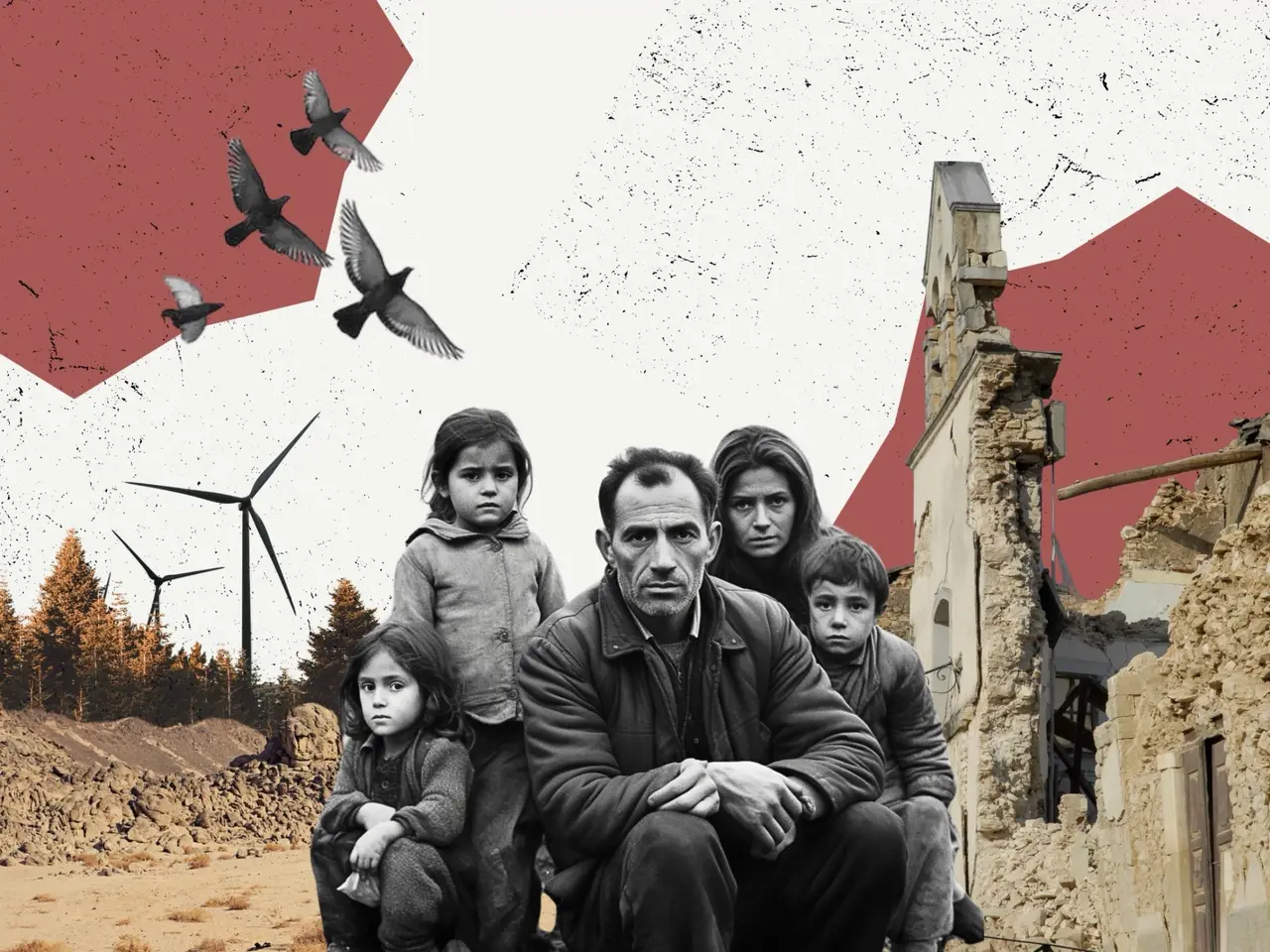
1. Climate Change and Human Security
Climate change affects human security through a complex web of environmental stress and social processes. Rising temperatures, prolonged droughts, floods, wildfires, stronger storms, and sea-level rise directly threaten human lives and livelihoods. The most recent examples of these threats are the wildfire outbreaks in Spain and France, which have been devastating and uncontrollable. However, the security implications extend far beyond immediate physical destruction.
Extreme weather events, for example drought, reduce agricultural productivity, damage infrastructure, displace populations, and reduce trust in public institutions. These effects are particularly severe in countries with weak governance and limited state capacity, since these conditions affect responsiveness to disasters. Economic hardship and limited political marginalisation increase vulnerability to climatic shocks as well. In contexts such as these, environmental shocks can overwhelm governments’ ability to provide basic services, increasing dependence on humanitarian assistance and raising the risk of political instability.
Importantly, climate change should not be understood as a threat multiplier as often argued, but rather as a phenomenon whose impact largely depends on the contexts in which it occurs. Existing social, political, and economic vulnerabilities largely determine whether climate shocks lead to humanitarian crises or violent conflict; the effect is not universal. A drought occurring in a wealthy country with strong institutions may cause economic losses but remain manageable, and an increase in conflict risk is not observable and statistically insignificant. The same drought in a fragile state with pre-existing struggles like widespread poverty caused by economic struggles would likely trigger increased conflict risk and a high sense of insecurity and vulnerability.
The following sections examine three of the most important pathways linking climate change to human security.
2. Humanitarian Aid
One of the evident consequences of climate change is the growing demand for humanitarian assistance. Humanitarian organisations increasingly respond to disasters that are intensified by shifting climatic conditions, which include a wide variety of factors such as floods, tropical cyclones, droughts, heatwaves, and wildfires. This shift reflects a broader recognition that climate change is not creating isolated emergencies but rather a long-term transformation in global humanitarian needs.
Over recent decades, the number of people affected by climate-related disasters has risen substantially; the number will continue to rise substantially. Although improvements in early warning systems have reduced mortality from many natural hazards, the economic and humanitarian impacts continue to increase. More people now live in disaster-prone areas, while climate change makes many extreme weather events more intense and frequent.
The humanitarian consequences are immediate. Floods destroy homes and infrastructure, forcing communities to seek emergency shelter. Droughts lead to crop failures and livestock losses, increasing food insecurity and malnutrition. Heatwaves threaten public health, particularly among vulnerable populations such as children and the elderly. Rising sea levels gradually render coastal communities increasingly uninhabitable, creating slow-onset displacement that challenges existing humanitarian frameworks.
Climate-related displacement has become an increasingly important issue. Unlike refugees fleeing armed conflict, many people displaced by environmental factors remain within their own countries, making them internally displaced persons rather than international refugees. However, the distinction between environmental and conflict-related displacement is often blurred. Climate shocks can contribute to economic hardship, which in turn interacts with political instability and violence, creating multiple overlapping drivers of migration.
Humanitarian organisations face several challenges in responding to these growing needs. First, climate-related disasters are becoming more frequent, leaving less time for recovery between successive crises. Communities that experience repeated floods or droughts often struggle to rebuild their livelihoods before the next disaster occurs.
Second, funding has decreased on a global level. Humanitarian needs are growing faster than available resources. International agencies such as the United Nations, the International Committee of the Red Cross, and numerous non-governmental organisations increasingly face difficult decisions regarding the allocation of limited funds across multiple simultaneous emergencies. The emerging multipolar world and the increasing focus on narrow national interests have led to the slashing of humanitarian assistance funding, most notably USAID in the US and German funding efforts.
Third, humanitarian responses themselves must adapt to changing climatic conditions. Rather than focusing exclusively on emergency relief, aid organisations increasingly invest in climate adaptation and resilience-building efforts. Examples include constructing flood-resistant infrastructure, supporting drought-resistant agriculture, and improving early warning systems. Further efforts emphasise the need to strengthen local disaster preparedness.
3. Food Security
Food security represents perhaps the most direct link between climate change and human well-being. According to the Food and Agriculture Organization (FAO), food security exists when all people have physical and economic access to sufficient, safe, and nutritious food at all times. Climate change threatens each of these dimensions simultaneously.
Agriculture is highly dependent on stable climatic conditions. Temperature increases, changing rainfall patterns, prolonged droughts, floods and more frequent extreme weather events reduce agricultural productivity across many regions. While some high-latitude countries may temporarily benefit from longer growing seasons, the overall global impact is expected to be negative, particularly in tropical and subtropical regions where many developing countries are located.
Crop yields for major staple foods like maize or rice are projected to decline under continued warming. Higher temperatures lead to accelerated evaporation and reduced plant growth. There is also some evidence that crops become less nutritious due to climate change. In many regions, rainfall has become more unpredictable, making agricultural planning increasingly difficult.
Livestock production is similarly affected. Heat stress reduces animal productivity, while changing disease patterns increase risks for both livestock and humans. Fisheries also face significant challenges due to warming oceans, coral bleaching, and changing marine ecosystems.
The consequences extend beyond food production itself. Reduced harvests contribute to rising food prices, which disproportionately affect poor households that spend a larger share of their income on food. Even relatively small increases in food prices can significantly reduce food access among vulnerable populations.
Food insecurity also has important health implications. Undernutrition weakens immune systems, increases child mortality, and reduces cognitive development. Children experiencing chronic malnutrition often suffer lifelong consequences, including lower educational attainment and reduced economic productivity.
Climate change also increases the likelihood of simultaneous harvest failures across multiple regions. Historically, poor harvests in one country could often be offset through international trade. However, if several major agricultural producers experience climate-related production losses simultaneously, global food markets become more volatile, increasing the risk of widespread food price shocks.
Adaptation strategies offer opportunities to reduce these risks. Climate-smart agriculture seeks to improve productivity while increasing resilience to climate change. Examples include drought-resistant crop varieties, improved irrigation systems, precision agriculture, agroforestry, and better soil management practices. Technological innovation, combined with effective governance and investment in rural infrastructure, will play an important role in maintaining global food security under changing climatic conditions.
4. Civil Conflict
The relationship between climate change and violent conflict has generated considerable debate within political science and security studies. While early research sometimes portrayed climate change as a direct cause of war, more recent scholarship presents a more nuanced understanding. Climate change rarely produces violent conflict independently. Instead, it interacts with existing political, economic, and social vulnerabilities.
This perspective views climate change as a threat multiplier. Environmental shocks increase stress within societies, but whether that stress results in violence depends on institutional capacity, governance quality, inequality, and existing grievances. Several mechanisms help explain how climate change may contribute to civil conflict.
First, climate-related resource scarcity can increase competition over land, water, and grazing areas. In regions where livelihoods depend heavily on natural resources, prolonged droughts or declining agricultural productivity may intensify disputes between communities. Such conflicts are particularly likely where institutions responsible for resource management are weak or absent.
Second, climate change may contribute to economic shocks. Bad agricultural yields reduce household incomes and increase unemployment. Economic hardship can increase support for armed groups that offer financial benefits and protection. Research on armed group recruitment frequently highlights economic vulnerability as one important factor influencing individuals’ decisions to participate in violence. Cross-national statistical studies generally find a relationship between climatic variability and certain interpersonal violence, often with a gendered effect.
One particularly important insight from recent research concerns individual vulnerability. Individuals experiencing environmental pressures can become more susceptible to recruitment by armed groups if participation in the group offers alternative sources of income or violent tendencies can be satisfied by joining. This micro-level perspective complements broader structural explanations by focusing on how environmental stress influences individual decision-making. Small arms are also relevant in this equation, as people have a need to defend themselves and their resources, which leads to them purchasing or manufacturing weapons.
At the same time, climate adaptation can also contribute to peacebuilding. Effective governance of natural resources, investment in climate-resilient infrastructure, inclusive development policies and improved disaster preparedness all reduce vulnerability and strengthen the kind of societal resilience that is necessary to address challenges caused by climate shocks. By addressing underlying inequalities and improving institutional quality, governments can reduce the likelihood that climate-related shocks escalate into violent conflict.
5. Health Security and Environmental Epidemics
Health security represents an integral yet frequently understated pillar of the human security framework originally conceptualized by the United Nations Development Programme. Climate change acts as a primary stressor on global public health infrastructure, directly altering disease transmission pathways, exacerbating environmental health hazards, and driving up global morbidity and mortality rates. Rising mean global temperatures, fluctuating precipitation patterns, and altered humidity levels expand the geographic range and seasonal duration for vector-borne diseases. Mosquito species carrying malaria, dengue fever, yellow fever, and Zika virus thrive in warmer, wetter environments, exposing previously unexposed populations in higher altitudes and temperate zones to novel epidemiological threats.
Simultaneously, waterborne pathogens proliferate under conditions of extreme hydrological instability. Intense flooding events routinely contaminate municipal water supplies and rural wells with sewage and runoff, triggering widespread outbreaks of cholera, dysentery, and diarrheal illnesses that disproportionately afflict young children and immunocompromised individuals. Conversely, severe and prolonged droughts compel communities to rely on unsafe, stagnant water sources, severely degrading hygiene standards and escalating public health emergencies. Thermal stress further compounds these risks; extreme heatwaves elevate cardiovascular and respiratory mortality, particularly among vulnerable urban populations lacking adequate green space and cooling infrastructure.
The physical disruption of local healthcare systems during acute climate shocks creates a compounding health crisis. Floods, tropical storms, and uncontrollable wildfires routinely destroy clinical facilities, disrupt pharmaceutical supply chains, and displace medical personnel. This sudden collapse in healthcare delivery halts routine immunization programs, maternal care, and chronic disease management, rapidly converting acute environmental hazards into long-term public health disasters. Consequently, climate-induced health crises strain state capacity, erode labor productivity, and heighten systemic individual vulnerability.
6. Institutional Governance and Climate Finance
Addressing the multidimensional security threats posed by climate change requires robust institutional governance frameworks and targeted climate finance mechanisms. However, a persistent gap remains between high-level international policy pledges and local implementation, particularly within fragile, low-income, and conflict-affected nations. Effective climate governance demands interdisciplinary cooperation across government ministries, breaking down institutional silos to integrate environmental management directly with national security, public health, social protection, and economic planning.
A central structural obstacle in global climate governance is the inequitable distribution and accessibility of climate finance. Although developing nations contribute the least to cumulative historical greenhouse gas emissions, they bear the overwhelming burden of climate-induced security risks, infrastructural damage, and socioeconomic dislocation. International financial mechanisms established under the United Nations Framework Convention on Climate Change (UNFCCC)—such as the Green Climate Fund and the Loss and Damage Fund—aim to redress this historical imbalance. Nevertheless, total financial disbursements remain far below required levels, and complex administrative bureaucracy frequently delays the flow of funds to vulnerable frontline communities.
Furthermore, international climate finance allocation remains heavily skewed toward mitigation projects—such as renewable energy transitions—rather than adaptation and resilience-building initiatives in vulnerable regions. Without dedicated adaptation funding for flood-resistant infrastructure, early warning systems, sustainable water management, and agricultural diversification, fragile states cannot build the institutional capacity required to absorb climate shocks. Strengthening climate governance therefore requires not only increasing total financial commitments from high-income economies but also streamlining direct access for local institutions and civil society organizations operating on the frontlines of climate insecurity.
7. Policy Imperatives for Integrated Human Security
To mitigate the interconnected risks outlined in this analysis, international actors and domestic governments must transition from reactive emergency response to proactive, integrated human security strategies. Security policies that rely exclusively on traditional military deterrence or border fortification are fundamentally ill-equipped to address the complex socioeconomic and environmental drivers of climate-induced instability. Instead, national governments, international organizations, and civil society actors must adopt a holistic human security approach that explicitly aligns climate adaptation, humanitarian assistance, peacebuilding, and sustainable economic development.
First, early warning systems must be systematically integrated into regional conflict prevention frameworks. Predictive risk modeling that combines meteorological data, satellite imagery, agricultural forecasts, and local socioeconomic indicators can help policy analysts identify emerging hotspots of climate-induced resource scarcity before local competition escalates into violent conflict. Second, international aid organizations and donor agencies must bridge the longstanding divide between short-term emergency relief and long-term development by embedding climate resilience directly into disaster recovery programs.
Finally, policy design and implementation must prioritize the active inclusion of marginalized populations—including indigenous communities, women, and youth—who possess vital local ecological knowledge regarding natural resource management and community adaptation strategies. By reinforcing local democratic governance, ensuring equitable climate finance distribution, and safeguarding fundamental human rights, the international community can foster resilient societies capable of navigating the complex security landscape of a warming world.
8. Conclusion
Climate change has fundamentally altered the landscape of human security. Its consequences extend well beyond environmental degradation to affect humanitarian needs, food systems, economic livelihoods, migration and political stability. Rather than viewing climate change solely as an ecological challenge, it should increasingly be understood as a multidimensional security issue that affects individuals, communities, and states alike.
The evidence suggests that climate change does not directly cause humanitarian crises or civil wars. Instead, it amplifies existing vulnerabilities. Countries characterised by poverty, weak governance, inequality, and political instability are generally the most vulnerable to climate-related insecurity. Consequently, addressing climate change requires more than reducing greenhouse gas emissions. It also demands investments in governance, social protection, disaster preparedness, sustainable agriculture, and conflict prevention.
Humanitarian organisations must increasingly balance emergency response with long-term resilience-building. Food systems must become more adaptive to changing climatic conditions while ensuring equitable access to nutritious food. Governments must strengthen institutions capable of managing climate-related risks before they evolve into broader security challenges.
Ultimately, climate change represents one of the defining human security issues of the twenty-first century because it simultaneously affects multiple dimensions of human well-being. Addressing its consequences therefore requires integrated policies that combine climate mitigation, adaptation, development, and peacebuilding. Strengthening human security in a warming world is not only an environmental necessity but also a political, economic, and humanitarian imperative.
References
Amnesty International. (2025, October). When people are displaced by climate change, what rights do they have? https://www.amnesty.org/en/latest/campaigns/2025/10/when-people-are-displaced-by-climate-change-what-rights-do-they-have/
Benos, N., Karagiannis, S., & Kiriakidou, M. (2025). The economic impact of climate change: A meta-analysis. Economic Policy, 40(123), 651–692. https://doi.org/10.1093/epolic/eiae056
Doctors Without Borders. (2026). Ebola disease outbreak 2026: How MSF is responding. https://www.doctorswithoutborders.org/latest/ebola-disease-outbreak-2026-how-msf-responding
Food and Agriculture Organization of the United Nations. (1997). The impact of climate change on agriculture. FAO Corporate Document Repository. https://www.fao.org/4/w4979e/w4979e05.htm
Gleditsch, N. P., Furlong, K., Hegre, H., Lacina, B., & Owen, T. (2008). Conflicts over shared rivers: Resource scarcity or domestic politics? Journal of Peace Research, 45(2), 203–219. https://doi.org/10.1177/0022343308088812
International Food Policy Research Institute. (2023). Will extreme weather lead to multiple breadbasket failures and threaten global food security? https://www.ifpri.org/blog/will-extreme-weather-lead-to-multiple-breadbasket-failures-and-threaten-global-food-security/
Médecins Sans Frontières. (n.d.). Humanitarian aid cuts. https://www.msf.org/humanitarian-aid-cuts
No Kid Hungry. (2018). The economic impact of child hunger in the United States. https://www.nokidhungry.org/sites/default/files/child-economy-study.pdf
Organisation for Economic Co-operation and Development. (2024). Impacts and costs of droughts. In Global drought outlook (Full report). OECD Publishing. https://www.oecd.org/en/publications/global-drought-outlook_d492583a-en/full-report/impacts-and-costs-of-droughts_b407ba90.html
The New York Times. (2026, July 29). Wildfires rage across Spain and France amid extreme heatwave. The New York Times. https://www.nytimes.com/2026/07/29/world/europe/wildfires-spain-france.html
United Nations. (2025, April). Extreme weather events threatening global stability, UN warns. UN News. https://news.un.org/en/story/2025/04/1162461
United Nations Development Programme. (1994). Human development report 1994. Oxford University Press. https://hdr.undp.org/system/files/documents/hdr1994encompletenostats.pdf
United Nations Development Programme. (n.d.). What is climate change adaptation and why is it crucial? Climate Promise. https://climatepromise.undp.org/news-and-stories/what-climate-change-adaptation-and-why-it-crucial
World Health Organization. (2023, October 12). Climate change and health. https://www.who.int/news-room/fact-sheets/detail/climate-change-and-health