


1. Bishkek and the contradictions of the Shanghai Cooperation Organisation
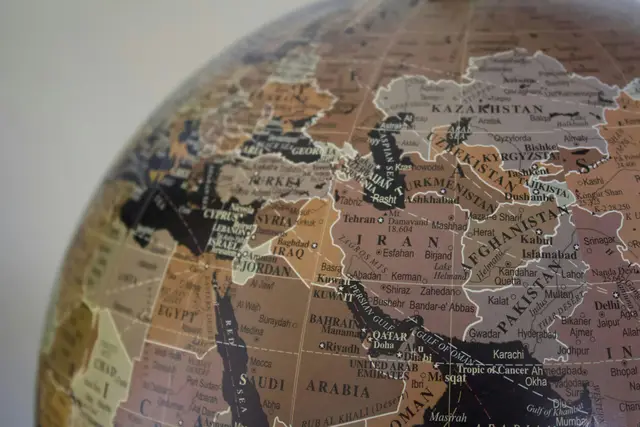
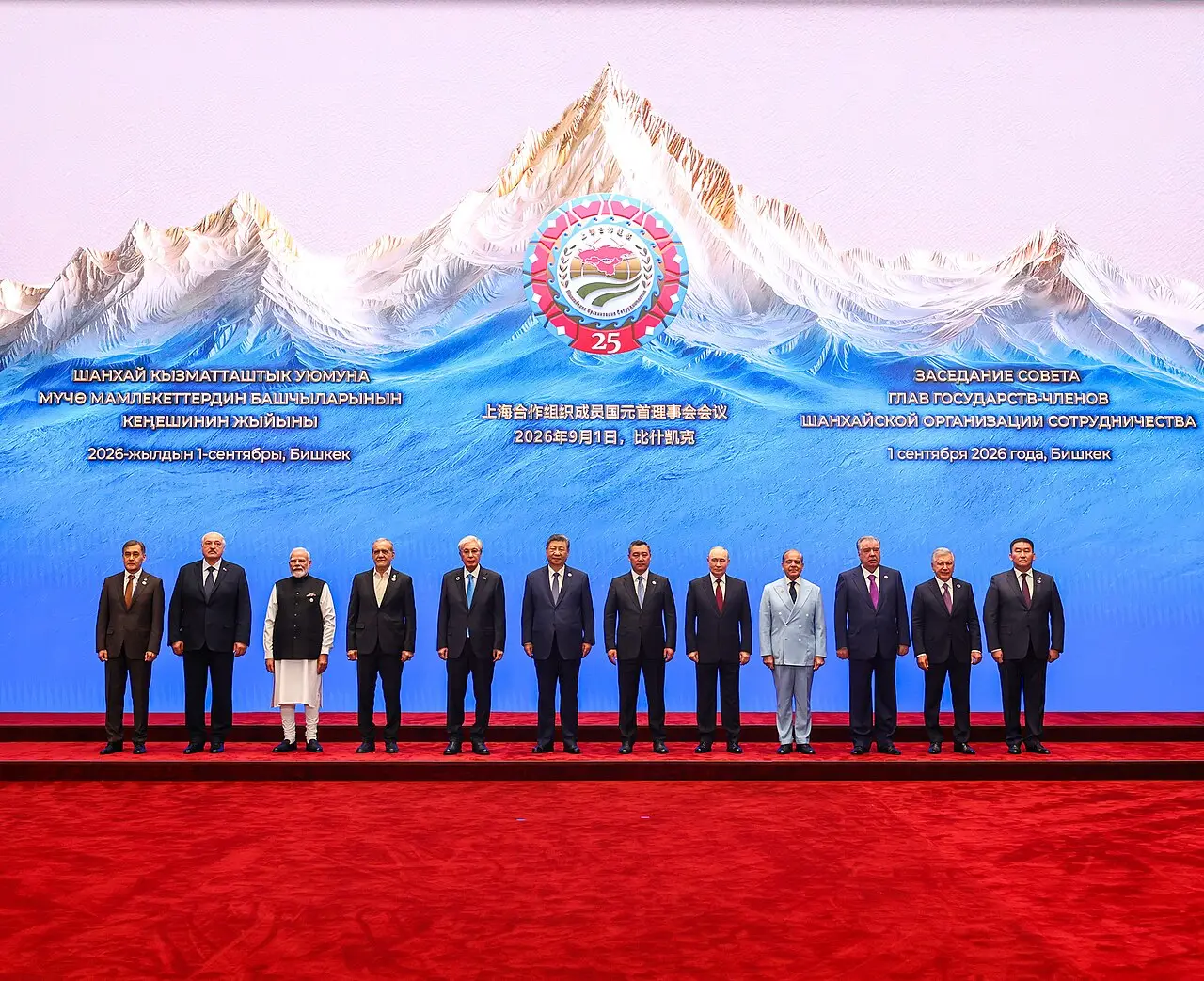
Twenty-five years after its establishment, the Shanghai Cooperation Organisation (SCO) has grown to the largest regional organisation in the world by landmass, population, and Gross Domestic Product (GDP) (Global Times, 2026, September 2). The organisation now comprises ten member states, including China, India, Russia, Iran, Pakistan, and four Central Asian republics, whose leaders met this year in Bishkek, Kyrgyzstan, from 31. of August to 01. of September 2026.
What brings all these countries together is not necessarily agreement on everything. Analysts increasingly view the SCO as a counterweight to US influence, a partnership through which China and Russia can advance their vision of the global order. However, the organisation’s diversity prevents it from functioning as a simple Eastern front against the West, and the SCO’s smaller members can use the China-India-Russia-dominated forum without becoming subordinate to any single major power (The Diplomat, 2026, September 11). Despite these divergent interests, the summit produced considerable output: member states signed 28 documents, mostly declarative frameworks rather than binding commitments, including the Bishkek Declaration marking the SCO’s 25th anniversary, a charter amendment protocol, and agreements on security, trade, technology, and climate. Notably, what drove much of the concrete institutional progress was individual member states, not the organisation’s three largest powers: Xi Jinping used the summit to establish an international cooperation centre on Artificial Intelligence (AI) applications for SCO countries, Uzbekistan proposed an industrial cooperation mechanism (Gazeta, 2026, September 26), and Tajikistan advanced a regional digital agro-ecological platform (Trend news agency, 2026, September 1). Such a diverse coalition converging on a single package, while its smaller members simultaneously advanced their own initiatives within it, hints that consensus in the SCO does not require the member states to share a common strategic vision.
This suggests that the SCO’s strength may lie in its capacity for cooperation without full strategic alignment, as Kyrgyzstan’s positioning in Bishkek illustrates. Like other Central Asian states, it maintains close ties with Russia, builds new ones with China, and remains open to Europe and Washington, reflecting the region’s broader “multi-vector” foreign policy of engaging with competing powers rather than aligning exclusively with one. Kyrgyzstan used the summit to advance its own national priorities: it promoted the China-Kyrgyzstan-Uzbekistan railway and advanced Bishkek as the proposed SCO development bank headquarters (Xinhua, 2026, August 30). The bank has nevertheless been discussed for years without implementation, partly because earlier Chinese proposals would have given Beijing a dominant financial role, which Russia resisted. Its geography and topography mean it depends on transport corridors, imported energy, and external markets, leaving the economy exposed to shocks beyond its borders and giving Kyrgyzstan an incentive to use forums such as the SCO while maintaining alternative partnerships, including with the US through the C5+1 format.
2. Where the Unity Comes From
Despite their different interests, SCO members share a common set of principles concerning the international order. The organisation consistently emphasises state sovereignty, territorial integrity, and non-interference in domestic affairs (The Shanghai Cooperation Organisation, 2026, July 25). At the same time, it advocates a more representative, multipolar international system centred on international law and the United Nations. These principles provide a relatively broad basis for cooperation: members do not need to agree on individual conflicts or strategic priorities to support an international order in which states have greater autonomy from external interference.
This emphasis on sovereignty extends into the economic sphere. SCO members have repeatedly criticised unilateral coercive measures as contrary to international law, and although their exposure to sanctions varies considerably, opposition to unilateral economic pressure provides further common ground. In this sense, the SCO’s calls for greater economic autonomy complement its preference for a more multipolar political order. In the months leading up to Bishkek, SCO finance ministers discussed deepening financial cooperation, expanding use of national currencies in mutual settlements and progressing consultations on an SCO Development Bank (The Shanghai Cooperation Organisation, 2026, May 30). Energy ministers similarly discussed implementation of the Strategy for Energy Cooperation Development until 2030 (The Shanghai Cooperation Organisation, 2026, June 19). These initiatives illustrate an important feature of SCO cooperation as it shows states with divergent orientations can still find common interests in reducing financial vulnerability and improving connectivity.
The summit’s position on Iran perhaps demonstrates this common ground. In the Bishkek Declaration, SCO members condemned military strikes on Iranian territory as violations of international law and the UN Charter and reaffirmed their support for Iran’s sovereignty and territorial integrity (Al Jazeera, 2026, September 1). The declaration also opposed unilateral coercive measures and supported Iran’s rights as a member of the Nuclear Non-Proliferation Treaty. Despite their contrasting relationships with Iran and the West, a membership comprising China, Russia, India, and Pakistan collectively endorsed this position. It shows how their principles of sovereignty and opposition to external coercion can generate a collective SCO position even when wider strategic alignments differ.
3. The Limits of Alignment
But this alignment has clear limits. The most prominent rift is the recurring friction between India and Pakistan over how the SCO should address terrorism. Since the late 1980s, India has accused Pakistan of arming, financing and sheltering armed groups fuelling the rebellion in Indian-administered Kashmir. This suspicion resurfaced after the 2025 Pahalgam attack, when India refused to sign the joint statement at the Qingdao defence ministers’ meeting because the draft omitted any reference to the attack (PIME Asia news, 2026, September 27). The same friction resurfaced at the summit itself, where the final declaration condemned terrorism “in all its forms and manifestations” (Telangana News, 2026, September 3), citing both the Pahalgam and Balochistan attacks. This offered Modi partial vindication without naming Pakistan directly. Such tensions are not limited to India and Pakistan: Kyrgyzstan and Tajikistan remained active members despite deadly border clashes in 2021 and 2022, as did India and China after the 2020 Galwan Valley confrontation. The SCO can therefore accommodate bilateral disputes alongside multilateral cooperation.
Another manifestation of these tensions is the India-Russia partnership. Historically centred on defence, it has expanded rapidly into energy, nuclear cooperation, trade, and technology, with bilateral trade in goods rising more than fourfold, from about US dollars (USD) 13 billion in 2021-22 to nearly USD 60 billion in 2025-26 (Ministry of External Affairs, Government of India, 2026, August 25). The two countries demonstrate this stability through continued engagement in the India-Russia Inter-Governmental Commission on Trade, Economic, Scientific, Technological and Cultural Cooperation (IRIGC-TEC). Nevertheless, this partnership has recently experienced some tensions over Russia’s invasion of Ukraine, which represented one of the summit’s focuses (Euronews, 2026, September 1). Although India refused to impose sanctions against Moscow and continued its economic engagement with Russia, it has repeatedly drawn attention to the necessity of diplomacy (Australian Institute of International Affairs, 2026, 16 September) in settling the conflict. This culminated when Indian Prime Minister Modi told Russian President Putin on live television to end this war against Ukraine (Deutsche Welle, 2026, September 1).
Alignment is also limited from within by a growing asymmetry between its two dominant powers. Russia’s historical role as a security guarantor in Central Asia has been challenged by the invasion of Ukraine and the subsequent Western sanctions. This eroded Moscow’s leverage in the region, forcing its dependence on Beijing and deepening the power imbalance between the two countries as they compete for influence in Central Asia (France 24, 2026, August 30), through SCO summits as well.
4. What Kind of Organisation Is the SCO Becoming?
The areas of common ground in the SCO should not be confused with the emergence of a conventional geopolitical alliance. The SCO itself stresses that it is not directed against other states (The Shanghai Cooperation Organisation, 2026, July 25) or international organisations and bases its cooperation on sovereignty and non-interference. This makes it fundamentally different from an alliance model built around rigid geopolitical alignment. Observers therefore view the organisation as a forum for cooperation rather than an “Asian NATO”. Participation does not require members to adopt an identical foreign policy.
Instead, Bishkek suggests that the SCO is developing into a platform where states with substantially different foreign policies can coordinate where their interests overlap. India illustrates this well: analysts at the East Asia Institute describe it as participating selectively in the SCO while managing its relations with the United States and Japan through the Quad. (East Asia Institute, 2026, September 1). Another East Asia Institute (EAI) analysis consequently characterises India’s participation as making the grouping less of a purely anti-Western alliance and more of a loose coalition seeking a multipolar order (East Asia Institute, 2026, August 30).
The result is an organisation whose cohesion should not necessarily be measured by the standards of a traditional alliance. India continues to participate selectively in the SCO while maintaining important relationships outside it, and Central Asian states retain incentives to balance among larger powers rather than align exclusively with one of them. Bishkek therefore did not erase the SCO’s internal strategic differences. Instead, it demonstrated that the organisation can facilitate cooperation without first requiring those differences to disappear. Its potential strength may lie in this flexibility. It has enough common interests to coordinate, without the level of strategic alignment expected from a conventional geopolitical bloc. However, this flexibility also limits collective action: the SCO can accommodate disputes more easily than it can resolve them. Future research should therefore examine whether this flexibility produces substantive outcomes beyond summit declarations. In particular, the SCO’s planned development bank and greater use of national currencies offer test cases for whether institutional cooperation can translate into meaningful economic autonomy.
References
Global Times (2026, September 2). Xi puts forward four-point proposal at SCO Bishkek Summit. https://www.globaltimes.cn/page/202609/1369605.shtml
The Diplomat (2026, September 11). SCO Summit Produces Surprising Winners. https://thediplomat.com/2026/09/sco-summit-produces-surprising-winners/
Gazeta (2026, September 26). President of Uzbekistan proposes “SCO-2040: A Space for Common Development” Vision. https://www.gazeta.uz/en/2026/09/02/sco/
Trend news agency (2026, September 1). President of Tajikistan proposes creating economic growth zones within SCO. https://www.trend.az/casia/tajikistan/4219428.html
Xinhua (2026, August 30). China-Kyrgyzstan-Uzbekistan railway under construction. https://english.news.cn/20260830/d9ec809bec9443ba8b52cc7d209c4aba/c.html
The Shanghai Cooperation Organisation (2026, July 25). Statement by the Council of Foreign Ministers of the Shanghai Cooperation Organisation. https://eng.sectsco.org/20260725/2470939.html
The Shanghai Cooperation Organisation (2026, May 30). SCO Member States’ Finance Ministers and Central (National) Bank Governors Meet In Bishkek. https://eng.sectsco.org/20260530/2340465.html
The Shanghai Cooperation Organisation (2026, June 19). The 6th Meeting of Energy Ministers of the SCO Member States takes place in Bishkek. https://eng.sectsco.org/20260619/2392065.html
Al Jazeera (2026, September 1). SCO slams attacks, sanctions on Iran: Key takeaways from Bishkek summit. https://www.aljazeera.com/news/2026/9/1/sco-slams-attacks-sanctions-on-iran-key-takeaways-from-bishkek-summit
PIME Asia news (2026, September 27). SCO summit slams terrorism, but for India, tensions with Pakistan remain. https://www.asianews.it/en/east-asia/china/sco-summit-slams-terrorism-but-for-india-tensions-with-pakistan-remain
Telangana News (2026, September 3). Strong message from Bishkek Declaration. https://telanganatoday.com/editorial-strong-message-from-bishkek-declaration
Ministry of External Affairs, Government of India (2026, August 25). EAM’s Opening Remarks during the 27th Session of the India-Russia Inter-Governmental Commission on Trade, Economic, Scientific, Technological and Cultural Cooperation (IRIGC-TEC). https://www.mea.gov.in/speeches-statements?dtl/41696/EAMs_Opening_Remarks_during_the_27th_Session_of_the_IndiaRussia_InterGovernmental_Commission_on_Trade_Economic_Scientific_Technological_and_Cultural_Cooperation_IRIGCTEC
Euronews (2026, September 1). SCO challenges West as diverse group of nations pursues multipolar future. https://www.euronews.com/2026/09/01/sco-challenges-west-as-diverse-group-of-nations-pursues-multipolar-future
Australian Institute of International Affairs (2026, 16 September). Modi–Putin at the SCO: From Bishkek to BRICS and the Future of India–Russia Ties. https://www.internationalaffairs.org.au/australianoutlook/modi-putin-at-the-sco-from-bishkek-to-brics-and-the-future-of-india-russia-ties/
Deutsche Welle (2026, September 1). At SCO summit, Modi urges Putin to end Ukraine war. https://www.dw.com/en/sco-summit-modi-putin-ukraine-war/video-78654478
France 24 (2026, August 30). Putin, Xi set for Central Asia summit as Russia and China seek to counter Western influence. https://www.france24.com/en/asia-pacific/20260830-putin-xi-set-for-central-asia-summit-as-russia-china-seek-to-counter-western-influence
The Shanghai Cooperation Organisation (2026, July 25). Statement by the Council of Foreign Ministers of the Shanghai Cooperation Organisation. https://eng.sectsco.org/20260725/2470939.html
East Asia Institute (2026, September 1). Reinterpreting Eurasian Alignment After the SCO Summit: An Anti-Western Bloc or Asynchronous Hedging?. https://global.eai.or.kr/en/reports/990485
East Asia Institute (2026, August 30). Russia-China-Iran-India Leaders’ Meeting in Kyrgyzstan and the Reshaping of the Eurasian Security Architecture. https://global.eai.or.kr/en/reports/990471