

1. Introduction
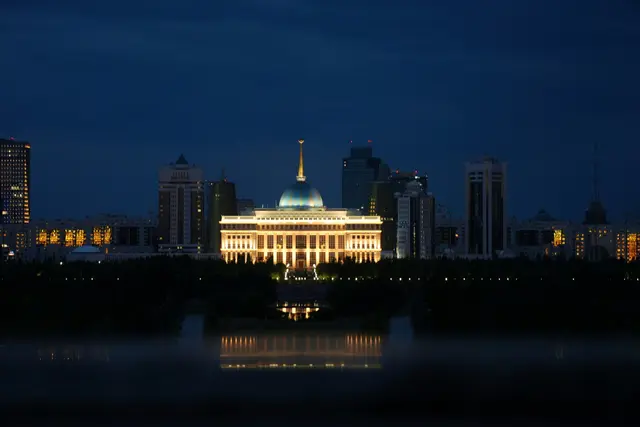
In November 2025, Kazakhstan and Russia signed a declaration elevating their relationship to a “Comprehensive Strategic Partnership and Alliance.” However, the timing is telling: just months prior, Tokayev had stood next to Xi Jinping in Astana for a separate “comprehensive strategic partnership” with China, and just days before heading to Moscow, he had been in Washington signing deals worth about $17 billion with Donald Trump (Bland, 2025). Around the same time, Armenia seemed to be moving in the opposite direction, refusing to pay dues, freezing its membership in the Russian-led CSTO, and pushing a measure to begin EU accession through parliament. After Putin asserted that the CSTO had no duty to intervene in the 2020 Nagorno-Karabakh war since it technically took place outside of Armenian territory, Prime Minister Nikol Pashinyan went further and told parliament that Armenia had reached the “point of no return” with the alliance (Laitadze, 2026; Nasibova, 2025).
These cases seem to tell opposite stories about Russian power in its former sphere, but the contradiction largely arises from looking only at official declarations. This article asks a more precise question: rather than whether Russia is simply “gaining” or “losing” influence, has it lost the ability to actually compel its neighbours, even where a close relationship still appears intact on paper?
It is necessary to explore beyond formal assertions to find the solution. Rather than relying on any one force, Kazakhstan pursues a “multi-vector” foreign policy that carefully balances Russia, China, the US, and Europe (Serikuly, 2025). It seeks to advance cooperation and diplomatic principles, which could position Kazakhstan as a regional leader and create opportunities and authority. One Russian military commentator even complained on Telegram, to nearly 300,000 viewers, that Russia seemed to be “losing the game” in Central Asia at the very moment the new alliance was signed (as cited in Kim, 2025). Armenia, by contrast, shows the opposite: Yerevan plans to remain in the Russian-led Eurasian Economic Union despite freezing its CSTO membership. Eurasianet calls this “tactical pragmatism rather than an ideological compromise,” driven by the country’s ongoing reliance on Russian gas and its diaspora (Laitadze, 2026). In other words, the official stances of both nations are not entirely consistent with their real actions.
Ukraine is a significant factor in both stories, even though neither country borders the conflict. For Kazakhstan, the war was a warning; Tokayev’s public refusal to recognise the Donetsk and Luhansk “republics” broke sharply with expected post-Soviet solidarity (Ibadildin & Ryzhkov, 2026). For Armenia, the war removed Russia’s excuse for inaction. When Azerbaijan retook Nagorno-Karabakh in 2023, and Russian peacekeepers failed to act, Yerevan concluded Moscow could no longer honour its commitments elsewhere (Hedenskog, 2023). Ukraine did not create these tensions, but it removed the remaining reasons to manage them quietly.
2. Conceptual Framework: Differences In Approaches.
In order to compare the two cases rigorously, it is beneficial to look at Alexander Cooley’s study of Central Asia’s “New Great Game”, which argues that regional states are not passive recipients of great-power pressure but active agents who set “local rules” that condition how much leverage any single outside power can actually exercise (Cooley, 2012).
Building on Cooley’s frameworks, we can suggest that Russia’s declining weight in the post-Soviet space appears to follow two qualitatively different patterns. In some cases, diffusion is subsequent: a state diversifies its trade partners, security cooperation, and diplomatic engagements, so Moscow’s influence in the relationship shrinks even as the relationship itself remains active or continues to grow in absolute terms. As Koga (2018) describes, this pattern aligns with what the hedging literature calls “multi-vector” foreign policy, in which states pursue counteracting strategies along a balancing–bandwagoning spectrum to avoid dependence on any single external patron. Additionally, Cooley’s (2012) study of Central Asia after 2001 illustrates this dynamic empirically: rather than acting as passive objects of a renewed great-power contest among Russia, China, and the United States, Central Asian governments deliberately cultivated competing external offers from “multiple principals,” using that competition to entrench their own bargaining position and have the leverage of any one major country. Nothing about this process means a failure in the relationship with Russia or requires its permission. It suggests only that credible partner countries become available and increasingly attractive over time.
The opposite path can occur when a decline follows a single visible moment in which a core promise between countries, which is usually a security guarantee, is broken publicly, prompting an abrupt and openly stated reassessment by the leadership of the dependent state. The CSTO’s non-intervention during the 2020 and 2022 escalations between Armenia and Azerbaijan may be viewed as the clearest post-Soviet example of an event that breaks security guarantees and delegitimises Russia as a leader in the region. Yerevan’s reassessment of Russia as a security guarantor was not a slow drift but a direct, vocal response to Moscow’s failure to act (Rumer, 2023).
3. Kazakhstan and Armenian Case Studies
3.1 Kazakhstan Case Study
At the outset of the Ukraine war, Kazakhstan was arguably Russia’s most structurally interlocked partner in the region. The two states share the world’s longest continuous land border, Kazakhstan’s north holds a sizeable ethnic Russian population, and its economy remains closely tied to Russia’s through the EAEU customs union. This dependence peaked just weeks before the invasion, when, in January 2022, after unrest in Almaty, President Kassym-Jomart Tokayev invoked Article 4 of the CSTO treaty to request a Russian-led intervention force, the bloc’s first deployment of its kind. Troops arrived within days and withdrew by January 19, having helped restore Tokayev’s grip on power (Eurasian Research Institute, n.d.; Kucera, 2022).
Since 2022, Kazakhstan’s trajectory has been one of steady diversification rather than rupture, a shift that has diluted Russia’s relative weight without breaking the relationship itself. Astana has expanded its “multi-vector” approach into a balancing act across at least six tracks: Russia, China, Europe, the United States, the Turkic world, and the Gulf states, complemented by growing use of the Middle Corridor, a transit route that bypasses Russian territory entirely (Kukeyeva, 2025). China’s role has expanded considerably within this portfolio: the second China–Central Asia summit, held in Astana in June 2025, secured agreements across energy, infrastructure, and digital technology, even as Kazakhstan pursued parallel high-level talks with Washington on critical minerals and investment (Serikuly, 2025). Tokayev’s positioning on the war itself has been similarly measured as he has declined to recognise Russia’s territorial claims in Ukraine, while continuing to project warmth in his bilateral rhetoric with Putin.
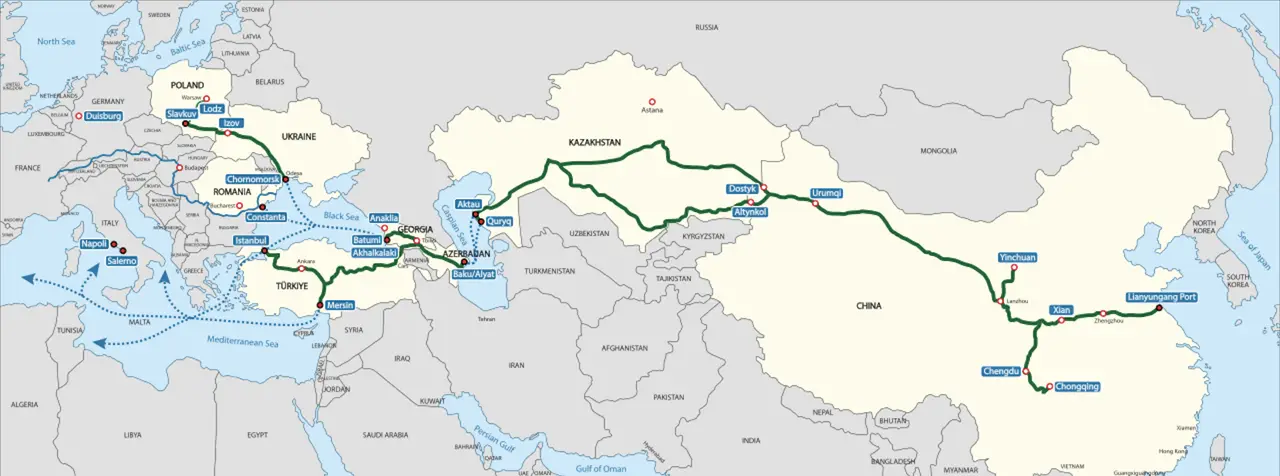
The Middle Corridor is an alternative China–Europe trade route bypassing Russia. Crucially, this diversification has not diminished the absolute relationship with Russia. Bilateral trade turnover held at roughly $26–27 billion in 2022–2023 and climbed to nearly $30 billion in 2024, with Tokayev and Putin signing a “comprehensive strategic partnership” declaration in Moscow as recently as November 2025 (Bland, 2025). Within the EAEU specifically, Kazakhstan’s trade remains overwhelmingly oriented toward Russia: as of 2023–2024, roughly 91 per cent of its EAEU trade turnover was with Russia alone (Bureau of National Statistics, 2025). Indeed, one recent comparative economic study finds that sanctions on Russia have, if anything, increased Moscow’s reliance on Central Asian trade corridors and parallel-import mechanisms, meaning the relationship is becoming more economically entangled even as Kazakhstan diversifies its other partnerships (Buklemishev, 2026).
3.2 Armenian Case Study
Armenia’s post-Soviet relationship with Russia followed a different logic from the outset. Unlike Kazakhstan, Armenia had limited alternative economic leverage and depended almost entirely on Russia for its core security guarantee against Azerbaijan and Turkey. This dependence was formalised through CSTO membership, a Russian military base at Gyumri, and Russian peacekeepers deployed to Nagorno-Karabakh after the 2020 war.
The delegitimising rupture came not with the Ukraine invasion itself, but with a sequence of security failures that followed. In September 2022, Azerbaijani forces struck targets on internationally recognised Armenian territory; Yerevan invoked Article 4 of the CSTO treaty, and the alliance took no action. The more decisive blow came in September 2023, when Azerbaijan launched a rapid offensive into Nagorno-Karabakh itself. Russian peacekeepers, deployed there since 2020 explicitly to prevent such an outcome, did not intervene, and within days the entire ethnic Armenian population (over 100,000 people) fled the place (Sukiasyan & Davtyan, 2025). Prime Minister Nikol Pashinyan’s government characterised this not as unfortunate but as an explicable strategic choice by an overstretched Russia, and as proof that the CSTO’s core promise was empty. Pashinyan stated bluntly that “the Russian Federation cannot meet Armenia’s security needs” and that reliance on a single security partner had been “a strategic mistake” (Zoria, 2024).
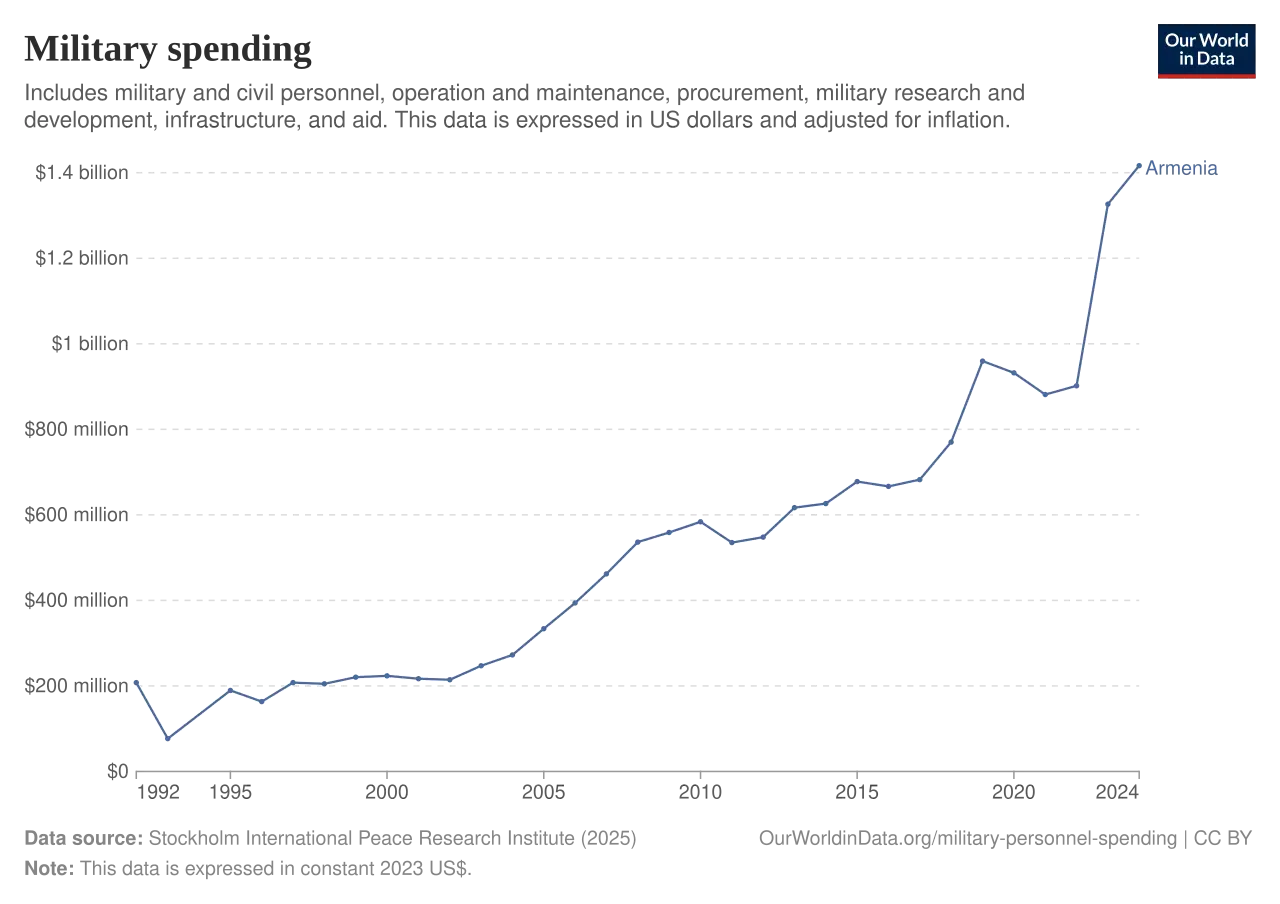
In contrast to Kazakhstan, Russia’s legitimacy collapse in Armenia has been swift and open. When Armenia declared its CSTO participation “frozen” in February 2024, stopped paying membership dues, and boycotted the bloc’s summits and exercises, its parliamentary speaker described the country as having “effectively withdrawn” in all but name by 2025 (RFE/RL, 2024a). Russian border guards completed their withdrawal from Yerevan’s Zvartnots Airport in July 2024, ending a decades-long presence (Kaleji, 2024). Alongside this, Yerevan has rapidly pivoted toward the West. France agreed to supply military equipment as early as October 2023, the EU and US arranged a joint economic support package, and in August 2026 Prime Minister Pashinyan told parliament that Armenia would soon begin formal preparations for an EU accession bid, which is a move that prompted Putin to warn explicitly that continued EU integration risked a “Ukrainian scenario,” followed by Russia’s decision to recall its ambassador from Yerevan (Basmat, 2026). Armenia’s defence spending nearly doubled between 2022 and 2024, reaching roughly $1.7 billion, as Yerevan sought to reduce its reliance on any single security guarantor (Pilibossian & Nersisyan, 2024).
4. Different Views of Russian Presence
Why did the same shock, such as Russia’s invasion of Ukraine, push Kazakhstan toward diffusion of Russian influence while pushing Armenia toward outright delegitimisation? Three structural differences help explain this divergence.
The first is the nature of dependence itself. Kazakhstan’s relationship with Russia runs along several tracks at once in security, trade, transit, and demography, giving Astana multiple levers to hedge with. Armenia, by contrast, staked almost everything on a single security guarantee, so when that guarantee failed, the collapse was total, with no other dimension of the relationship to hedge with. The second is geography, which shapes how costly it is to step back. Kazakhstan’s long land border with Russia makes quiet, gradual division the more realistic option. Armenia, separated from Russia by Georgia, has more room to break publicly, though its French and EU security guarantees remain largely symbolic for now. Third, the credibility of alternative partners matters. China can offer Kazakhstan economic weight that roughly rivals Russia’s, giving Astana a real alternative. Armenia’s Western partners, however, have so far offered far less in concrete security terms than Russia’s now-discredited guarantee once did. That gap helps explain why Yerevan’s pivot westward has been loud in rhetoric but thin in substance (Pilibossian & Nersisyan, 2024; Kintsurashvili, 2025).
These differences also matter for how reversible each shift is. Diffusion takes years to build precisely because it happens across so many sectors at once, but that same breadth makes it hard to reverse: pulling back would mean rolling back on multiple fronts simultaneously, not just one. Delegitimisation, by contrast, can happen quickly. However, it is more fragile: because no full substitute for the Russian guarantee has emerged yet, a renewed and credible Russian commitment, or simply a change of leadership in Yerevan, could partly rebuild the relationship. Either way, “Russian loss” is not absolute. Moscow still holds real leverage over Kazakhstan through trade and transit routes, and over Armenia through its base at Gyumri and control over gas supply
5. Conclusion
The comparison between Kazakhstan and Armenia suggests that the question “is Russia losing influence in its post-Soviet periphery?” is the wrong question, or at least an incomplete one. The more useful question is: through what mechanism, and how reversible is the loss? Kazakhstan’s diffusion and Armenia’s delegitimisation are not points on a single spectrum of “more or less Russian influence” – they are different processes, driven by different structural conditions, with different implications for how durable the resulting distance from Moscow will prove to be.
Kazakhstan and Armenia show that a single shock can weaken Russian influence in two entirely different ways. Kazakhstan’s shift has been gradual and multidimensional, with a quiet redistribution of dependence across trade, security, and diplomacy that leaves no single rupture point and, for that reason, will be slow to reverse. Armenia’s shift has been sudden and concentrated, born of the collapse of one security guarantee rather than a broad unwinding of ties, which makes it dramatic in appearance but still open to reversal, since no alternative guarantee has yet taken its place. Neither case amounts to a clean Russian defeat: Moscow still shapes Kazakhstan’s choices through trade and transit routes, and still holds leverage over Armenia through its military presence and gas supply. What has genuinely changed is not Russia’s presence in the region, but that both states now treat Moscow as one option among several, rather than as accepted by default.
6. Reference List
Basmat, D. (2026, August 25). Armenia to launch EU accession bid in “near future,” PM says, further distancing from Russia. Kyiv Independent. https://kyivindependent.com/armenia-to-launch-eu-accession-bid-in-near-future-pm-says/
Bland, S. M. (2025, November 12). Kazakhstan, Russia sign comprehensive strategic partnership declaration. The Times of Central Asia. https://timesca.com/kazakhstan-russia-sign-comprehensive-strategic-partnership-declaration/
Buklemishev, O. V. (2026). Structural transformation and economic policy of Russia at a new stage. Studies on Russian Economic Development, 37, 10–17. https://doi.org/10.1134/S1075700725700686
Bureau of National Statistics, Agency for Strategic Planning and Reforms of the Republic of Kazakhstan. (2025, February 17). Foreign trade turnover of the Republic of Kazakhstan (January–December 2024). https://stat.gov.kz/en/industries/economy/foreign-market/publications/315588/
commonspace.eu. (2026, April 30). Caught between Operation Epic Fury, Russia, and China: Has Kazakhstan’s “multi-vector” foreign policy reached its limit? https://www.commonspace.eu/analysis/caught-between-operation-epic-fury-russia-and-china-has-kazakhstans-multi-vector-foreign
Cooley, A. (2012). Great games, local rules: The new great power contest in Central Asia. Oxford University Press.
Eurasian Research Institute. (n.d.). Kazakhstan’s security realignment: Navigating strategic partnerships amid geopolitical shifts. https://www.eurasian-research.org/publication/kazakhstans-security-realignment-navigating-strategic-partnerships-amid-geopolitical-shifts/
Hedenskog, J. (2023). The Armenian dilemma after Azerbaijan’s September attack on Nagorno-Karabakh (SCEEUS Report No. 14). Stockholm Centre for Eastern European Studies. https://sceeus.se/en/publications/the-armenian-dilemma-after-azerbaijans-september-attack-on-nagorno-karabakh/
Ibadildin, N., & Ryzhkov, V. (Eds.). (2026). Kazakhstan as a middle power in wartime: Relations with Russia after the invasion of Ukraine (1st ed.). Routledge. https://doi.org/10.4324/9781003773115
Kaleji, V. (2024, August 5). Armenia reaches “point of no return” in withdrawal from CSTO. Jamestown Foundation, Eurasia Daily Monitor, 21(118). https://jamestown.org/armenia-reaches-point-of-no-return-in-withdrawal-from-csto/
Kim, A. (2025, July 9). Kazakhstan reinforces multivector foreign policy. Jamestown Foundation, Eurasia Daily Monitor. https://jamestown.org/kazakhstan-reinforces-multivector-foreign-policy/
Kintsurashvili, E. (2025, September 15). Who will fill the strategic gap in the South Caucasus? German Marshall Fund of the United States. https://www.gmfus.org/news/who-will-fill-strategic-gap-south-caucasus
Koga, K. (2018). The concept of “hedging” revisited: The case of Japan’s foreign policy strategy in East Asia’s power shift. International Studies Review, 20(4), 633–660. https://doi.org/10.1093/isr/vix059
Kostoudis, G. (2026, May 11). Central Asia’s Middle Corridor: A strategic shock absorber for China–Europe trade. Risk Intelligence. https://www.riskintelligence.eu/analyst-briefings/central-asias-middle-corridor-a-strategic-shock-absorber-for-chinaeurope-trade
Kucera, J. (2022, January 5). CSTO agrees to intervene in Kazakhstan unrest. Eurasianet. https://eurasianet.org/csto-agrees-to-intervene-in-kazakhstan-unrest
Kukeyeva, F. (2025). From balancing to active hedging: The transformation of Kazakhstan’s multi-vector foreign policy after 2022. YSU Journal of International Affairs, 1(2), 93–117. https://journals.ysu.am/bulletin-ysu-int-rel-pol/article/view/13643
Laitadze, I. (2026, June 23). Pashinyan’s victory and Armenia’s geopolitical choice. Eurasianet. https://eurasianet.org/pashinyans-victory-and-armenias-geopolitical-choice
Levitsky, S., & Way, L. A. (2005). International linkage and democratization. Journal of Democracy, 16(3).
Levitsky, S., & Way, L. A. (2010). Competitive authoritarianism: Hybrid regimes after the Cold War. Cambridge University Press.
Nasibova, N. (2025). The point of no return—with a comma: Armenia’s CSTO backtracking. Caliber.az. https://caliber.az/en/post/the-point-of-no-return-with-a-comma
Our World in Data. (2024). Military spending [Data visualisation]. https://ourworldindata.org/grapher/military-spending-sipri
Pilibossian, A., & Nersisyan, L. (2024, December 17). Leaving the “post-Soviet” behind: Redefining Armenia’s deterrence strategy. Royal United Services Institute. https://www.rusi.org/explore-our-research/publications/commentary/leaving-post-soviet-behind-redefining-armenias-deterrence-strategy
Radio Free Europe/Radio Liberty. (2024, February 23). Pashinian says Armenia freezes membership in Russian-led security alliance. https://www.rferl.org/a/armenia-pashinian-csto-frozen/32832200.html
Radio Free Europe/Radio Liberty. (2024). Pashinian suggests Armenian rift with Russia widening. https://www.rferl.org/a/pashinian-parlaiment-statement-armenia-rift-russia-csto-tasmaghambetov/33226765.html
Rumer, E. (2023, August 17). Russia’s wartime foreign policy: Regional hegemony in question. Carnegie Endowment for International Peace. https://carnegieendowment.org/research/2023/08/russias-wartime-foreign-policy-regional-hegemony-in-question
Seidaliyeva, S. (2026, March 3). The geopolitics of residual dependence: Kazakhstan’s multivector foreign policy and strategic realignment in the post-Soviet era. University of Navarra, Global Affairs and Strategic Studies. https://en.unav.edu/web/global-affairs/kazakhstan-s-multivector-foreign-policy
Serikuly, T. (2025, November 19). Opinion: Multi-vectorism 2.0 — Kazakhstan seeks balance in a shifting geopolitical landscape. The Times of Central Asia. https://timesca.com/opinion-multi-vectorism-2-0-kazakhstan-seeks-balance-in-a-shifting-geopolitical-landscape/
Sukiasyan, N., & Davtyan, E. (2025). The South Caucasus reconstructed: Polarity and regional security order after the Nagorno-Karabakh War in 2020. The International Spectator, 60(4), 120–137. https://doi.org/10.1080/03932729.2025.2500407
Tolstrup, J. (2013). When can external actors influence democratisation? Leverage, linkages, and gatekeeper elites. Democratisation, 20(4), 716–742.
Tolstrup, J. (2014). Russia vs the EU: The competition for influence in post-Soviet states. Lynne Rienner.
Yuneman, R. A. (2023). Kazakhstan’s multi-vector foreign policy: A case study of voting on UNGA resolutions. Russia in Global Affairs, 21(2), 141–162. https://doi.org/10.31278/1810-6374-2023-21-2-141-162
Zoria, Y. (2024, September 1). Armenia freezes participation in CSTO, Russia’s NATO equivalent, PM Pashinyan confirms. Euromaidan Press. https://euromaidanpress.com/2024/09/01/armenia-freezes-participation-in-csto-russias-nato-equivalent-pm-pashinyan-confirms/