


Introduction
For sixty years, the Indus Water Treaty (IWT) was a success story in international water governance. It stood as a rare beneficial agreement between two, at times, hostile states, having survived numerous wars and diplomatic crises. However, India’s 2025 decision to hold the treaty in “abeyance” brings that legacy into question. This decision is not merely a diplomatic breakdown, but rather a calculated strategy of coercion that exploits the treaty’s ambiguity on treaty suspension without the reputational costs of withdrawal. This withdrawal concerns numerous overarching themes concerning grey-zone statecraft, the nuances of treaty arbitration with a non-compliant party, as well as the concerning precedent it sets for major powers in similar water-mediation treaties, such as China. By using the IWT as a coercion mechanism rather than a binding compact, India has attempted to erode one of the core principles of water law: that river sharing is governed by more than upstream dominance.
Set-up: Why the IWT matters as a case study
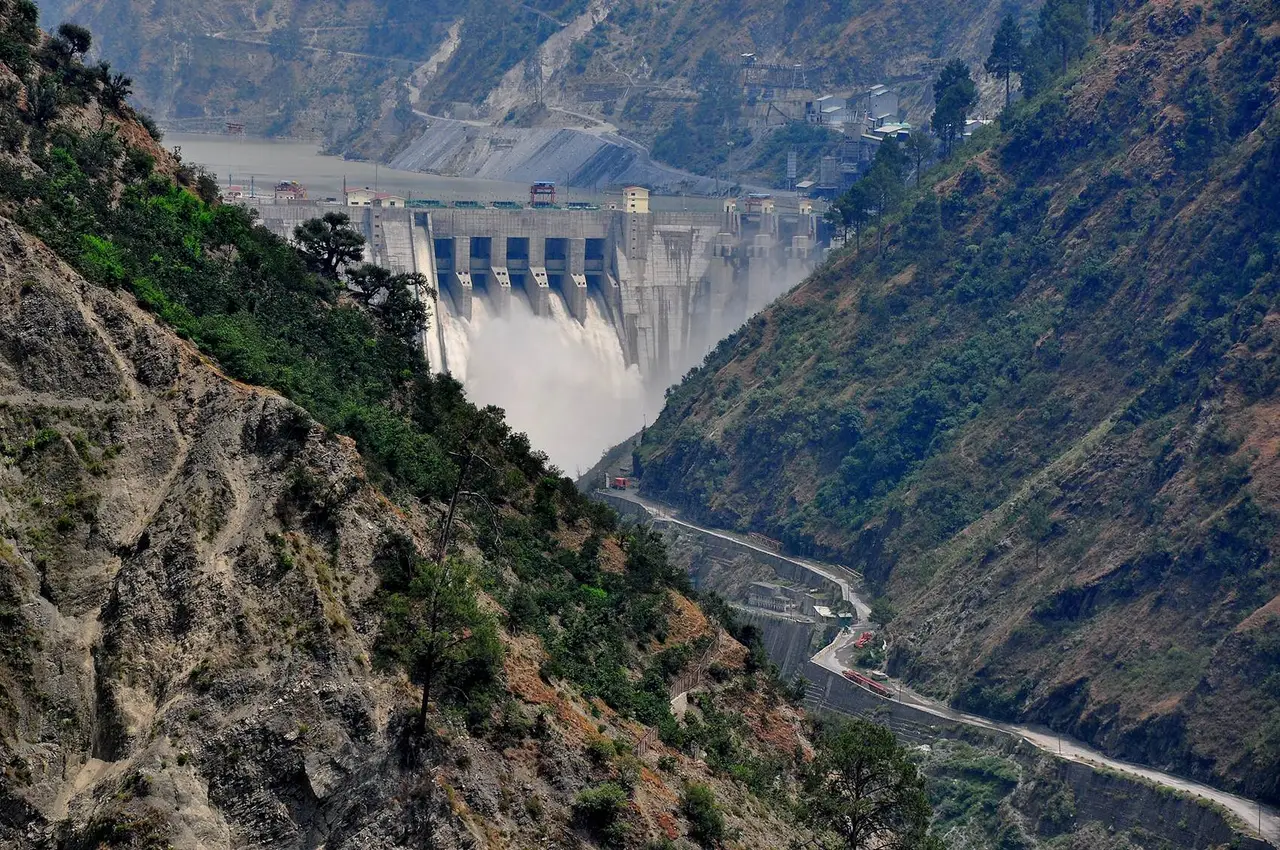
The Indus Water Treaty formerly stood as an example of successful international cooperation. Signed in 1960 with World Bank involvement, it divided the six principal rivers of the Indus system (United Nations, 1960, p. 128). India received primary and direct use of the Ravis, Beas and Sutlej rivers in the east, while Pakistan received primary use of the Indus, Jhelum and Chenab in the west. India retained limited rights on the western rivers, including run-of-river hydropower generation subject to detailed design restrictions.
The treaty also created the Permanent Indus Commission, regular information exchanges, and a dispute settlement system (United Nations, 1960, p. 130). Routine questions were assigned to intermediary commissioners, technical differences could be referred to a neutral expert, and legal disputes could reach a Court of Arbitration. The purpose of such organisations was to prevent each new development or engineering disagreement from escalating into a wider conflict. For more than six decades, the arrangement stood resilient. It continued to operate even during the 1965 and 1971 wars, the 1999 Kargil conflict and repeated diplomatic freezes (Raj, 2025). Scholars frequently pointed to such examples as evidence that technically-focused institutions could preserve cooperation, even amongst openly hostile states (Mirza, 2016). Comparison with other major basins also reinforces the treaty’s reputation. The Brahmaputra has no comprehensive legal framework binding China, India, Bhutan, and Bangladesh. The Mekong Agreement excludes the two upstream states of China and Myanmar, and the Nile similarly lacks an inclusive water allocation mechanism (United Nations, 1995).
On April 23, 2025, following the attacks in Pahalgam in Indian Administered Kashmir, India announced that the treaty would be held in “abeyance” until Pakistan “credibly and irrevocably” ended its alleged support for cross-border terrorism (Ministry of External Affairs, 2025). Pakistan denied involvement and rejected India’s ability to suspend the agreement unilaterally (Reed et al., 2025). India has since maintained that the treaty cannot continue in its present form and requires complete renegotiation (Vishnoi, 2026). A negotiated review would preserve existing commitments while the parties attempted to seek amendments to the agreement. Abeyance revokes participation first and makes restoring cooperation conditional on concessions in a separate security dispute. This distinction determines why the case matters beyond South Asia. The IWT’s durability was supposed to demonstrate that institutions could restrain power even when relations deteriorated. If the stronger upstream state can suspend the regime’s practical operation and continue despite an adverse legal process, such a loss of international legitimacy could have further-reaching consequences.
The mechanics of coercive leverage
Debate over the IWT has focused heavily on two questions: whether abeyance is lawful and whether India can stop Pakistan’s water. Neither fully explains the coercive value of India’s decision. India does not currently possess sufficient storage and diversion infrastructure to block the western rivers for a sustained period (Niazi, 2026). Most Indian projects on those rivers are run-of-river facilities with limited reservoirs. The immediate risk to Pakistan is therefore not that the Indus will disappear, but that its management will become less predictable (Amrith, 2025). Predictability is itself strategically valuable, because irrigation authorities and power operators require information about reservoir filling, sediment flushing, maintenance, releases and flood conditions. Water arriving at the wrong time can be damaging even if the annual volume remains unchanged. The treaty’s hydrological-data requirements consequently reduce Pakistan’s vulnerability as much as the allocation rules themselves. India’s choice of the term “abeyance” is important precisely because the treaty does not define it. The IWT specifies that it continues until terminated through a duly ratified agreement between both governments. Abeyance is neither formal withdrawal nor ordinary compliance, leading to an intentionally ambiguous interpretation of the treaty.
This ambiguity itself can be interpreted as a form of calibrated coercion. India signals that normal cooperation will not resume without political change, while steering clear of the categorical reputational cost of declaring the treaty terminated. Thus the agreement has not been annulled, that its existing terms are obsolete and that its obligations are nevertheless suspended. The logic resembles grey-zone statecraft. Scholarship on Chinese maritime activity defines grey-zone operations as measures designed to exploit legal and political uncertainty for strategic benefit. Rather than crossing clearly identifiable thresholds, states gradually alter conditions on the ground while complicating retaliation and collective condemnation. Water management is not maritime coercion, but the strategic value of ambiguity is comparable (McLaughlin, 2022). A formal withdrawal would provide Pakistan and third parties with a clearly identifiable breach. Abeyance leaves uncertainty over which obligations remain effective, how long the suspension will last and what concessions might restore the regime.
The concept of hydro-hegemony captures this combination of geography and political power (Zeitoun & Warner, 2006). Hydro-hegemony does not require an upstream state to halt a river. It can be exercised through infrastructure, knowledge, bargaining capacity and control over the institutions that define acceptable water use. The treaty endured because water was partly insulated from Kashmir, terrorism and military confrontation. Abeyance removes that insulation. Its immediate purpose is not to turn off the Indus, but to create uncertainty and shift the bargaining environment in India’s favour.
The asymmetry problem: why arbitration hasn’t worked as a check
The arbitration proceedings demonstrate the distance between establishing a legal entitlement and enforcing it. The predominant method of mediation is a Court of Arbitration constituted under the IWT, with the Permanent Court of Arbitration supporting the proceedings. Thus, the ICJ’s jurisdiction no longer concerns disputes regarding the IWT. India’s reservation under Article 36(2) of the ICJ Statute is therefore not the central jurisdictional obstacle. The more important problem is that treaty arbitration lacks an independent mechanism capable of implementing an award against an unwilling state. The dispute concerns Pakistan’s objections to India’s Kishenganga and Ratle hydropower projects (Salik, 2025). Pakistan pursued arbitration, while India preferred the treaty’s neutral-expert procedure. A World Bank-appointed neutral expert confirmed his competence in January 2025, supporting India’s position that the technical questions belonged before that process (Lasksr, 2026). India has argued that the parallel Court of Arbitration was improperly constituted (Ministry of External Affairs, 2025). The tribunal disagreed. In June 2025, it found that India’s decision to place the treaty in abeyance did not remove its competence over proceedings already underway (Permanent Court of Arbitration, 2025. In May 2026, it issued a supplemental award concerning “maximum pondage”, the operational water storage permitted at Indian hydropower facilities (Ministry of External Affairs, 2026). The decision reportedly favoured a restrictive calculation that would limit the amount India could hold at projects including Kishenganga and Ratle (Vishnoi, 2026). India rejected the award, declared the tribunal illegally constituted and reiterated that the treaty remained in abeyance. Pakistan has continued the proceedings without Indian participation and is reportedly covering both parties’ costs, which have exceeded $600,000 (Vishnoi, 2026).
This outcome does not prove that arbitration is generally ineffective. A recent study of 54 observable PCA-administered awards found compliance in 85 per cent of interstate cases (Powell & Perez-Linan, 2025). The researchers attributed that record partly to state consent, control over procedure and the perceived legitimacy of interstate arbitration. The Indus case reveals what happens when those conditions collapse. India rejects the tribunal’s constitution, no longer accepts the existing treaty framework as legitimate and appears willing to bear the reputational cost of non-participation. The tribunal can interpret pondage rules and project-design restrictions. It cannot operate Indian dams, transmit data, convene commission meetings or halt construction. Unlike the European Union’s legal order, PCA-administered arbitration has no embedded enforcement authority; compliance ultimately rests on state willingness.
Pakistan can preserve its legal rights, create an authoritative record and seek diplomatic support, but it cannot obtain a prompt operational remedy through arbitration alone. As such, the existing legal framework can identify which party is entitled to act, but the material outcome continues to be influenced by the party controlling the territory, infrastructure and information. A stronger state that can absorb reputational costs possesses greater freedom to separate legal defeat from practical compliance.
The arbitration has therefore mattered, but primarily by preventing India’s interpretation from becoming legally uncontested. It has not reversed abeyance. Pakistan may prevail regarding jurisdiction and treaty interpretation while India retains operational control and continues demanding renegotiation. The wider lesson is uncomfortable: arbitration constrains most effectively when both parties stay invested in the legitimacy of the institution. When the stronger party is prepared to leave that institutional bargain behind, international law may still determine who is legally right without determining what happens next.
Precedent-setting: what other upstream powers are watching
China occupies the same upstream position over India on the Brahmaputra that India occupies over Pakistan on the Indus, at a far larger scale, and with no binding water-sharing treaty at all governing the relationship, even after a year of broader diplomatic thaw between New Delhi and Beijing that has left the hardest issues in the relationship untouched. Beijing is now building what will be the world’s largest hydropower project, the Yarlung Tsangpo Medog Hydropower Station in Tibet, roughly fifty kilometres from the Indian border, with a projected annual output around three times that of the Three Gorges Dam and a reported cost near one hundred seventy billion dollars. The river becomes the Siang and then the Brahmaputra as it enters India’s northeast, and the Jamuna once it reaches Bangladesh, making any Chinese decision about flow timing a three-country issue by default. India has responded less by building parallel monitoring than by building parallel leverage: a $77 billion initiative to construct more than 200 dams in Arunachal Pradesh, a project Indian officials frame explicitly as a hedge against Chinese upstream control, while New Delhi continues pressing Beijing to revive the data-sharing arrangement that lapsed in 2022. It is the same posture Pakistan now holds toward India. Even the engineering risk echoes the broader instability of the moment: Chinese state-linked geological research published in July 2026 has itself flagged that the dam site sits on an active fault line in one of the most seismically volatile regions on earth.
The uncomfortable question for New Delhi is what precedent it is setting for its own future dealings with Beijing. If the lesson of the Indus dispute is that a state can suspend a functioning treaty, dispute the resulting legal process, and absorb the political cost without meaningful consequence, that lesson is available to China as much as it was to India. A river regime that bends to relative power rather than binding law is a regime China has every incentive to prefer over one that constrains it, and India’s own conduct on the Indus makes it harder for New Delhi to argue otherwise if and when it finds itself on the downstream end of Chinese decisions about the Brahmaputra.
Policy implications and the path forward
None of this argues for abandoning legal or diplomatic channels, but it does argue for realism about what they can deliver on their own. Technical, apolitical tracks tend to survive even when high-level political relationships freeze entirely. Military hotlines between India and Pakistan have functioned as a de-escalation channel independent of the broader relationship for years, and there is no structural reason a similar mechanism could not exist for hydrological data exchange, insulated from the political calendar in both capitals. South Asia analysts have repeatedly noted that incremental, low-visibility confidence-building measures, resumed data sharing, eased visa access, restored pilgrimage routes, tend to survive political freezes better than headline diplomacy does, precisely because neither government has to be seen making a concession to the other.
There is also a shared interest argument that both India and Pakistan have reason to take seriously, whatever their other disagreements. Neither state can fully insulate itself from the precedent it is helping to set. Pakistan is simultaneously managing an active conflict along its border with Afghanistan, and India is managing an unresolved and only partially thawed border dispute with China, the same country now building the dam upstream of India’s own vulnerable northeast. A regional norm in which water infrastructure becomes a routine instrument of coercion is one that ultimately exposes both countries more than it protects either.
The Indus Waters Treaty was never just a bilateral arrangement between two rivals, but it was, for over six decades, evidence that shared rivers could be governed by something other than the relative strength of whoever sits upstream. What happens next will help determine whether that evidence still holds anywhere in Eurasia, or whether it was simply a long pause before the older rule reasserted itself.
References
Haider, M. W., & Azad, T. M. (2021). The role of confidence-building measures in the evolution of relations between Pakistan and India. World Affairs, 184(3), 294–317. https://doi.org/10.1177/00438200211030222
The Durand Line rupture: Analyzing the outbreak of “open war” between Pakistan and Afghanistan. (2026, March 6). Eurasia Review. https://www.eurasiareview.com/06032026-the-durand-line-rupture-analyzing-the-outbreak-of-open-war-between-pakistan-and-afghanistan/
India and China in deep water over Himalayan hydropower. (2025, December 15). East Asia Forum. https://eastasiaforum.org/2025/12/15/india-and-china-in-deep-water-over-himalayan-hydropower/
India reopens Bangladesh corridor, but South Asia stays walled. (2026, July 11). Indoneo. https://www.indoneo.com/power/india-bangladesh-visas-south-asia-integration-5-percent/
India, Pakistan DGMO hotline stops war: Ceasefire, de-escalation. (2025, May 14). Business Standard. https://www.business-standard.com/external-affairs-defence-security/news/india-pakistan-dgmo-hotline-stops-war-ceasefire-de-escalation-125051401175_1.html
Inside the India-Pakistan DGMO hotline: How it works, who uses it, and why it matters. (2025, May 12). Business Today. https://www.businesstoday.in/india/story/inside-the-india-pakistan-dgmo-hotline-how-it-works-who-uses-it-and-why-it-matters-475907-2025-05-12
China’s $170 billion Brahmaputra mega dam sits atop an active fault. What does it mean for India? (2026, July 10). Business Today. https://www.businesstoday.in/world/story/chinas-170-billion-brahmaputra-mega-dam-sits-atop-an-active-fault-what-does-it-mean-for-india-542352-2026-07-10
Chinese geologists warn of active fault line dangers from world’s largest hydropower project in Tibet. (2026, July 12). Tibetan Review. https://www.tibetanreview.net/chinese-geologists-warn-of-active-fault-line-dangers-from-worlds-largest-hydropower-project-in-tibet/
China-India relations in 2026: Can the thaw continue? (2026, January 3). The Diplomat. https://thediplomat.com/2026/01/china-india-relations-in-2026-can-the-thaw-continue/
India, China, and how not to save the Brahmaputra. (2026, March 24). The Diplomat. https://thediplomat.com/2026/03/india-china-and-how-not-to-save-the-brahmaputra/
Buytaert, W., Minear, J. P., Al-Khasawneh, A. S., & Blackmore, D. (2025). IN THE MATTER OF THE INDUS WATERS WESTERN RIVERS ARBITRATION. In The Permanent Court of Arbitration, Indus Waters Western Rivers Arbitration (PCA: 2023-01). Jus Mundi. https://pcacases.com/web/sendAttach/75789
India, Pakistan, & International Bank for Reconstruction and Development. (1960). The Indus Waters Treaty 1960 (with annexes). In United Nations — Treaty Series (No. 6032; Vol. 1962). https://treaties.un.org/doc/Publication/UNTs/Volume%20419/volume-419-I-6032-English.pdf
Lasksr, R. H. (2025, January 21). Expert’s ruling backs India’s position in rift with Pak over Indus Waters Treaty | India News. Hindustan Times. https://www.hindustantimes.com/india-news/experts-ruling-backs-india-s-position-in-rift-with-pak-over-indus-waters-treaty-101737456181681.html
McLaughlin, R. (2022). The Law of the Sea and PRC Gray-Zone operations in the South China Sea. American Journal of International Law, 116(4), 821–835. https://doi.org/10.1017/ajil.2022.49
Ministry of External Affairs , Government of India. (2025a, April 23). Statement by Foreign Secretary on the decision of the Cabinet Committee on Security (CCS). https://www.mea.gov.in/speeches-statements?dtl/39442/statement+by+foreign+secretary+on+the+decision+of+the+cabinet+committee+on+security+ccs.
Ministry of External Affairs , Government of India. (2025b, June 27). Operation Sindhu. https://www.mea.gov.in/speeches-statements?dtl/39442/statement+by+foreign+secretary+on+the+decision+of+the+cabinet+committee+on+security+ccs.
Ministry of External Affairs , Government of India. (2026, May 16). Official spokesperson’s response to media queries on matters pertaining to the illegally constituted so-called Court of Arbitration. https://www.mea.gov.in/response-to-queries?dtl/41154/Official_spokespersons_response_to_media_queries_on_matters_pertaining_to_the_illegally_constituted_socalled_Court_of_Arbitration
Mirza, M. N. (2016). Indus Water Disputes and India-Pakistan Relations. Department of Political Science South Asia Institute University of Heidelberg. https://archiv.ub.uni-heidelberg.de/volltextserver/20915/1/Mirza%20PhD%20Dissertation%20for%20heiDOK.pdf
Niazi, Z. A., & Sheikh, H. (2026). FROM TREATY TO WEAPON: HYBRID COERCION AND THE SUSPENSION OF THE INDUS WATERS TREATY IN 2025. DOAJ (DOAJ: Directory of Open Access Journals). https://doi.org/10.54690/margallapapers.29.2.343
Powell, E. J., & Pérez-Liñán, A. (2025). Compliance with decisions of the Permanent Court of Arbitration. The Review of International Organizations, 21(2), 413–445. https://doi.org/10.1007/s11558-025-09599-y
Raj, H. (2025). Holding back the flow: “Abeyance” of Indus Waters Treaty and India’s legal posture Post-Pahalgam. Washington International Law Journal. https://wilj.org/2025/10/07/holding-back-the-flow-abeyance-of-indus-waters-treaty-and-indias-legal-posture-post-pahalgam/
Reed, J., Singh, J., Kaushik, K., & Jilani, H. (2025, April 23). India downgrades ties with Pakistan over alleged role in Kashmir attack. Financial Times. https://www.ft.com/content/702b94b2-21ec-40b6-ac27-75f3696e2225?syn-25a6b1a6=1
Salik, M. A. N. & Centre for Strategic Perspectives (CSP), ISSI. (2025). RE ANCHORING THE INDUS WATERS TREATY AFTER THE HAGUE COURT’S SUPPLEMENTAL AWARD. ISSUE BRIEF. /api/wp-media/2025/07/IB_Salik_July_17_2025.pdf
The Kingdom of Cambodia, The Lao People’s Democratic Republic, The Kingdom of Thailand, & The Socialist Republic of Viet Nam. (1995). AGREEMENT ON THE COOPERATION FOR THE SUSTAINABLE DEVELOPMENT OF THE MEKONG RIVER BASIN. /api/wp-media/2024/08/The-Mekong-Agreement.pdf
Vishnoi, A. (2026a, May 16). Indus river system: India rejects latest IWT Court ruling on water storage limits. The Economic Times. https://economictimes.indiatimes.com/news/india/indus-river-system-india-rejects-latest-iwt-court-ruling-on-water-storage-limits/articleshow/131142895.cms?from=mdr
Vishnoi, A. (2026b, July 17). Cash-strapped Pakistan foots India’s Bill, bears New Delhi’s share of Indus Water Treaty arbitration costs. The Economic Times. https://economictimes.indiatimes.com/news/defence/cash-strapped-pak-foots-indias-bill-bears-new-delhis-share-of-indus-waters-treaty-arbitration-costs/articleshow/132447338.cms?from=mdr
Vishnoi, A. (2026c, July 20). Indus Waters Treaty needs complete renegotiation, says government; blames Pakistan for stonewalling talks. The Economic Times. https://economictimes.indiatimes.com/news/india/indus-waters-treaty-needs-complete-renegotiation-says-government-blames-pakistan-for-stonewalling-talks/articleshow/132522397.cms?from=mdr
Zeitoun, M., & Warner, J. (2006). Hydro-hegemony – a framework for analysis of trans-boundary water conflicts. Water Policy, 8(5), 435–460. https://doi.org/10.2166/wp.2006.054