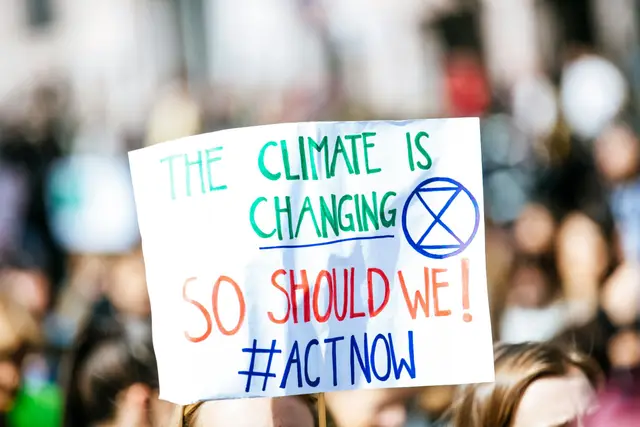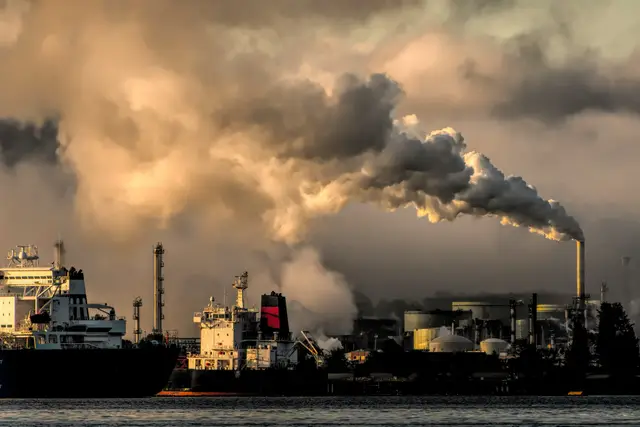


We are already living through the volatility of extreme weather events caused by Climate change, from floods and wildfires to water scarcity and deteriorating air quality, among others. These risks increasingly undermine population welfare and pose a direct economic threat, especially to the insurance sector and its economy-wide risk-management role (Gupta & Venkataraman, 2024). Over the past 30 years, insured losses from extreme weather events have increased by 250%, leading to insurance companies struggling to cover the economic impact of losses (Gupta & Venkataraman, 2024).
The insurance sector is expected to provide financial protection, but is also vulnerable to those same risks (Alokla et al., 2025). However, as losses become harder to predict and more costly to absorb, financial risks can shift toward households, businesses, and, ultimately, governments (Gupta & Venkataraman, 2024). Public authorities may then face increasing pressure to compensate for losses that private markets are unable or unwilling to insure. This provides short-term protection but can weaken incentives for risk reduction and expose governments to substantial fiscal liabilities.
Climate Change as an Insurance Market Problem
Climate change is increasing the frequency and severity of hazards with potentially substantial economic consequences. By 2050, extreme precipitation and temperature anomalies are expected to reduce global economic output by 11-14%, as declining crop yields, the spread of disease and rising sea levels increasingly disrupt economic activity (Gupta & Venkataraman, 2024). Catastrophe data show that insured losses have increased alongside economic and population growth, particularly in vulnerable areas such as coastal regions (Botzen et al., 2010). Climate change is expected to further amplify these damages by altering the frequency and severity of extreme weather events. For example, in the first half of 2025, natural catastrophes caused approximately $162 billion in global economic losses, of which 38% remained uninsured (Henderson and Murphy, 2025).
Climate risks operate through acute hazards and chronic changes. Acute hazards such as hurricanes, wildfires and floods can generate property and casualty losses. Chronic changes, including sea-level rise, temperature shifts and precipitation anomalies, can affect health, agriculture, supply chains and other areas of insurance (Botzen et al., 2010; Gupta & Venkataraman, 2024). As the scale and uncertainty of these risks increase, climate-related losses become increasingly difficult for insurers to predict. Therefore, Botxen et al. (2010) argue that insurers need to incorporate projected changes in the probability of extreme weather events into exposure assessment and pricing. This requires insurers to move beyond reliance on historical risk patterns and take into account how changing climate conditions may alter future insurability, for instance, by using data from regional climate models such as the scenarios developed by the Royal Netherlands Meteorological Institute (KNMI) (Botzen et al., 2010; Alokla et al., 2025).
The role of insurers is therefore moving beyond simply compensating for losses, as seen in the growing attention they are giving to climate change across their operations. Mills (2009) identified 643 climate-related activities across 244 insurance entities in 29 countries, representing a 50% increase in activity. These organisations collectively managed $1.2 trillion in annual premiums and $13 trillion in assets. This shift reflects the emergence of climate change as an enterprise risk management (ERM) issue, “one cutting across the domains of underwriting, asset management and corporate governance” (Mills, 2009). This shows how awareness of climate risk across the sector is growing, yet policymakers highlight the need for insurers to develop responses beyond conventional products. Without adequate risk-sharing mechanisms, insurers respond defensively by increasing premiums, tightening coverage, limiting availability, or withdrawing from high-risk markets to preserve solvency (Gupta & Venkataraman, 2024). Therefore, if private coverage recedes, households and businesses face an availability-affordability gap, while governments face increasing pressure to act as insurers of last resort (Mills, 2009).
When Private Insurance Withdraws
The probability that the government will assume more climate risk increases once the private sector recedes. In cases where insurance companies fail to insure the total costs, private losses become public liabilities (Mills, 2009). For example, the US National Flood Insurance Program (NFIP) passed all financial risk to the federal government. It led to insolvency and a $30 billion deficit after Hurricane Katrina in 2005 and Hurricane Ike in 2008 (Mills, 2009). Collier and Fox (2021) link this case to the ways in which such public insurance schemes can create problems for long-term urban resilience by separating financial responsibility from risk management. They argue that if governments provide broad subsidies for high-risk areas, the level of physical risk can become less visible. This creates a “moral hazard”, as property owners, businesses, and municipalities may have less incentive to invest in stronger buildings, flood protection, and other forms of climate adaptation (Collier & Cox, 2021; Mills, 2009).
Government intervention can also weaken the role of insurance prices as signals of climate risk. In a risk-reflective insurance system, premiums are based on the specific level of risk a property faces, meaning that households in high-risk areas generally pay more for coverage (Lucas & Booth, 2020). These higher premiums can communicate the financial consequences of living in hazard-prone areas and may encourage households to invest in measures that reduce their exposure (Botzen et al., 2010). However, government subsidies or post-disaster compensation can mitigate this effect by reducing the financial burden on high-risk households. This can make insurance appear more affordable than the underlying risk would suggest and weaken incentives to adapt (Lucas & Booth, 2020).
Public-Private Risk Sharing
The limitations of both private insurance and government absorption suggest that climate risk requires a clearer division of responsibility between public and private sectors. For more than 10 years, experts have warned of the need for collaboration between private companies and the public sector on insurance schemes to address climate change (Mills, 2009). The Warsaw International Mechanism for Loss and Damage, established under the UN climate negotiations, recognises risk transfer and insurance as part of broader approaches to managing climate-related losses. Similarly, Article 8 of the Paris Agreement identifies risk insurance facilities and other risk-transfer mechanisms as areas for cooperation on loss and damage (Mills, 2009). These developments reflect a broader recognition that increasing climate risks cannot be managed through either private markets or public compensation alone. Instead, effective climate-risk governance requires cooperation between insurers, governments, and other financial institutions (Dolk et al., 2023; Lee et al., 2024).
The role of insurance can also extend to reducing the risks that generate those losses in the first place. Collier and Cox (2021) argue that insurers occupy a distinctive position as risk assessors, risk carriers, and investors, giving them the ability to influence how governments and other actors respond to climate risks. Through risk-based pricing, improved climate-risk assessment, and incentives for risk reduction, insurers “are in a unique position to leverage and incentivise local governments to undertake appropriate preventive measures” (Collier & Cox, 2021). Botzen and van den Bergh (2008) therefore propose a multi-layered public-private insurance system, in which households and businesses bear smaller losses, private insurers cover the middle layer of risk, and the government provides coverage for extreme losses that exceed private insurers’ capacity. Such an approach recognises that government intervention remains necessary for highly correlated and catastrophic risks, but avoids complete reliance on public compensation (Botzen et al., 2010).
Moreover, public institutions can provide international funding to support climate adaptation and reduce the financial burden of climate-related disasters on national governments. For instance, the Green Climate Fund, set up under the UNFCCC, supports climate adaptation in developing countries (Hulme, Neill, & Dessai, 2012). The European Union has also dedicated funds to support climate resilience and disaster recovery. For example, the EU Solidarity Fund, established after major flooding across Europe in 2002, provides financial assistance to countries affected by major natural disasters (Aakre et al., 2010). Such mechanisms can reduce the immediate fiscal burden on national governments while allowing private insurance markets to continue functioning.
However, maintaining this balance also requires attention to insurers’ financial stability. As climate-related losses increase, insurers may face growing exposure to correlated risks across their portfolios, increasing the possibility that extreme events could undermine their ability to meet claims. Alokla et al. (2024) therefore emphasise the importance of regulatory frameworks that require insurers to assess and account for climate-related risks. Strengthening climate-risk assessment and disclosure can help regulators identify vulnerabilities before they threaten insurers’ solvency, while encouraging insurers to account for climate change in their risk-management strategies.
A clear example of public-private risk sharing is the UK’s Flood Re scheme. It is a reinsurance scheme designed to improve the availability and affordability of flood insurance in regions where households are at high risk (Flood Re, n.d.). It allows insurers to reinsure residential flood-risk policies at a subsidised price. Flood Re is funded through a levy on insurers, which spreads the cost of high flood risk across the market, while giving the industry time to adapt to increasing flood risks (OECD, 2020). This reduces the financial exposure of individual insurers whilst allowing them to continue the coverage in high-risk areas. Public intervention can therefore operate through financial support following extreme events, as well as through regulation that helps preserve insurance markets’ capacity to absorb climate risk over time.
Conclusion
This brief argues that preserving insurance availability under increasing climate risk requires a layered public-private risk-sharing approach. Private insurers and reinsurers should continue to manage risks that can be effectively priced and diversified, while targeted public mechanisms can provide support for extreme or systemic risks that exceed private-sector capacity. However, their effectiveness depends on maintaining a connection between risk transfer and risk reduction. If public support simply absorbs losses without encouraging adaptation, it may protect against the immediate financial consequences of climate change while leaving the underlying exposure unchanged.
The future of climate insurance, therefore, depends not only on expanding financial capacity but on how that capacity is governed. Public-private risk-sharing can help reconcile the need for continued insurance coverage with the limits of private markets. Nevertheless, it should be accompanied by a forward-looking climate risk assessment, appropriate risk pricing, regulatory oversight, and incentives for preventive investment.
Bibliography:
Alokla, J., Tzouvanas, P., & Albitar, K. (2025). Does Climate Change Risk Impact Insurance Credit Risk? Cross Country Evidence. Business Strategy and the Environment, 34(5), 5401–5418. https://doi.org/10.1002/bse.4252
Botzen, W. J. W., van den Bergh, J. C. J. M., & Bouwer, L. M. (2010). Climate change and increased risk for the insurance sector: A global perspective and an assessment for the Netherlands. Natural Hazards, 52(3), 577–598. https://doi.org/10.1007/s11069-009-9404-1
Collier, S. J., & Cox, S. (2021). Governing urban resilience: Insurance and the problematization of climate change. Economy and Society, 50(2), 275–296. https://doi.org/10.1080/03085147.2021.1904621
Dolk, M., Laliotis, D., & Lamichhane, S. (2023). From extreme events to extreme seasons: Financial stability risks of climate change in Mexico. IMF Working Papers, 2023(176). https://doi.org/10.5089/9798400249679.001.A001
European Environment Agency. (2023). Public-private partnership for a new flood proof district in Bilbao, Spain. Climate-ADAPT. https://climate-adapt.eea.europa.eu/en/metadata/case-studies/public-private-partnership-for-a-new-flood-proof-district-in-bilbao
Flood Re. (n.d.). How Flood Re works. https://www.floodre.co.uk/how-flood-re-works/
Gupta, A., & Venkataraman, S. (2024). Insurance and climate change. Current Opinion in Environmental Sustainability, 67, 101412. https://doi.org/10.1016/j.cosust.2023.101412
Henderson, E., & Murphy, D. (2025, August 8). Natural disasters have cost us $162 billion this year. Insurance covered most of it. World Economic Forum. https://www.weforum.org/stories/business/global-insurance-industry-gap/
Henrik Selin, & Stacy D. VanDeveer. (2009). Changing Climates in North American Politics : Institutions, Policymaking, and Multilevel Governance. The MIT Press. p.241.
Lee, R., Rojas-Romagosa, H., Teodoru, I. R., & Zhang, X. (2024). Climate Transition Risk and Financial Stability in France. IMF Working Papers, 2024(144). https://doi.org/10.5089/9798400280696.001.A001
Lucas, C. H., & Booth, K. I. (2020). Privatizing climate adaptation: How insurance weakens solidaristic and collective disaster recovery. WIREs Climate Change, 11(6), e676. https://doi.org/10.1002/wcc.676
Mills, E. (2009). A Global Review of Insurance Industry Responses to Climate Change. The Geneva Papers on Risk and Insurance – Issues and Practice, 34(3), 323–359. https://doi.org/10.1057/gpp.2009.14
Organisation for Economic Co-operation and Development. (2020, June 4). Transition effects of Flood Re in the United Kingdom. OECD. https://www.oecd.org/en/publications/ocean-policies_17318a16-en/transition-effects-of-flood-re-in-the-united-kingdom_fc416422-en.html