International Relations & Diplomacy19 November 20262 min read

Xi Jinping’s Call for Free Trade Challenges US Economic Leadership

Xi Jinping calls at the APEC-summit for free trade and multilateralism.

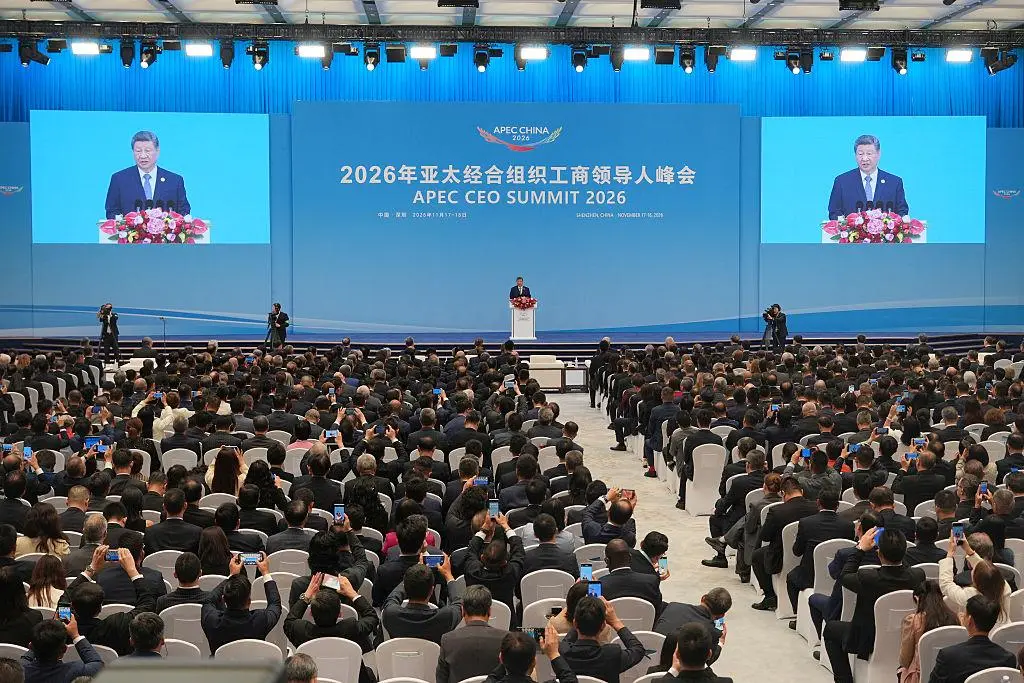
Chinese President Xi Jinping delivers a keynote speech at the opening of the APEC CEO Summit in Shenzhen, China, on November 18, 2026.
Chinese President Xi Jinping delivers a keynote speech at the opening of the APEC CEO Summit in Shenzhen, China, on November 18, 2026.Chinas President Yi calling for free trade and multilateralism.
PDF in preparation
Follow EPIS on Google
Key Insights

China, whose economic model has historically been subject to strict state control, is seeking to present itself as an alternative leader in promoting free trade.

Xi’s Call for Free Trade

In his opening address at the APEC Summit, which is to be held this year in Shenzhen, China, attended by US President Donald Trump and Russian President Vladimir Putin, Xi Jinping called for “free and open trade”. He also advocated for the preservation of the “rules-based multilateral trading system, with the World Trade Organisation at its core”. At the same time, he warned against rising protectionism. This can be interpreted as a criticism of US trade policy, which is increasingly characterised by tariffs and export controls, restricting especially China’s access to advanced technology. Xi, by contrast, announced economic reforms aimed at reducing tariffs and improving market access.

A Shift in Global Economic Leadership?

Xi’s speech reflects a shift in roles that has been unfolding in recent years. While the US has traditionally presented itself as a champion of free trade, President Trump has marked a significant departure from this approach. China, whose economic model has historically been subject to strict state control, is seeking to present itself as an alternative leader in promoting free trade. This could be met with approval, particularly in the Global South. Xi’s statements should be viewed with caution, as Beijing continues to use export restrictions to protect its own technologies and repeatedly employs economic dependencies as a weapon to exert pressure. It remains to be seen whether Xi’s indirect criticism of Washington, on the one hand, and the warm reception given to the US President at the APEC summit, on the other, will translate into an actual shift in international economic leadership.


Linus Rieger Linus is in his third semester of a Bachelor’s degree in International Relations at Karlshochschule in Karlsruhe, Germany, specialising in International Security. As co-host of the German-language podcast Ordnungsruf! – Ordnung im Chaos der Politik, he speaks with experts and politicians every two weeks about security, defence, and geopolitics.

Cite this brief
Rieger, L. (2026). Xi Jinping’s Call for Free Trade Challenges US Economic Leadership. EPIS Insight · International Relations & Diplomacy.

EPIS PublicationsEvery Monday

New EPIS publications, in your inbox

One email a week with the new EPIS publications. You choose the topics on the next page.

FreeCancel at any timeYou confirm your address by email

© 2026 EPIS · Independent · Non-partisan · Funded by the EPIS FellowsLegal Notice · Privacy Policy · · RSS

Privacy preference centre

When you visit a website, it may store or read information in your browser, mostly in the form of cookies. Choose below which categories we may use. Your choice is kept for 12 months, and you can change it here at any time. Privacy Policy

Manage consent preferences

Always active