
The Yemen-Saudi conflict has emerged as another flashpoint in the Middle East, further straining a region already under pressure from the ongoing Iran-US conflict. Attacks have caused major investment and entertainment events to be postponed.
Amidst the US-Iran war, a new front of conflict has emerged between Saudi Arabia and the Houthis in Yemen, resulting in the reignition of the flames of conflict in Yemen. Since 2022, a UN-brokered ceasefire has been instrumental in maintaining relative calm in the country (Vakil & Al-Muslimi, 2026). The recent escalation can be traced back to this summer, when the Saudi-backed Yemeni forces attacked the Sanaa airport on July 13 (Jafarnia, 2026). It is imperative to understand the context of the attack on the airport by the forces; it was done to stop a flight operated by Mahan Air, which reportedly was carrying Islamic Revolutionary Guard Corps (IRGC) commanders and military advisors, indicating that Tehran wants to open a new arena of geopolitical contest (Michael & Hafezi, 2026). To respond to the attack, the Houthis launched attacks on the Saudi oil facilities, causing damage to the kingdom’s East-West pipeline, which has been utilised by the kingdom to overcome the blockage of the Strait of Hormuz. The critical question is what the re-emergence of the conflict in Yemen means for Saudi Arabia, Yemen, and the wider region, which is locked in a “no peace, no war” situation.
The Houthi Movement Explained
The Houthi movement, formally known as Ansar Allah, is a central actor in the conflict. Its rise reflects a combination of local grievances and political exclusion. Iran’s relationship with the Houthis has further complicated the conflict. Tehran has provided varying forms of support, including military assistance and technology, while the Houthis have become an important component of Iran’s wider regional network of partners. Nevertheless, the movement should not be understood simply as an Iranian proxy. Its origins, domestic political objectives, and decision-making are rooted in Yemen’s own history and social conditions. Saudi Arabia and Iran have frequently treated Yemen as part of their broader strategic competition. This regional dimension has made the conflict more difficult to resolve because developments on the ground are connected to wider disputes involving security, influence, and deterrence.
Riyadh’s Dilemma: Diplomacy or Deterrence?
Riyadh has no good options in Yemen: either it can get bogged down in a long military conflict with the Houthis or go back to the negotiation table with them. Both options carry critical strategic risks, putting Riyadh in a tight spot. The first option is escalating the military operation against the Houthis, which, in fact, Saudis tried in 2015 and was largely unsuccessful (Center for Preventive Action, 2025). Returning to war is costly for Saudi Arabia, and it has spent years avoiding military confrontation on several important foreign policy files from Yemen to Iran. The cost of military escalation with the Houthis is too high for the Saudis, as the group’s limited military capabilities can impose high economic costs on Saudi Arabia; the Houthis have shown they can do so. This was clear in the strikes on King Khalid International Airport, which caused 13 people to die, and hundreds were injured (Gupta & Lukiv, 2026). There are other significant costs of military escalation for Riyadh, which span challenging its economic ambition plans under Vision 2030 – a project of the Crown Prince Mohammed Bin Salman that aims to wean the country off oil. In recent days, major entertainment and business events were cancelled due to flight disruptions caused by the attack. In recent days, Saudi Arabia’s answer to Davos, the “Future Investment Initiative”, often referred to as “Davos in the Desert”, was postponed to next year as the finance executives lobbied the Saudi government to delay the event (Graham & Kimball, 2026). It is seen as paramount to Riyadh’s diversification plan, as the event attracts critical foreign investment that it needs to finance its mega projects.
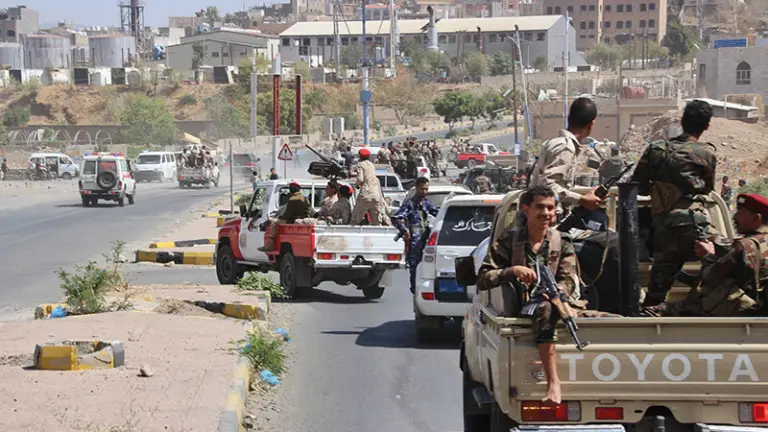
Riyadh recognises the limitations of relying solely on airstrikes and has therefore increased its support for the Yemeni government’s counteroffensive against the Houthis. On October 5, the government announced the launch of the Yemen Dawn offensive, aiming to reclaim all territory under Houthi control (Al-Alimi, 2026). However, achieving this ambitious objective remains highly improbable. The operation has so far produced limited results: government forces have recovered some territory near the Bab al-Mandeb Strait, while Houthi forces have advanced around Taiz, Yemen’s third-largest city and a strategically important corridor connecting coastal areas with the government’s southern stronghold. Meanwhile, persistent divisions within the Yemeni government continue to weaken military coordination and operational effectiveness, contributing to the rapid territorial losses experienced along the coast in September.
The Risks of a Long-Term Conflict for Riyadh
Over the past three years, the Houthis have demonstrated both the sustained intention and the operational capacity to disrupt maritime traffic through the Red Sea. This waterway is strategically important to Saudi Arabia, which has invested heavily in its western coastal regions to strengthen economic connections with Europe, Africa, and Western markets. These investments form a central component of the kingdom’s economic diversification strategy. Consequently, the continued expansion of Houthi influence over the Red Sea poses a potential threat to Riyadh’s long-term economic ambitions and regional trade interests.
As the Houthi threat expands, Saudi Arabia faces the risk of becoming embroiled in another prolonged conflict with uncertain outcomes. The current escalation exhibits several characteristics associated with previous unsuccessful military efforts, including an extensive reliance on airstrikes, ground operations conducted by fragmented forces, and the absence of clearly defined and achievable military and political objectives. A prolonged conflict could also have consequences extending well beyond Yemen and Saudi Arabia. It could complicate efforts to de-escalate tensions between Iran and its regional adversaries by intensifying hostility between Riyadh and Tehran. Furthermore, disruptions to maritime security and threats to energy shipments could contribute to higher global oil prices, given Saudi Arabia’s position as one of the world’s leading oil exporters. The Houthis could also use the conflict to consolidate and extend their influence across the Red Sea, increasing disruptions to a vital international shipping corridor and raising broader concerns about the protection of freedom of navigation.
References
Center for Preventive Action. (2025, March 26). Conflict in Yemen and the Red Sea. Council on Foreign Relations. Global Conflict Tracker. https://www.cfr.org/global-conflict-tracker/conflict/war-yemen
Gupta, P., & Lukiv, J. (2026, October 10). King Khalid airport: 12 Killed in attack in Saudi capital Riyadh. BBC News. https://www.bbc.co.uk/news/articles/cw33x4y8k82no
Graham, E., & Kimball, S. (2026, October 19). Saudi Arabia postpones big investor conference to 2027 as Iran-backed Houthis escalate attacks on kingdom. CNBC. https://www.cnbc.com/2026/10/19/saudi-arabia-postpones-fii-investorconference-to-2027.html
Vakil, S., & Al-Muslimi, F. (2026, October 13). The Yemen war is not just Saudi Arabia’s problem. It’s the gulf’s too. Chatham House. Chatham House – International Affairs Think Tank. https://www.chathamhouse.org/2026/10/yemen-war-not-just-saudi-arabias problem-its-gulfs-too
Jafarnia, N. (2026, July 28). Strikes endangering civilians in Yemen and Saudi Arabia. Human Rights Watch. https://www.hrw.org/news/2026/07/28/strikes-endangering-civilians-in-yemen-and-saudi-arabia
Michael, M., & Hafezi, P. (2026, July 23). EXCLUSIVE: Iran flew IRGC commanders, missile gear to Yemen’s Houthis, sources say. Reuters. https://www.reuters.com/world/middle-east/iran-flew-irgc-commanders-missile-gear-yemens-houthis-sources-say-2026-07-23/
Al-Alimi, P. D. R. (2026, October 5). PLC PRESIDENT ANNOUNCES LAUNCH OF “DAWN OF YEMEN” OPERATION TO RESTORE STATE INSTITUTIONS AND LIBERATE CAPITAL SANA’A President Dr. Rashad Al-Alimi, Chairman of the Presidential Leadership Council. Presidentalalimi.Net. https://presidentalalimi.net/en/news2042.html?ref=theglobalvoice.com