




Iran bets on nuclear ambiguity as insurance against renewed strikes
Mohsen Rezaei, Secretary of Iran’s Supreme National Security Council, told Pakistan’s army chief Asim Munir in Tehran on 20 October that no enriched nuclear material will leave Iran. Parliament Speaker Qalibaf and President Pezeshkian insisted the same day that Washington vacate the Strait of Hormuz first. The IAEA estimates Iran held 440.9 kg of 60%-enriched uranium before the June 2025 strikes, but has not verified it since. Tehran says talks cannot resume until the US meets seven conditions presented in New York. Those publicly named include an end to the war on all fronts, release of frozen assets, and lifting the naval blockade.
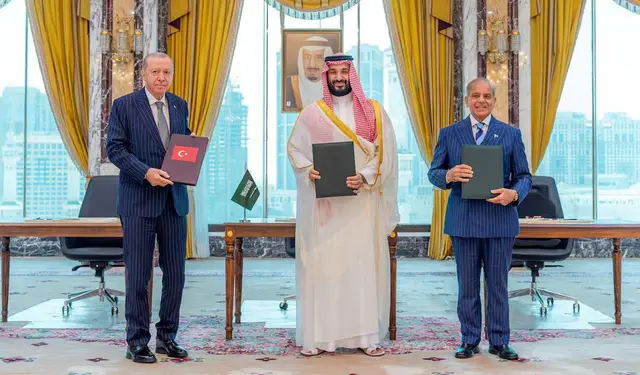
By delivering the line to Pakistan’s mediator, with the speaker and president aligned on preconditions the same day, Tehran is subtly suggesting to Washington that no softer back channel exists. Munir, on his fifth visit since June, left with Iran’s reply to a US message but no solution to the conflict, underscoring the limits of Pakistan’s mediation.
Tehran is hedging through nuclear ambiguity. Before the war, Iran signalled willingness to ship out half its 60% stockpile; Supreme Leader Mojtaba Khamenei has now allegedly ordered it kept in the country. Iran likely sees the material as an insurance against renewed US-Israeli attack. Its unverified size and location add to that leverage: as long as the IAEA cannot verify it, neither Washington nor Israel can be certain what a further strike would achieve.
One possible solution is dilution of the stockpile inside Iran under IAEA supervision, floated by an Iranian source and by Russia’s envoy in Vienna. But that method would require the inspector access that Tehran is withholding. With Trump ruling out strikes only until the 3 November midterms, the window for such a compromise is narrowing.