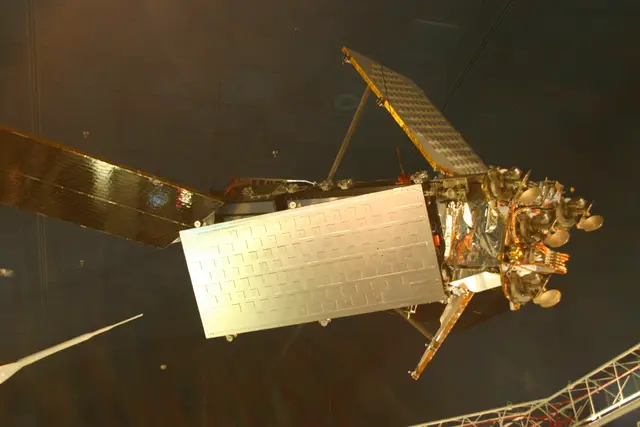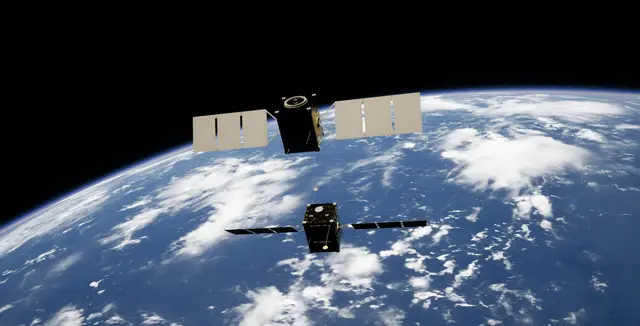

Beyond the recent maritime and airspace security concerns, France may now face another security challenge. On 25 November, Le Monde reported that Paris considers the possibility of Russia deploying a nuclear weapon in outer space a serious risk. According to intelligence assessments reported by German media, Russia could launch a satellite known as Sputnik-S carrying a nuclear weapon before the end of 2026, although Moscow has rejected these allegations.
The consequences of such a development would go far beyond military interests. Considering the growing dependence of civilian and military infrastructures on satellite systems, a nuclear detonation in space could severely disrupt telecommunications, navigation, intelligence and weather monitoring. From a legal perspective, placing a nuclear weapon in orbit would constitute a violation of Article IV of the 1967 Outer Space Treaty, to which Russia is a party.
However, while the Treaty prohibits the placement of nuclear weapons in orbit, it does not establish a general prohibition on military activities in outer space. In this context, the Chief of Staff of the French Air and Space Force, General Jérôme Bellanger, recently disclosed a joint strategic signalling operation with the United States, involving coordinated manoeuvres near a satellite belonging to an undisclosed rival power.
In parallel, on 25 November, the French government presented a draft law aimed, among other objectives, at simplifying defence procurement and facilitating joint European military acquisitions, as part of Europe’s 2030 rearmament agenda.
Although these developments are not necessarily directly interconnected, they reflect the complexity of the security challenges France currently faces. The growing militarisation of space raises questions about the adequacy of conventional military capabilities and existing international arms control mechanisms.
If Russia’s alleged plans are confirmed, how prepared are France and its European partners to respond to a threat whose consequences would extend far beyond national borders?