


Despite concerns about the reliability and predictability of U.S. foreign policy, the European Union cannot fully abandon the transatlantic alliance or substitute U.S. security guarantees.
Introduction
The stability of the post–Cold War rules-based international order, long grounded in credible commitments, is increasingly contested. In recent years, major powers have pursued more unpredictable foreign policy behaviour, raising uncertainty among allies about the reliability of established rules and partnerships. Actions taken by the United States under the second Trump administration, such as the imposition of tariffs on allies and shifting positions in international engagements, illustrate a pattern of inconsistent signalling that challenges expectations of stable and predictable leadership.
The credibility of commitments is central to sustaining international order. It functions as a signalling mechanism that underpins deterrence and alliance reassurance. When signals become inconsistent and unpredictable, perceptions of reliability decline, weakening their deterrent and persuasive force (Fettweis, 2017). This raises an important question: how do allies respond when the credibility of a leading power becomes uncertain? Specifically, how has the European Union responded to perceived unpredictability in U.S. foreign policy under the Trump administration? This article addresses this question by examining shifts in EU–U.S. transatlantic relations under Trump 2.0.
EU–U.S. relations are characterised by structural dependence. The United States remains the primary provider of security and defence guarantees for Europe, particularly through NATO, while the European Union lacks the capabilities to ensure effective deterrence independently (Anderson, 2025). This dependence constrains the EU’s strategic options. At the same time, recent developments indicate that the EU is pursuing greater self-sufficiency in areas such as energy, industrial and technological policy, and defence.
This article argues that perceived U.S. commitment unreliability has not led the European Union to abandon the transatlantic alliance. Instead, it has prompted a strategy of adaptation: the EU seeks to diversify its partnerships while developing limited strategic autonomy. In this sense, unpredictability erodes credibility and generates alliance uncertainty; however, rather than causing alliance breakdown, it incentivises allies to adjust within existing structures.
Credibility of commitments
Credibility of commitments is an essential component of the rules-based international order because credible commitments are predictive and consistent. Such signalling reassures allies that the status quo will not be contested. When signalling becomes inconsistent and unpredictable, perceptions of reliability decline, leading to an erosion of trust in mutual commitments within alliances. However, this does not necessarily mean that partnerships will be abandoned; rather, partnerships may be diversified.
Credible commitments are those perceived as reliable, meaning that states are expected to follow through on their promises and threats. Such signalling reassures allies that the status quo will not be contested. When signalling becomes inconsistent and unpredictable, perceptions of reliability decline (Fettweis, 2017). This leads to the erosion of trust in mutual commitments within alliances. However, this does not necessarily imply abandonment; instead, it may encourage diversification of partnerships.
Credible signalling in International Relations (IR) theory is a complex mechanism through which states communicate their intentions and capabilities to other actors in the international system. This process is crucial for maintaining stability and avoiding conflict. The key characteristics of credible signalling include the clear communication of intentions, the use of costly signals, and the generation of audience costs. According to Fettweis (2007–2008), credibility can be understood as the capacity to be believed or trusted. In foreign policy decision-making, credibility is shaped by perceptions of consistency, understood as behavioural stability over time, and predictability, understood as the ability to anticipate behaviour. If actors consistently follow through on their threats and commitments, they signal reliability, which contributes to their reputation in the international system. In this sense, credibility, consistency, and predictability are interrelated components of a state’s perceived reputation. High credibility enables states to deter adversaries and reassure allies, whereas low credibility leads both adversaries and allies to question the reliability of a state’s commitments (Fettweis, 2007–2008, p. 609). Following this logic, when signalling becomes inconsistent and unpredictable, a state loses its reputation as a reliable ally, which may incentivise allies to diversify their partnerships in search of more dependable actors.
Similarly, McMahon (1991) emphasises that credibility is closely tied to reputation, reflecting a state’s perceived reliability, determination, and status as a major geopolitical actor. However, empirical developments suggest a different dynamic. Rather than leading to a complete abandonment of alliances, inconsistency in major power signalling may instead produce uncertainty that alters alliance behaviour. The case of U.S. foreign policy under Donald Trump illustrates this dynamic. The administration’s signalling was often characterised by shifts between threats, reassurances, and economic coercion, which introduced ambiguity into U.S. commitments. Such inconsistency complicates the ability of allies and adversaries to accurately assess U.S. intentions and reliability, thereby affecting perceptions of credibility.
Olesen and Schmidt (2026) describe how European countries perceive the U.S. as either a friend or an adversarial actor. They argue that this perception is, to a large extent, shaped by the Trump presidency. A March 2025 poll by Le Grand Continent (‘Baromètre de l’opinion publique européenne: “Quelle défense pour l’Europe?”’) shows that 51% of respondents perceive Trump as an enemy of Europe (Olesen & Schmidt, 2025).
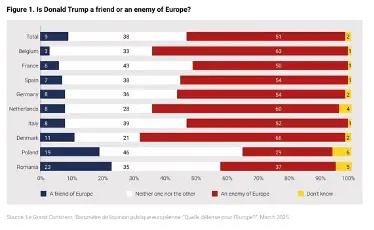
Figure 1: Is Donald Trump a friend or an enemy of Europe? Source: https://www.jstor.org/stable/pdf/resrep71877.pdf?refreqid=fastly-default%3Ac3ebc857941e8615f76e4d92e8bb6559&ab_segments=0%2Fbasic_search_gsv2%2Fcontrol&initiator=search-results&acceptTC=1
Despite this perception, the U.S. remains a central pillar of EU security and defence, primarily because the European Union does not possess sufficient capabilities to provide effective deterrence independently. ‘The U.S. defence industry dwarfs its European counterparts in scale, innovation, and integration’ (Anderson, 2025). Although the European Union has established initiatives such as the European Defence Fund and Permanent Structured Cooperation (PESCO), these do not constitute viable alternatives to U.S.-led security structures such as NATO (Anderson, 2025). As a result, despite concerns about the reliability and predictability of U.S. foreign policy, the European Union cannot fully abandon the transatlantic alliance or substitute U.S. security guarantees. Instead, it remains structurally dependent on the United States while simultaneously exploring complementary partnerships. Contrary to the expectations of Fettweis (2017) and McMahon (1991) regarding the effects of declining credibility, the uncertainty of major power foreign policy does not lead the EU to fully hedge against the U.S., but rather to adopt a more flexible strategy of diversification.
Credibility of commitments matters, and the loss of credibility does not necessarily mean that states will abandon alliances and form alternative ones. Rather, it suggests that states may gradually lose trust in their allies’ commitments and seek to diversify their partnerships to secure vital areas such as security and defence.
Figure 2: EU adaptation across key policy domains
Source: based on the section below
Defense and Security Policy
The EU is trying to reorganise its defence industrial sector, protect European economic interests, secure access to essential raw materials, and raise the funds necessary to support Ukraine.
The European Commission has launched several initiatives in 2025 to boost European defence. The white paper for European defence aims to rearm Europe by enabling the industry to produce quickly “made in Europe” and facilitating the rapid deployment of military troops and assets across the EU. It will also help the EU to respond to the short-term urgency of supporting Ukraine. Another platform is the ReArm Europe plan / Readiness 2030 to boost defence funding by giving EU countries more financial flexibility, allowing Member States to increase defence spending. It also launched a €150 billion loan instrument, Security Action for Europe (SAFE), to help spend better, together and European. The instrument is also boosting defence cooperation, demonstrated by the deal with Canada to join SAFE (POLITICO, 2025). Finally, the last part of the puzzle is supporting the European Investment Bank Group in broadening its lending to defence and security projects and accelerating the savings and investment union to mobilise private capital, so the European defence industry is not reliant on public investment alone.
As to capabilities in the defence industry, the Commission launched the European Defence Fund to mobilise the European defence industry to produce more in Europe, alongside the European Defence Industrial Strategy (EDIS) and the European Defence Industry Programme (EDIP), to convince Europeans to invest more and together within the Union.
When it comes to defence partnerships, the EU has to date established 10: Moldova, Norway, Japan, South Korea, North Macedonia and Albania in 2024; United Kingdom and Canada in 2025; and most recently, India in 27 January, Iceland in 18 March and Australia in 24 March of 2026 (Council of the European Union, 2026). These are an indispensable pillar of the EU’s efforts to promote peace and security in Europe and across the world, thus constructing mutually beneficial bilateral partnerships with like-minded non-EU partners. Even though they are tailored individually, all the partnerships cover a common range of areas of cooperation, such as: peace, conflict prevention and crisis management; defence initiatives and capabilities; countering hybrid threats and foreign information manipulation and interference; space, cyber and maritime security; counterterrorism; non-proliferation, disarmament and arms control; climate security; and women, peace and security.
This ultimately demonstrates the EU’s will to diversify its defence partnerships structures to start decreasing (at least on the intentions sphere) its dependency on the United States and NATO.
Energy Policy
The Union’s energy independence is recognized as one of the main pillars of its autonomy, even though the EU still has a long way to go in order to reach its objective.
According to Oberthür & Dupont (2024), energy independence through renewable investments offers enhanced security, economic stability, and environmental sustainability, reducing external dependencies.
Therefore, the EU must keep diversifying its partnerships. As Europe pivots towards renewable energy and enhanced self-sufficiency, it must simultaneously acknowledge the interconnected nature of global energy markets. This could destabilize energy-exporting countries and regions, with repercussions that extend back to Europe, and it may shift geopolitical leverage to other global powers by replacing one set of dependencies with another, such as reliance on critical raw materials or renewable technology supply chains.
The EU’s pursuit of energy independence is unfolding globally. The dependence on external energy suppliers has placed the EU vulnerable, as seen in Russia’s strategic use of natural gas as a geopolitical lever. However, with its growing role as a liquefied natural gas (LNG) exporter, allies like the United States may have economic and strategic motivations to discourage an independent European energy system. If not countered with robust policies and international collaboration, pressure strategies could undermine the EU’s ambitions for energy independence.
In 2024, the share of homegrown renewables in the EU’s energy consumption was of 25.2%. The REPowerEU Plan has played a critical role in phasing out Russian fossil fuels imports (which the EU still imports), but the strategic diversification was pressed even harder in 2025, due to Trump’s second administration. To achieve its goals, the EU must expand its partnerships when it comes to energy supply routes. For that purpose, according to the European Commission, there are established agreements with Egypt, Israel, Azerbaijan, Canada, the USA, Australia, Qatar, and East African countries to start or increase Liquefied Natural Gas (LNG) imports, and with Norway, the United Kingdom, and North Africa through pipelines. The European Union is also investing in nuclear energy, as translated by the publication of the latest Nuclear Illustrative Programme (PINC) in 2026, by creating a €200 million guarantee to support private investment (European Commission, 2026).
Simply put, Europe is and must continue to accelerate its own energy policy, diversify its supply chains, and reduce its reliance on any single energy partner, fostering a more resilient and autonomous energy system.
Technological and Industrial Policy
Despite progress, an integrated European strategy for technological sovereignty remains elusive. Various national agendas, unaligned investments, and limited coordination at the EU level hinder industrial scaling and strategic coherence.
Europe’s Open Strategic Autonomy strategy, as well as the Chips Act, are important steps forward, but coherence and execution remain limited. Technological sovereignty is a strategic necessity for Europe’s competitiveness, security, and democracy. Nevertheless, the European Commission is acting and has presented the Clean Industrial Deal in 2025, aiming to lowering energy prices, boosting demand for low-carbon European-made technologies and products, mobilising over € 100 billion to support EU-made clean manufacturing and securing critical raw materials to reduce dependence on “unreliable suppliers” (Critical Raw Materials Act) (European Commission, 2025)
The digital transformation poses a second vector for the industrial strategy of the European Union. Since 2018, the declaration of the Single Digital Gateway has been ensuring the gradual digitalisation of administrative procedures across Europe. Moreover, the EU created the first legal comprehensive framework on AI, the AI Act, and created the European AI Office 2024 (European Commission, 2023). To strengthen this process, and to address the disruption of supply chains, given the shortcomings in key chip design and manufacturing, the Chips for Europe initiative was launched, pulling together €11.15 billion of public investment.
The goal is to reduce dependencies through the diversification of partnerships and to further develop self-reliant EU capabilities on its industrial sectors.
Commercial Policy
The European Union is the largest trading bloc in the world. The EU also has the world’s largest network of trade agreements. The EU’s 44 Free Trade Agreements (FTA) network aims to expand commercial manoeuvring room and reduce dependencies at a time of regulatory volatility, especially due to China’s and the USA’s stances. The EU–Mercosur agreement, signed in January 2026 after more than two decades of negotiations, is one pillar of this strategy. The FTA with India represents a second pillar of the EU’s trade network (Lima, 2025). Most recently, on the 24th March 2026, another FTA was signed, with Australia. These vectors demonstrate the diversification strategy the EU is applying to its commercial policy, securing different markets and diversifying supply chains.
Another instrument that must be mobilized for this commercial and economic effort is the Global Gateway programme. In times of economic and trade diversification for Europe, the EU’s Global Gateway must promote and take European investment all around the world. A great example is the EURO 20 billion investment that will drive seven green hydrogen projects in Namibia. The demand exists, and Europe must leverage it as hard as it can. While estimates of the affected export value differ across stakeholders, the direction is clear: relying on unilateral preferences is becoming less reliable, strengthening the case for an FTA that locks in stable, treaty-based access.
Conclusion
The inconsistency and unpredictability of U.S. foreign policy have a significant impact on the stability of the global order. Such behavior is perceived as unreliable by allies, prompting them to form strategic partnerships with other actors in the system. This article argued that inconsistency in major power signaling produces uncertainty that alters alliance behavior.
In response to unpredictability in U.S. foreign policy under the Trump administration, the European Union has not abandoned the transatlantic alliance but has instead diversified its partnerships and accelerate ongoing negotiations (just like the EU-Mercosur agreement) and developed limited strategic autonomy across defence and security, energy, commercial, technological, and industrial policies.
Credible commitments remain central to international relations because they reassure allies and provide certainty that the status quo will not be challenged. Even in periods when major powers contest shared rules, maintaining credibility and reliability is essential for sustaining the stability of the global order.
Reference List
Articles
Anderson, C., & Anderson, C. (2025, July 23). 4 reasons why European defense still depends on America. Defense Feeds. https://defensefeeds.com/analysis/european-defense-depends-on-america/
Fettweis, C. J. (2007–2008). Credibility and the war on terror. Political Science Quarterly, 122(4), 607–633.
Lau, S. (2025, December 1). Canada clinches deal to join Europe’s €1.5B defense scheme. POLITICO.https://www.politico.eu/article/canada-clinches-deal-to-join-europes-e150b-defense-scheme/
Lima, P. (2025). EU-India Partnership: Trade Deal Urgency. EPIS Thinktank. Lima | EPIS
McMahon, R. J. (1991). Credibility and world power: Exploring the psychological dimension in postwar American diplomacy. Diplomatic History, 15(4), 455–471.
Oberthür, S., & Dupont, C. (2024). Synergies and tensions between decarbonisation, security and strategic autonomy in EU energy policy. Journal of European Public Policy.https://doi.org/10.1016/j.enpol.2024.114001
Olesen, M. R., & Schmidt, J. L. (2025). Trump and the future of transatlantic relations. Danish Institute for International Studies (DIIS). DIIS Policy Brief.
EU Reports
Council of the European Union. (2025, December 19). SAFE: Member states endorse agreement on the participation of Canada [Press release]. https://www.consilium.europa.eu/en/press/press-releases/2025/12/19/safe-member-states-endorse-agreement-on-the-participation-of-canada/
Council of the European Union. (2026). Security and defence partnerships.https://www.consilium.europa.eu/en/policies/security-defence-partnerships/
European Commission. (2021). European industrial strategy. https://single-market-economy.ec.europa.eu/industry/strategy_en
European Commission. (2023, March 16). Critical Raw Materials Act. Directorate-General for Internal Market, Industry, Entrepreneurship and SMEs. https://single-market-economy.ec.europa.eu/sectors/raw-materials/areas-specific-interest/critical-raw-materials/critical-raw-materials-act_en
European Commission. (2023, March 16). Questions and Answers: European Critical Raw Materials Act .[Press release]. https://ec.europa.eu/commission/presscorner/detail/en/qanda_23_4519
European Commission. (2024, August 1). Artificial intelligence.https://commission.europa.eu/topics/artificial-intelligence_en
European Commission. (2025, February 26). Clean Industrial Deal.https://commission.europa.eu/topics/competitiveness/clean-industrial-deal_en
European Commission. (2025, October 16). The future of European defence.https://commission.europa.eu/topics/defence/future-european-defence_en
European Commission. (2026). Defence. https://commission.europa.eu/topics/defence_en?hp
European Commission. (2026). EU action to address the energy crisis.https://commission.europa.eu/topics/energy/eu-action-address-energy-crisis_en
European Commission. (2026). Trade. https://commission.europa.eu/topics/trade_en
European Commission. (2026). International partnerships.https://commission.europa.eu/topics/international-partnerships_en
European Commission. (2026, March 10). Nuclear investment needs. Directorate-General for Energy.https://energy.ec.europa.eu/topics/nuclear-energy/nuclear-investment-needs_en
European Commission. (2026, March 24). EU-Australia agreement. Directorate-General for Trade.https://policy.trade.ec.europa.eu/eu-trade-relationships-country-and-region/countries-and-regions/australia/eu-australia-agreement_en


