Artificial Intelligence & Cybersecurity26 November 20262 min read

As Treaty Talks Stall, Germany’s Kamikaze Drones Put Its Promise on Killer Robots to the Test

Convention on Certain Conventional Weapons deadlock leaves Berlin room to manoeuvre

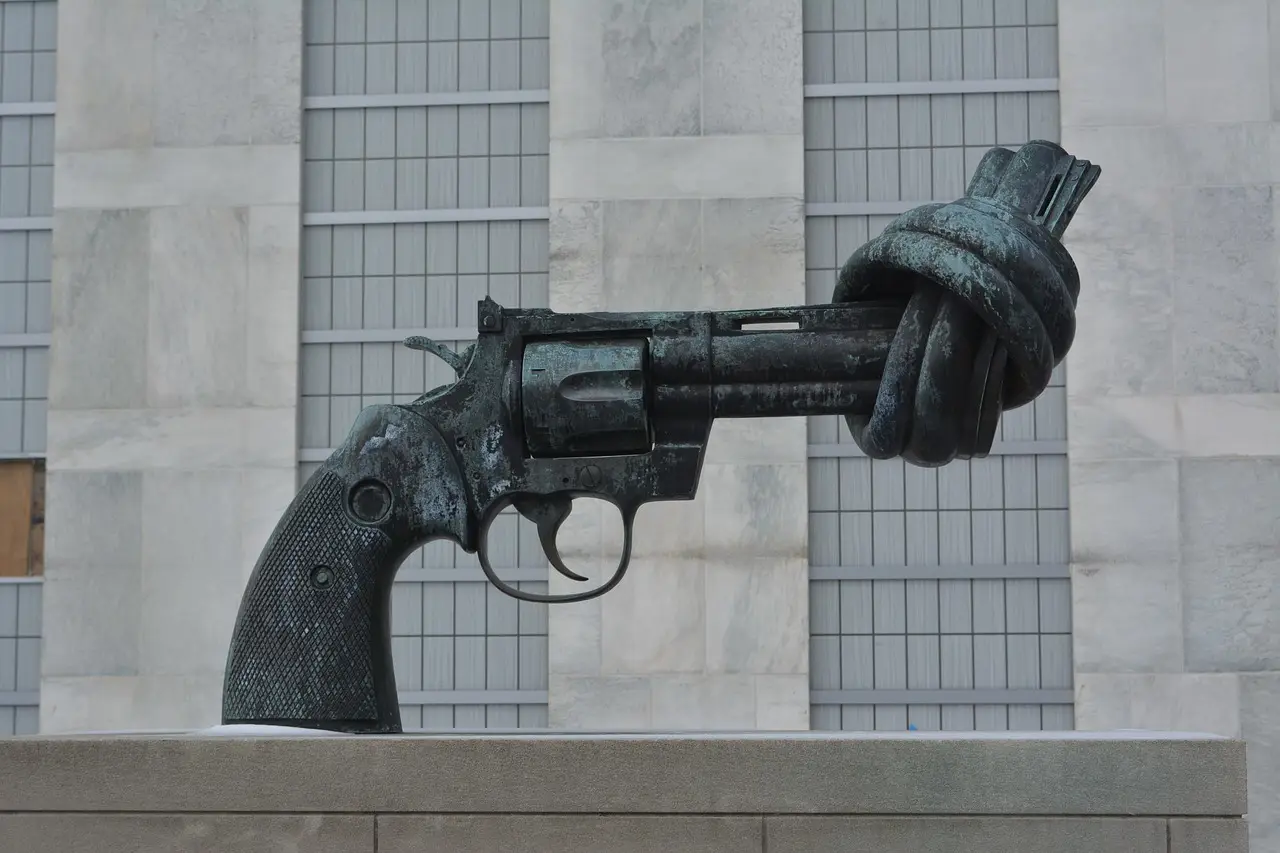
Gun, united nations, nyc
Gun, united nations, nycPhoto: Botana/Pixabay
PDF in preparation
Follow EPIS on Google
Key Insights

Without German backing, a CCW treaty would lack a key EU and NATO signatory; with it, Berlin would have to accept limits on weapons it is buying en masse to upgrade its arsenal.

Convention on Certain Conventional Weapons deadlock leaves Berlin room to manoeuvre

A new study by the Bundestag’s research service concludes that autonomous weapons are not unlawful in themselves, but that letting machines select targets without human intervention cannot currently be done lawfully. The finding lands as the Bundeswehr tests around 100 kamikaze drones in Lithuania, some of which can reportedly complete a strike alone if their signal is jammed. Days earlier, UN talks in Geneva ended without a mandate to negotiate a binding treaty: most states wanted one, but the US and Russia blocked it. States agreed only to develop an instrument of unclear legal status by 2028.

Crucially, Germany’s core promise, that a human always decides who dies, holds in peacetime but not in the war it is preparing for: once Russian jamming cuts the link, the drone may decide independently. Berlin appears to have preempted this, laying the foundations for its legal justification for autonomous targeting by reportedly backing a looser instrument in Geneva than it initially pushed for in 2025.

That retreat weakens the potential treaty at a critical moment. Frustrated states may now pursue a ban outside Geneva’s consensus rule, as was done with landmines and cluster bombs. Without German backing, a CCW treaty would lack a key EU and NATO signatory; with it, Berlin would have to accept limits on weapons it is buying en masse to upgrade its arsenal.

Germany’s likely answer will be exemptions for drones with technical safeguards– time limits, restricted areas, and self-deactivation, as happened with a German artillery shell under the cluster munitions ban. The danger is that a loophole tailored to German drones becomes the global benchmark, one that Russia, China, and arms exporters can cite to justify far less constrained systems, undermining any serious efforts at global regulation and arms control.

Sophie Rieckmann Sophie is a Vienna-based MA International Affairs student at King’s College London. After early work in social impact startups, she moved into geopolitical risk and diplomacy. She writes about European and Middle Eastern politics and geopolitics, and MENA-EU relations, with a focus on peace and security issues. Her work also covers non-proliferation, arms control, nuclear doctrine, and emerging threats.

Cite this brief
Rieckmann, S. (2026). As Treaty Talks Stall, Germany’s Kamikaze Drones Put Its Promise on Killer Robots to the Test. EPIS Insight · Artificial Intelligence & Cybersecurity.
Drawing of a café terrace on a street in Cologne around 1900. A postman cycles past and papers fly from his bag, a waiter carries Kölsch glasses, and the cathedral's spires rise behind the houses.

EPIS PublicationsEvery Monday

New EPIS publications, in your inbox

One email a week with the new EPIS publications. You choose the topics on the next page.

FreeCancel at any timeYou confirm your address by email

© 2026 EPIS · Independent · Non-partisan · Funded by the EPIS FellowsLegal Notice · Privacy Policy · · Cancel contracts here · RSS

Privacy preference centre

When you visit a website, it may store or read information in your browser, mostly in the form of cookies. Choose below which categories we may use. Your choice is kept for 12 months, and you can change it here at any time. Privacy Policy

Manage consent preferences

Always active