Economic interdependence can deter conflict, and energy infrastructure embodies this logic. The proposed TRIPP corridor could tie Armenia and Azerbaijan through shared transit and gas networks, raising the cost of renewed war. Yet history, from the Coal and Steel Community to Russian-European gas, shows infrastructure alone doesn’t secure peace. Institutions, credible guarantees and distributed control…
Introduction
Since the end of the Second World War, security strategists have increasingly pointed to economic integration as a powerful mechanism of conflict prevention. The foundation of the European Union reflected this understanding, with it ultimately extending to major developments in geopolitics like the famous German Ostpolitik of “Wandel durch Annäherung” (change through drawing closer), US President Bill Clinton’s push for China to join the World Trade Organization, and even the European Union’s purchasing of Russian energy throughout much of the 2000s up until the Russian invasion of Ukraine (Hover et al., 2025). Thomas L. Friedman introduced the “Golden Arches Theory of Conflict Prevention”, where he stated somewhat jokingly that no two countries with a McDonald’s have ever fought a war against each other (Friedman, 1999). This anecdote drew on the justification that nations with a developed middle class could support McDonald’s franchises and had enough economic incentive through globalization, interdependence, and consumerism to pursue cooperation rather than militarization. While this theory was developed in the post-Cold War era of geopolitical optimism, recent history shows that this has not quite held up. The intervention by NATO in the breakup of Yugoslavia and the Russian invasions of Georgia and Ukraine serve as clear rebuttals of the theory, showing that even with significant economic integration, conflict does not entirely abate. Despite these exceptions, policymakers still broadly support the stance that economic interdependence can reduce incentives for conflict.
A sector that embodies this directly is energy. Fossil fuels have both catalyzed and prevented armed conflicts throughout modern history, as energy resources often drive competition over control and transit, while simultaneously requiring deep long-term cooperation between states, preventing otherwise adversarial behavior (Månsson, 2014). Unlike ordinary commodity goods, the infrastructure underpinning fossil fuel markets is fixed, with pipelines, export terminals, and electrical grids serving as examples. These nodes tie together and are indispensable for the functioning and profits of consumers, producers, and transit states. The recently proposed Trump Route for International Peace and Prosperity (TRIPP) aims to facilitate the transit of goods through Armenia towards its Nakhchivan autonomous exclave. While the main initiative focuses on a rail corridor, new gas pipelines are a likely secondary infrastructure initiative. The duality of this energy tension lies at the heart of this proposal, as it reframes the exclave from a geopolitical barrier between Azeri-Armenian relations to a crucial region whose facilitation of energy transit directly links prosperity to regional stability. While the proposal seeks to end the energy isolation of Azerbaijan’s exclave, pipelines could instead be extended to provide new export routes for Azeri gas to the European Union. If both states derive considerable economic benefit from the transit of oil and gas, the renewal of the Armenian-Azeri conflict becomes prohibitively expensive for both states. While this arrangement may seem intuitive, lessons from history show that infrastructure alone rarely facilitates peace. In the past, political institutions, credible security guarantees, and sustained external support have been key to successful energy integration. The question of the South Caucasus instead becomes: can energy infrastructure serve as a catalyst for reconciliation, or will it simply become another asset over which wars are fought?
Infrastructure as an Anchor for Peace
The underlying logic of the TRIPP is not just further construction of pipelines and transport corridors, but the strategic incentives that accompany them, such as fixed networks of interdependence between producers, consumers, and transit states that persist for decades. The existence of such networks restructures the cost-benefit calculations of government policy by internalizing them within regional stability, resulting in materially advantageous cooperation (Keohane & Nye, 1977). For Azerbaijan, these transit corridors reinforce its emerging role as a key supplier of oil and gas to the European Union, serving as an alternative to Russian energy, as well as the increasingly tenuous Persian Gulf supply routes. The EU’s 2022 Memorandum of Understanding with Azerbaijan includes a doubling of gas imports by 2027, reflecting the realignment of supply routes (European Commission, 2022). On the Armenian end, the role of a transit state provides stable transit revenues, foreign investment, and most importantly, a reduced dependence on Russia, in line with Prime Minister Pashinyan’s goal of strategic independence from the Russian economic sphere. In quantifiable terms, the asymmetry is daunting. The Azeri economy is highly dependent on hydrocarbon revenues, which represented approximately 48% of GDP, and 92% of export revenue in 2022, with numbers fluctuating considerably based on market price cycles (U.S. International Trade Administration, 2023; International Energy Agency, 2022). Conversely, estimates of the TRIPP corridor indicate gas projects could earn Armenia $200-300 million in annual transit revenues, combined with a 30% reduction in logistics distances (Caspian Post, 2026). While this appears modest when compared to Azerbaijan’s revenues, the sum could provide a significant new source of income for the significantly smaller Armenian economy.

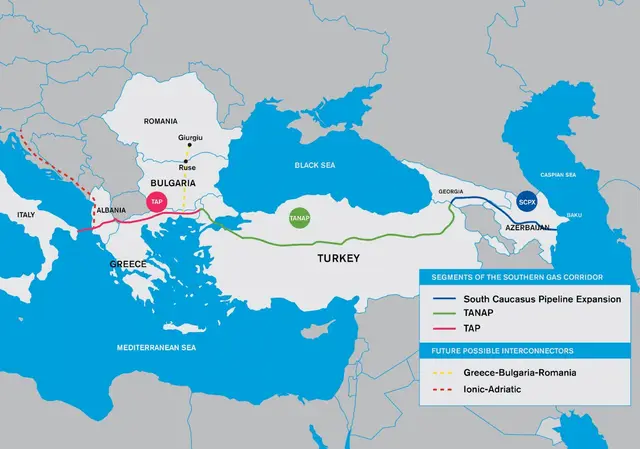
Figure 1: Proposed TRIPP Corridor Visualized
Note. From Trump Route for Peace and Prosperity (TRIPP) [Map], by Egmont Institute, 2026, https://egmontinstitute.be/app/uploads/2026/04/Brender-PB-image.png
This is reflected in a thematic group on regional connectivity that was brought together by LINKS Europe in the format of EU4Peace3, a peacebuilding initiative of the EU for the South Caucasus, highlighting that connectivity cannot be viewed solely through an economic lens, but also as an opportunity and mechanism for confidence-building. These transport corridors could reinforce the normalization of relations between the South Caucasus states through long-term cross-border cooperation and shared infrastructure. They add, however, that such effects could only result from the accompanying institutional dialogue and cooperative governance (LINKS Europe, 2025). This analysis reflects the convoluted logic of complex interdependence, which refers to states connected through multiple economic channels, and the higher costs they face when relations are disrupted (Keohane & Nye, 1977). Energy pipelines historically have amplified this dynamic due to their long-term nature and continuous cooperation requirements for safety and security regulation and maintenance. They simultaneously create a vulnerability, as fixed infrastructure can quickly become a source of political leverage, allowing either transit states or exporters to threaten disruption during periods of tension (Yergin, 2020).
Farrell and Newman (2019) refer to this as weaponized interdependence, where states in strategic positions within international networks exploit them for political advantage (Farrell & Newman, 2019). The deteriorating energy relationship between European states and Russia highlights this paradox, as infrastructure that formerly symbolized mutual dependence transformed into an instrument of coercion (Yergin, 2020). The lesson for the South Caucasus is abundantly clear, with energy integration serving as a mechanism to elevate the costs of renewed conflict, but only when supported by credible institutions, sustained political commitment, and adequate legal safeguards.
Lessons from past peacebuilding frameworks
The goal of using economic interdependence to build regional stability has been attempted many times throughout modern history. Governments frequently use strategic and shared resources or infrastructure to reduce conflict incentives, and as these experiences suggest, economic integration can catalyze peace. Likely the most prominent example is the European Coal and Steel Community (ECSC), established by West Germany, France, Italy, Belgium, Luxembourg, and the Netherlands in 1951 through the Schuman Declaration. The ECSC highlighted coal and steel, identified as critical to development but also rearmament, under the management of the supranational organization which, rather than simply encouraging trade purposefully eliminated strategic industries associated with war from national control (Schuman, 1950; Milward, 1984). The success of this arrangement stemmed not from the commodities governed, but rather from the institutions governing them. The shared oversight, dispute mechanisms, and common regulations guided the transformation from strategic competition to cooperation, eventually evolving into the European Union (Dinan, 2014). While a compelling example, the Caucasus face a very different reality.
This lesson is instructive for the South Caucasus, as an Azeri-Armenian pipeline to European markets may increase the cost of conflict, but it does not substitute for the political and legal institutions required for managing potential disputes. A lesson in the limitations of energy interdependence can be seen in Russia’s export relationship with Europe. The export of Russian gas to Europe was often used as an example of mutual economic interdependence, and a system that prevented conflict. Russia’s dependence on gas revenues from European customers was substantial, and the relatively cheap access to gas propelled European industrial growth for decades. This relationship, while pointed to as being a pillar of conflict prevention, eventually became a vulnerability as Russia’s relationship with Ukraine soured. After Russia’s full-scale invasion of Ukraine in 2022, the pipelines fully switched from instruments of cooperation to instruments of coercion (Stern, 2005; Yergin, 2020). The vulnerability came not as the result of dependence on Russian gas, but rather on infrastructure whose operation hinged on political cooperation and mutual trust, which deteriorated. This transformed the pipelines from insurance against conflict to leverage in one, illustrating a crucial lesson for policymakers in the South Caucasus peace process. Economic interdependence decreases the incentives for war, but does not remove geopolitical ambition, especially in authoritarian states that are not beholden to judicial decisions. Without sustained and shared political commitment, even infrastructure that was once mutually beneficial can become the target of conflict and competition.
Regional Challengers
Threats to the success of the Azeri-Armenian transit corridor will likely not exclusively come from the two main states themselves. The greatest challenges will likely emerge due to geopolitical influence and efforts to preserve existing dependency by regional powers. For the majority of post-Soviet history, Russia has preserved its influence in the region through a delicate balance of roles, acting as an energy supplier, political mediator, and security guarantor. Armenia’s (frozen) membership in the Collective Security Treaty Organization (CSTO), and the resulting presence of Russian peacekeeping forces, along with Russia’s residual dominance of transport and energy infrastructure from the Soviet era, have consistently placed Russia as the primary regional power in the Caucasus (de Waal, 2009). Armenia began seriously questioning this relationship following the limited response of Russia in the 2020 and 2023 conflicts with Azerbaijan, yet Moscow still holds considerable economic leverage in the country, despite the renewed electoral mandate of Pashinyan, who has made efforts to pivot away from Russian partnership (Hedlund, 2026). A Western-oriented transit corridor from Azerbaijan to European markets through Armenia would hence be more than just an infrastructure project, reducing Armenia’s economic dependence on Russia considerably while reinforcing its pivot towards the West. It would consequently strengthen the European Union’s influence in what has long been considered Russia’s backyard. The magnitude of export volumes Russia has lost from the EU can explain its intense opposition to any further Western-backed routes in what Russia considers to be its sphere of influence. The gas volumes piped to Europe disintegrated from 175 million cubic meters in 2021, to 16 billion in 2025 (The Moscow Times, 2025), leading Gazprom to post its first annual loss in over 2 decades (Al Jazeers, 2024). With this in hindsight, Russia has reason to resist further consolidation of Western-Azerbaijani-Armenian energy ties at its expense.
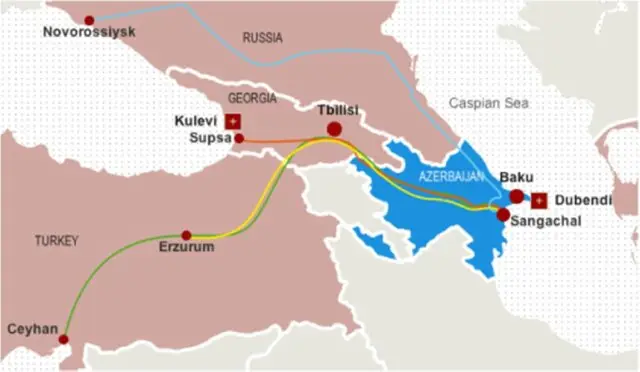
Figure 2: Map of the Trans-Caucasian pipelines originating in Baku-Azerbaijan (Natural Gas Europe, 2013).
Iran, like Russia, has strong incentives to prevent such a corridor from diminishing its regional importance. Historically, Tehran has opposed transport initiatives that bypass its territory, preferring to preserve its own role as a transit corridor between the Caucasus and Eurasia (Avdaliani, 2025). Iranian policymakers have additionally shown themselves to be sensitive to growing Turkish and Western influence in the Caucasus given Iran’s substantial Azeri minority population and long-running regional separatism (Hunter, 2010). The external pressure on the corridor need not be militaristic in nature, as modern geopolitical competition is increasingly indirect and designed to influence political outcomes rather than open confrontation, as can be seen in Russia’s electoral influence campaigns in Georgia and Armenia in recent years (Kharshiladze et al., 2025). The South Caucasus region is particularly vulnerable to these tactics due to existing unresolved conflicts surrounding borders, displaced populations, and ethnic tensions that heavily influence domestic politics (Cornell, 2017). The success of any such energy-for-peace framework hinges on both bilateral cooperation between Azerbaijan and Armenia and their ability to resist external pressure. Such a proposed corridor would immediately represent a flashpoint in the competition between the European Union, Russia, Türkiye, and Iran over the future of the region. History offers the suggestion that infrastructure that can reshape the direction of regional power rarely remains politically neutral.
Lessons from past peacebuilding frameworks
As discussed in the previous section, energy corridors in the past have become catalysts for both peace and conflict under differing circumstances. The ultimate answer to the question of success can only be answered by the future, but the direction hinges strongly on the true motivations of the South Caucasus states. If the route can serve as the anchor of a peace-building process between Azerbaijan, Armenia, and Turkey motivated by a true willingness to stabilize the region, increase cooperation, and overcome past divisions, then it is likely that an energy corridor would succeed in facilitating a lasting peace mechanism. If the motivation instead comes from self-interest in extracting transit and export revenues, then the incentives point to further conflict.
The danger lies in the fact that interdependence provides targets in addition to incentives, as a pipeline provides alternatives to outright destruction for weaponization. Transit and producing states can temporarily interrupt, threaten to disrupt transits, give preferential access, or interfere with maintenance in order to exercise political pressure. Natural gas infrastructure, in this case, has particular vulnerabilities to these actions, as they produce long-term dependencies between countries through every link of the supply chain (Victor et al., 2006). The dynamic is especially dangerous for Armenia, as Azerbaijan is the producer state and has several alternative export routes for its gas, setting up a considerable power imbalance. This imbalance is further reinforced by the start difference in financial buffer availability between the two states. The Azerbaijan State Oil Fund (SOFAZ), designed to funnel oil and gas revenues into a sovereign reserve, was reported to hold $56 billion in 2024 (U.S. Department of State, 2024). This financial cushion allows Azerbaijan significant capacity to absorb temporary export disruptions. Armenia, meanwhile, has nothing comparable, indicating that any disruption to transfer fees would be considerably more damaging to the Armenian economy. The resulting financial asymmetry adds to the broader imbalance between the states of the TRIPP.
The strategic value of any such corridor hence, is derived from the ability to influence the movement of resources, rather than just the resources themselves. While the primary unit of analysis in their example focuses on financial networks, the logic applies all the same to energy infrastructure, with the strategic indispensability of a network resulting in potential leverage for actors capable of controlling critical nodes. The expanded TRIPP could consequently result in a new strategic target in the South Caucasus, making influence over the corridor as important as control over the resources themselves.
Bachmann and Schouten’s (2018) criticism of infrastructure-first peacebuilding lends itself particularly well to this case. They warn against the treatment of infrastructure as inherently conducive to peace, arguing instead that it should be embedded within political relationships, providing the ability to redistribute power just as it can facilitate economic exchange. With TRIPP, beyond the question of economic profitability, several others arise over who regulates the corridor, who controls access, who guarantees its security, and how disputes will be arbitrated. The implications extend beyond the Caucasus, with a successful TRIPP corridor strengthening EU access to Azerbaijani energy and furthering Armenia’s pivot away from Russian independence. It would simultaneously increase Türkiye’s role as a regional transit hub, further diminishing the influence of Russia and Iran in the region and gas market. Çerný & Souleimanov (2011) concur that wider strategic calculations in the South Caucasus have historically been intertwined with energy infrastructure, pointing out that competing powers have used pipelines to advance broader geopolitical interests.
TRIPP would not result in a direct Western alignment, but rather a more multipolar South Caucasus. The incentives remain for Iran and Russia to preserve existing alternative routes that they favor, resisting the Western-oriented consolidation of connectivity, while Türkiye, the US, and the EU have equally strong incentives to further deepen their involvement. Analyses indicate that Russian and Iranian resistance to the project would likely be the greatest political risks (Carnegie Endowment for International Peace, 2026). Such a corridor wouldn’t diffuse the geopolitical tensions in the South Caucasus, but rather give the competition a physical route to operate through. The central challenge that emerges is to prevent this interdependence from concentrating enough to become weaponized. The peacebuilding potential of TRIPP hence depends on whether the governance structures employed distribute control, prevent any single actor from gaining disproportionate leverage over the network, and provide credible dispute resolution mechanisms. The integration of energy infrastructure can make peace more attractive, but without safeguards it can simultaneously make it a prize worth fighting over.
Lessons from past peacebuilding frameworks
The success of TRIPP hinges upon whether the current diplomatic good faith between Baku and Yerevan develops into a durable political settlement. Armenia and Azerbaijan have achieved considerable progress towards normalization, but the decades of conflict have left their mark on the respective societies and political realities. The integration of energy infrastructure can reinforce this process through the introduction of a material interest in peace and stability to both governments, yet such a project can’t resolve existing disputes and competition alone. Energy infrastructure should be understood as an instrument whose effects depend on the political realities they exist in, rather than a guarantee of peace. TRIPP, consequently, should be viewed neither as a peace mechanism on its own nor as an economic olive branch. Its value lies instead in the creation of additional peace incentives. If Azerbaijan and Armenia both invest in the same infrastructure, the costs of conflict rise proportionally, and if the corridor is secured by transparent governance, credible security guarantees, and shared regional interests, it could in the end become an anchor for peacebuilding.
The lesson from history is that economic interdependence does not fail, but rather must be institutionalized to ensure it. TRIPP will not make war unthinkable, but it can make peace increasingly valuable.
Lessons from past peacebuilding frameworks
Al Jazeera. (2024, May 2). Gazprom falls to first annual loss in 20 years as trade with Europe hit. https://www.aljazeera.com/economy/2024/5/2/gazprom-falls-to-first-annual-loss-in-20-years-as-trade-with-europe-hit
Egmont Institute. (2026). Trump Route for Peace and Prosperity (TRIPP) [Map]. https://egmontinstitute.be/app/uploads/2026/04/Brender-PB-image.png
Avdaliani, E. (2025, September 10). The new “Trump” corridor leaves Iran scrambling to preserve influence in the South Caucasus. Stimson Center. https://www.stimson.org/2025/new-trump-corridor-leaves-iran-scrambling-to-preserve-influence-in-the-south-caucasus/
Bachmann, J., & Schouten, P. (2018). Concrete approaches to peace: Infrastructure as peacebuilding. International Affairs, 94(2), 381–398. https://doi.org/10.1093/ia/iix237
Blackwill, R. D., & Harris, J. M. (2016). War by other means: Geoeconomics and statecraft. Harvard University Press. https://doi.org/10.4159/9780674545960
Carnegie Endowment for International Peace. (2026). Rewiring the South Caucasus: TRIPP and the new geopolitics of connectivity.
Caspian Post. (2026, January 16). The Zangezur corridor: Infrastructure that transforms the South Caucasus. https://caspianpost.com/opinion/the-zangezur-corridor-infrastructure-that-transforms-the-south-caucasus
Černý, F., & Souleimanov, E. A. (2011). South Caucasian pipelines and Caspian “oil diplomacy.” Central European Political Studies Review, 13(4), 383–408.
Cornell, S. E. (2017). The international politics of the Armenian-Azerbaijani conflict.
de Waal, T. (2019). The Caucasus: An introduction (2nd ed.). Oxford University Press.
European Commission. (2022). EU and Azerbaijan step up bilateral relations, including in the field of energy.
Farrell, H., & Newman, A. L. (2019). Weaponized interdependence: How global economic networks shape state coercion. International Security, 44(1), 42–79. https://doi.org/10.1162/isec_a_00351
Friedman, T. L. (1999). The Lexus and the olive tree: Understanding globalization. Farrar, Straus and Giroux.
Hedlund, S. (2026, July 16). Armenia’s strategic pivot from Russia to the West. GIS Reports. https://www.gisreportsonline.com/r/epc-armenia-russia-west/
Hover, R., Buchenrieder, G., & Sokolsky, J. (2025). Economic interdependence and the likelihood of war: A systematic literature review. Cogent Social Sciences, 11(1), Article 2488114. https://doi.org/10.1080/23311886.2025.2488114
Hunter, S. T. (2010). Iran’s foreign policy in the post-Soviet era. Praeger.
International Energy Agency. (2022). Azerbaijan’s energy context. In Implementing a long-term energy policy planning process for Azerbaijan: A roadmap. https://www.iea.org/reports/implementing-a-long-term-energy-policy-planning-process-for-azerbaijan-a-roadmap/azerbaijan-s-energy-context
Keohane, R. O., & Nye, J. S. (1977). Power and interdependence: World politics in transition. Little, Brown.
Kharshiladze, N., Chechelashvili, V., & Kekelidze, T. (2025, August 28). Challenges to Russia’s influence in the South Caucasus. New Eurasian Strategies Centre. https://nestcentre.org/challenges-to-russias-influence-in-the-south-caucasus/
LINKS Europe. (2025). New Armenian-Azerbaijani dialogue: Four landmark reports.
Månsson, A. (2014). Energy, conflict and war: Towards a conceptual framework. Energy Research & Social Science, 4, 106–116. https://doi.org/10.1016/j.erss.2014.10.004
Milward, A. S. (1984). The reconstruction of Western Europe, 1945–51. University of California Press.
The Moscow Times. (2025, July 2). Russia’s natural gas exports to Europe plunge to historic lows. https://www.themoscowtimes.com/2025/07/02/russias-natural-gas-exports-to-europe-plunge-to-historic-lows-a89650
Natural Gas Europe. (2013, February 20). Pipelines. http://naturalgaseurope.com
Schuman, R. (1950, May 9). The Schuman Declaration.
Stern, J. (2005). The future of Russian gas and Gazprom. Oxford University Press.
U.S. Department of State. (2024). 2024 investment climate statements: Azerbaijan. https://www.state.gov/reports/2024-investment-climate-statements/azerbaijan
U.S. International Trade Administration. (2023). Azerbaijan country commercial guide. https://trade.gov/country-commercial-guides/azerbaijan-market-overview
Victor, D. G., Jaffe, A. M., & Hayes, M. H. (Eds.). (2006). Natural gas and geopolitics: From 1970 to 2040. Cambridge University Press.
Yergin, D. (2020). The new map: Energy, climate, and the clash of nations. Penguin Press.