
The European Union’s Global Gateway, launched in December 2021, was the result of a process of convergence among evolving partnership aspirations, strategic priorities, and significant transformations in the international economic environment. Initially conceived to mobilise €300 billion in public and private investment by 2027 (which was reached in 2025), the initiative encompasses five priority sectors: digital connectivity, climate and energy, transport, health, and education and research.
As one of the world’s largest providers of development assistance, the EU already possessed an extensive framework of financial instruments, development programmes and institutional partnerships before 2021. However, the fragmentation of initiatives across European institutions and Member States often limited their coordination and strategic direction. Therefore, Global Gateway represented an attempt to consolidate existing capacities within a more coordinated and strategically oriented framework, through the so-called “Team Europe approach”. This institutional evolution coincided with a period of growing concerns about economic security and strategic dependencies. The vulnerabilities exposed by disruptions to global supply chains, particularly during and after COVID-19, reinforced the importance of diversifying trade relationships and strengthening international connectivity. Infrastructure investment acquired increasing relevance not only as an instrument of development cooperation but also as a means of enhancing European economic resilience.
These developments unfolded within a changing international context characterised by two interconnected dynamics. First, substantial infrastructure deficits across developing economies continued to constrain their economic diversification and regional integration, generating considerable demand for long-term investment. Second, connected to this need, China’s Belt and Road Initiative (BRI), launched in 2013, demonstrated the growing geopolitical significance of infrastructure financing, intensifying competition over international connectivity networks and economic partnerships.
Global Gateway emerged at the intersection of such developments, seeking to combine a more coherent European external investment strategy with the infrastructure and development priorities of partner countries. The effectiveness of the initiative can be assessed by analysing the financing mechanisms employed, the distribution of economic benefits, and the capacity of partner countries to shape investments in line with their own development strategies.
Fundamental perspectives
From a European perspective, the Global Gateway provides an opportunity to diversify economic relationships, thereby strengthening supply chain diversification and resilience.
At the same time, for partner countries, improved transport, energy and digital connectivity can address structural constraints on economic growth, facilitate regional integration and support industrial development. Their compatibility depends on the characteristics of individual investments and the priorities of the actors involved.
Infrastructure plays a significant role in shaping international economic relationships. Drawing on the concept of structural power, Rolf et al. (2026) emphasise how interconnected infrastructure, production, financial and digital networks influence the organisation of the global economy. In this context, investments promoted through Global Gateway can help strengthen European economic influence by establishing durable, long-term commercial and institutional connections. By expanding access to markets and, consequently, financing opportunities, infrastructure development may enhance the economic opportunities and negotiating capacity of participating countries.
In this regard, partner countries should not be solely regarded as passive recipients of externally defined investment strategies. Their governments pursue distinct development priorities, including industrial diversification, employment creation, technological upgrading and greater participation in regional and global value chains. As illustrated by Karkare and Byiers (2025), the interests and strategies of recipient countries may substantially influence the direction and implementation of international infrastructure partnerships. Their capacity to negotiate investment terms, diversify economic ties, and align projects with domestic priorities is therefore instrumental to understanding Global Gateway’s outcomes. Moreover, development benefits cannot be assessed exclusively at the governmental level, but must also consider the benefits to the local communities.
The relationship between geopolitical influence and development cooperation should consequently be understood as one of potential convergence, rather than automatic compatibility or inevitable conflict. Its effectiveness ultimately depends on the extent to which the interests of participating actors can be translated into mutually beneficial investments while preserving partner countries’ capacity to pursue their own development strategies.
Financing methodologies
The extent to which Global Gateway can reconcile these different interests depends significantly on its financial architecture, which combines public resources, development finance institutions and private capital to support infrastructure investment in partner countries. Rather than operating as an autonomous investment fund, Global Gateway coordinates existing European financial instruments. Its original €300 billion investment framework envisaged approximately €135 billion in investments supported through the European Fund for Sustainable Development Plus (EFSD+), up to €18 billion in grants, and around €145 billion in planned investments by European financial and development institutions.
The EFSD+, operating under NDICI–Global Europe, constitutes the main mechanism for mobilising capital through public guarantees and blended finance. Guarantees mitigate selected investment risks, enabling financial institutions, including the European Investment Bank, to support projects that might otherwise struggle to attract financing. Blended finance combines grants with loans and other financial instruments to improve project viability and potentially reduce financing costs. Such mechanisms seek to mobilise additional resources while addressing infrastructure needs that cannot be met through public expenditure alone.
This investment-oriented approach reflects a broader transformation in development cooperation, which Carbone (2026) conceptualises through retroliberalism: the increasing use of public development resources to mobilise private capital and stimulate infrastructure-led economic growth. While this model may expand financing opportunities, its developmental implications depend on how investment priorities are defined and financial risks and benefits distributed. From the perspective of partner countries, guarantees and concessional financing can facilitate access to capital, but they do not necessarily eliminate public debt obligations or contingent fiscal liabilities. Furthermore, commercially attractive projects may receive greater attention than socially essential investments offering limited financial returns. Consequently, assessing Global Gateway requires distinguishing between financial additionality, defined as the mobilisation of investments that would otherwise not materialise, and development additionality, concerning the economic and social benefits generated beyond those achievable through alternative financing arrangements.
Similarly, announced investment volumes should not be automatically equated with actual disbursements or completed projects: the effectiveness of this financing model depends not only on the quantity of capital mobilised, but also on its capacity to support partner countries’ development priorities, strengthen local productive capabilities and ensure financially sustainable, broadly distributed benefits.
Key developmental factors
In fact, beyond its more visible economic rationale, the contribution of infrastructure to development depends on those social and institutional opportunities it ought to create. Strong transport and digital transport networks can support productivity and regional integration, but their value lies in improving access to healthcare, education, and other essential services, and in connecting underserved communities to expand opportunities for broader social participation.
Partner-country agency is therefore a decisive variable in determining how these opportunities are pursued, because national governments can articulate their development priorities by targeting their needs and negotiate financing and implementation conditions, including by leveraging competing international partnerships. Nevertheless, their bargaining capacity tends to be constrained by limited resources, technological dependencies and unequal access to technical expertise.
Another layer of complexity is that national development interests are rarely homogeneous. Communities, governments, local authorities, and businesses may pursue very different objectives and experience the consequences of infrastructure investment unevenly. Meaningful development ownership must therefore extend beyond intergovernmental agreements to ensure that local actors can effectively participate in shaping investment priorities and decisions. Thus, the core question is how these different interests are negotiated, and whether infrastructure partnerships provide partner countries and affected communities with sufficient opportunities to influence their developmental outcomes.
Relevant case studies
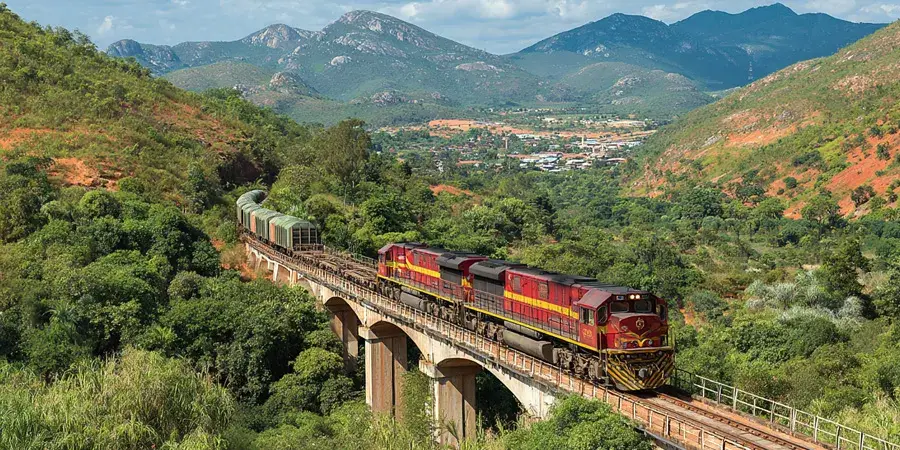
The Lobito Corridor, linking Angola’s Atlantic coast to the Democratic Republic of the Congo (DRC) and Zambia, illustrates this relationship. For the participating African countries, the significance lies in the potential for enhanced regional trade and industrial scale-up, including economic diversification by supporting their agricultural sectors. For the EU, investments were justified as providing opportunities to diversify critical-mineral supply chains.
Framed as the Global Gateway flagship infrastructure project in the region, its rehabilitation and expansion involve regional institutions, private operators, and key U.S. investment, with the Development Finance Corporation committing a $553 million loan to the existing Angolan railway. Under Global Gateway, Team Europe reports mobilising more than €2 billion across the wider corridor, including complementary investments in agricultural value chains, education and trade facilitation, rather than exclusively railway construction; the USA committed $4 billion through its G7-led Partnership for Global Infrastructure and Investment (PGII).
Nevertheless, significant structural and commercial uncertainties remain. The project largely builds on the existing colonial-era Benguela Railway, whose Angolan section had already been rehabilitated with Chinese financing, while further improvements are still required along the Congolese section. Moreover, the commercial viability of the proposed new railway connection to Zambia remains uncertain, despite recent progress in selecting construction contractors. Meanwhile, substantial Congolese copper continues to flow mostly by road, with China remaining a major destination for exports. This raises questions about the corridor’s ability to establish genuinely differentiated supply chains, given the already extensive presence of Chinese firms in regional mining and infrastructure, suggesting commercial opportunities for cooperation rather than competition.
From the perspective of the participating African countries, the corridor’s developmental relevance extends beyond crude-mineral exports, but is rather heterogeneous: while the DRC and Zambia aim at strengthening local processing and production scale-up, Angola seeks greater regional economic integration to diversify its economy.
Namibia provides a contrasting case centred on green industrial investments. Through the EU–Namibia Strategic Partnership established in 2022 (which provides up to €1 billion), European actors seek to support low-carbon supply chains and industrial decarbonisation, while Namibia aims to leverage its renewable energy potential to diversify an economy that has traditionally depended on mineral exports. The HyIron Oshivela facility was inaugurated in April 2025 to produce low-emission iron using green hydrogen. Its initial phase received €13.7 million in German funding, followed by an announced €12.9 million EU–Dutch contribution for expansion. According to European institutions, the project has involved over 60 Namibian SMEs and 400 skilled workers.
The translation of foreign investment into domestic industrial capabilities remains uncertain. Scholvin and Kalvelage (2025) highlight how Namibia has demonstrated considerable institutional initiative in attracting international partners and developing a national green hydrogen strategy. Yet, this strategy has largely followed a top-down approach, driven by government engagement with international investors and limited participation by local entities. This threatens the emergence of an inclusive industrial sector, as few Namibian enterprises have developed the capabilities to participate in emerging value chains, such as the hydrogen value chain, with projects such as HyIron being exceptions rather than the norm.
Future trajectory
In the very long term, a critical assessment of Global Gateway’s trajectory should pay particular attention to the transparency and accountability of its governance, including the clarity of investment objectives and resource allocation, as well as jointly established mechanisms to monitor projects and assess their socio-economic implications. Sustained dialogue with partner countries is relevant for identifying needs and expectations for both parties, while recognising that each may pursue political objectives that could interfere with or affect the project’s goals and progress. In this context, involving policymakers and affected communities in assessing how benefits are distributed could help identify discrepancies between stated objectives and actual outcomes, providing a basis for adjusting investment priorities accordingly. Embedding such mechanisms throughout project implementation could strengthen the initiative’s credibility and foster a more participatory, development-oriented model of international partnership.
References
Carbone, M. (2026). It’s not just geopolitics, stupid! Development, retroliberalism, and the EU’s Global Gateway. Journal of European Integration, 48(6), 947–965.
Heldt, E. C., & Meunier, S. (2026). The EU’s Global Gateway initiative: The geopoliticization of development aid and foreign economic policy. Journal of European Integration, 48(6), 901–921.
Karkare, P., & Byiers, B. (2025). The Lobito Corridor: Between European geopolitics and African agency (Discussion Paper No. 386). European Centre for Development Policy Management.
Lunardini, M., & Tshuma, D. (2026). The Lobito Corridor and Africa’s development agenda: Synergies with the Mattei Plan and Global Gateway (IAI Briefs No. 26|01). Istituto Affari Internazionali.
Rolf, S., Zajontz, T., & Schindler, S. (2026). Structural power redux: Geoeconomic rivalry in a networked world. Globalizations. Advance online publication.
Scholvin, S., & Kalvelage, L. (2025). New development paths through green hydrogen?: An ex-ante assessment of structure and agency in Chile and Namibia. Energy Research & Social Science, 120, Article 103904.
Tagliapietra, S. (2024). The European Union’s Global Gateway: An institutional and economic overview. The World Economy, 47(4), 1326–1335.