
Disruptions and turmoil are characterising the economic and political world of today. A common energy strategy, at the very least within the framework of the “Western World”, could bring some stability into the chaos. There is no life and no economic activity without energy. We are confronted with dramatic climate changes. Yet the world, even its Western part, has not found a common way to develop a global and sustainable energy policy. Different energy strategies are contributing to global fragmentation and disruption.
Recent developments show different trends and contradictory policies. Wars have put new strains on the system. Rising demands from some private activities, especially from the tech industries, including data centres, add further pressure. A coordinated development of the energy system is not primarily possible due to the global fight for economic and political supremacy, especially between the U.S. and China. Europe remains very often a victim of geopolitical and geoeconomic forces beyond its influence.
Nevertheless, there are some positive developments, even if they are far behind what would be necessary to comply with the climate targets agreed in Paris in 2015. Even if the growth in global CO2 emissions slowed further, total emissions reached a record high in 2025.
Newest Trends & Recent Developments
The latest Global Energy Review of the International Energy Agency reports slower overall energy demand growth due to slower economic growth and slower growth in energy-intensive industries. Also, faster efficiency improvements contributed to slower demand growth. What is especially noteworthy is the fact that low-emissions sources combined contributed nearly 60% of the growth in global demand. But we have to recognise that these low-emissions sources include, besides solar, wind and hydropower, also nuclear power. The building and running of nuclear power stations are certainly part of the low-emissions sources but are still connected with risks and uncertainties concerning the treatment and storage of nuclear waste.
Anyway, solar power is the largest single source of growth, and it met more than 25% of the higher demand. As the Global Energy Review writes: “Two main trends marked the evolution of global electricity generation in 2025. Solar PV posted a record increase of 600 TWh, taking its total electricity generation to nearly 2 700 TWh. This was more than double its output in 2022 and brings solar PV’s share in total global electricity generation to over 8%. ….Although China saw a huge increase in its solar PV generation, the growth of this source was a global story, with the United States, India and the Middle East all seeing increases of 20% or more…..The flip side of the strong growth of solar PV was a decline in global electricity generation from coal for the first time since 2019.” The sustainable way into the future energy systems seems to be clear, but the speed is not satisfactory, especially in view of the global climate concerns. As the Review also mentions: “Fossil fuels continued to contribute more than half of the global electricity generation, with coal remaining the largest source.”
There are, of course, differences in regional demands and in the answers to them. As the Global Energy Review notes, energy demand growth in the United States rose to its highest level since 2000. Certainly, the rising demand from data centres, but also robust industrial growth and colder temperatures, added to that rise. But it is also an expression of the energy policies of the Trump administration, which is not keen on energy saving and energy efficiency.
The “Age of Electricity”
What is clearly visible when looking at the data is that the world has entered the “Age of Electricity”. It is a general, broad-based development. But we have to recognise that data centres and electric vehicles, while still having a small share, are growing rapidly. In the U.S., data centres accounted for about 50% of the total electricity demand growth. Data centres have been the focus of public attention worldwide, but especially in the United States. Again, we see contradictory trends. While the industry, especially the AI industry, is pushing for as many data centres as possible, with Trump’s administration supporting it, the public is often very sceptical. The high energy and water demand is perceived as a threat to the supply for citizens’ households. A typical AI-focused data centre consumes as much as 100 000 households, and the newer generation already under construction will consume 20 times as much.
But it is not only the availability of electricity that may be highly critical. The energy grids are also already under strain in many areas. At least it would be necessary to locate data centres in areas of high power and grid availability. Additionally, it would be useful to reduce the number of data centres. The development of AI generally needs some regulation, and that should also include the construction of data centres. Economically, it would also be wise to bring speculative development into a more even investment flow. As Martin Wolf wrote recently in the Financial Times (04. November 2026): “The longer the investment boom and the associated financial engineering continue, the bigger the negative economic impact is likely to be when it ends… New technologies have often triggered stock market manias and investment booms that end in busts. Recent market tremors suggest this could even be happening to AI now.”
Security versus vulnerability
On the other hand, we should not underestimate the capacity of Artificial Intelligence to organise the way our energy systems work more efficiently! It can make the systems more secure, affordable and sustainable. But there is a caveat: energy systems are never permanently, or even in the long run, secure. Again and again, new and more sophisticated security investments have to be undertaken to maintain the security level.
Indeed, the restructuring of the energy sector towards electricity generated from lower-emission sources, combined with strong digitalisation, is very beneficial for mitigating negative climate change. But it is often overlooked that it is connected with higher risks. Interference, especially hacking by private individuals, criminal organisations or states, can have devastating effects. The more states develop their digital energy systems, the more they must design security systems to protect them. And the more private or state-backed hackers target these systems, the more authorities must develop new security measures. These developments may lead to a permanent cycle of cyberattacks and the design of protective mechanisms against them.
The effect of wars
The fact that the electrification of the energy system raises the vulnerability of the system does not mean that cyber attacks are the only disruptive forces for our energy system. The vulnerability of gas and oil flows has again been demonstrated by the war in the Middle East. It is not the first time that a war in this region has had global effects, not only on the energy supply but also on the global economy. And maybe this time it also had a direct effect on the outcome of the election in the United States. The rising prices, not only of gasoline, certainly had an additional influence on U.S. voters at the midterm elections. It is not yet clear what kind of effect this election’s result will have on U.S. policies in the Middle East and on energy policies in general. Anyway, Trump’s efforts to change U.S. voters’ attitudes by delivering diesel from Russia did not help his fellow Republicans. Concerning the energy demand of AI, the protests of citizens and of their Democratic, but also some Republican, representatives may force Trump to make some changes to his fossil energy policies. But overall, he will remain a strong supporter of fossil fuels and of data centres in order to strengthen the competitive position vis-à-vis China but also Europe.
It is evident that Russia’s war against Ukraine, and especially the war of the U.S. and Israel against Iran, has changed the global energy supply and price situation. Still, the effects differ across regions. Russia’s war had an immediate, strong impact on the energy situation in Europe, particularly in those countries that depended heavily on Russian gas supplies. The sanctions on Russian gas led to a shift away from Russian sources towards new suppliers, including the U.S., which gained additional markets. By contrast, the consequences for European consumers and industries were severe. Even when policies to soften the price increases were introduced, the public reacted negatively. European public opinion also became increasingly critical of financial support for Ukraine. Due to rising energy prices and their inflationary consequences, right-wing forces gained a boost in public support.
When energy prices slowly reached a more moderate level, the war against Iran and Iran’s reaction, especially the blockade of the Strait of Hormuz, pushed energy prices up again. The U.S. public felt the rising prices too, but because the country supplies much of its own energy, the price increase was limited. Still, it certainly influenced the election result. China, on the other hand, could use its high level of oil and gas reserves to limit the price increase and has continued access to Russian gas. It can also use its support for the Russian war and the loss of the European market for Russian gas to demand low prices. So again, it was Europe, besides many of the poorer and resource-weaker countries, which suffered because of the war in the Middle East.
For Europe, the two ongoing wars have enormous economic and political consequences. The European Union had developed a clear energy strategy. It wanted to build up a new sustainable energy system with cheap Russian gas as a transitional source of energy. In addition, energy saving and, in particular, rising energy efficiency should decrease energy demand. This should also be achieved by taxes on energy, in particular by levies on non-sustainable energy sources. First, the Russian war against Ukraine and later the war in the Middle East torpedoed those policies. The European industry is suffering from competition from countries with lower energy prices. Households are protesting by voting against the inflationary burden, and very often this protest supports anti-establishment movements and parties, that is, anti-European ones.
Forward-looking China
China has for many years pursued a progressive energy policy, combining a still heavy reliance on fossil fuels, including coal, with a strong expansion of different forms of sustainable energy, including a growing battery energy storage system (BESS). China has also pursued a comprehensive resource policy, which enabled a very cost-efficient transformation into a sustainable energy system. The development of the battery industry was particularly important. For all these developments, the early engagement in the supply and processing of critical materials, including the so-called rare earths, was fundamental.
As the Financial Times (01. October 2026) writes in its Big Read about energy: “The seeds of China’s battery storage boom were sown in the years after Xi Jinping took power in 2012, with its pledge to build an ‘ecological civilization’. The government increased support for renewable power investment in an effort to boost energy security, tackle urban pollution and gain a strategic advantage in a sector with global growth potential.” But the Chinese authorities saw that much of the energy produced by wind and solar was wasted, as the grid could not absorb it. So the authorities “launched a strategic push to deploy battery storage on the grid at large scale. Across much of the country, developers were required to build or commission large-scale storage as a condition of approval for new wind and solar plants.” The strong support for the battery industry, including enhanced research into more efficient batteries, was a decisive step forward. The full use of renewable energy, which can only be produced in a “intermittent” way, depending on when the wind is blowing or the sun is shining, needs a functioning battery energy storage system. China has again done its homework and is in an advanced position in relation to the United States and Europe.
Looking into the future
To draw a line from the past to the future concerning energy is not delivering any useful result. In the past decades, many discussions about the existence of a “peak oil” point have been largely futile. Any such point from which oil supply would recede depends on many factors, which would have to be defined beforehand. The much more important question is how much and what kind of energy societies want to use to fulfil their wishes and meet their desires. Not every society has the same expectations or the same possibilities to meet them. But it may be useful to think in scenarios. They could outline how future energy systems would develop or could be managed. McKinsey & Company, which is used to working with scenarios, has recently published the Global Energy Perspective 2026. It presents an assessment of how the global energy system may evolve by 2050. McKinsey works with three scenarios – Slow Evolution, Continued Momentum and Sustainable Transformation.
The Continued Momentum scenario is the baseline scenario. In this scenario, fossil fuels are projected to remain in demand through to the late 2020s, before growth begins to slow down in the early 2030s. From an environmental and climate policy perspective, it is not a comfortable outlook. The resulting warming is well above the Paris Agreement target. Even worse from this perspective is the Slow Evolution scenario. Here, fossil fuel displacement is even more gradual. This scenario is characterised by a weakened policy ambition: „Renewables capacity continues to grow, EV adoption rises, and electrification advances, but the system struggles to absorb new energy technologies at the pace required to materially change the global fuel mix before the mid-2030s.“ Fossil fuel demand would peak around 2050. The third scenario, „Sustainable Transformation“, is characterised by a strong transition ambition and quicker fossil fuel displacement. Fossil fuel consumption would peak around 2030 and then enter a sustained decline. Electricity would quickly become the backbone of the global energy system. „Emissions decline materially over the period to 2050, putting the world on a significantly lower implied warming trajectory of about 2℃ or below by 2100.“
The Sustainable Transformation scenario was more or less the scenario the European Union had in mind when developing its answer to climate change. Basically, it is still part of the European sustainability aspirations. The question has to be asked if it is still realistic. The McKinsey report speaks of a “Fragmented Energy Order“ due to the geopolitical disruptions. “Fragmented Energy Order is the scenario in which geopolitical developments move the world even further toward a more “tripolar energy system“ with blocs coalescing around China and its trading partners, the United States and aligned markets, and Europe and its partners.“
As we have seen, China will use its strength to continue its path of transformation from a strong reliance on coal to renewables, in combination with an efficient battery energy storage system. As long as these batteries use rare earths as vital components, China holds an advanced position. It can always put pressure on other countries by imposing export restrictions on critical materials. The U.S. is in a good position concerning fossil fuels, but it has also invested heavily in sustainable energy, in spite of Trump’s attitudes and policies. Even if Artificial Intelligence demands a great deal of energy, it could also be used to improve the U.S. energy system. Europe is still promoting a policy of strengthening energy production from renewables, even with lower targets. However, the right wing is sceptical, if not outright opposed, to the sustainable energy system. The extreme right parties are also promising to bring Russian gas back to households and industry, something which could be accepted and favoured by a wider public not thinking about the long-term effects. Such a policy may reduce energy prices and, consequently, inflation in the short term, but it would at least postpone the transition to the already cheaper renewables.
Does Europe have a chance?
In a study with the complex title “Global Energy Crises, Geopolitical Conflict, and Economic Vulnerability: Econometric Evidence on Inflation Transmission, Growth Effects, and Renewable Transition Resilience”, the author comes to the unsurprising conclusion: “The econometric evidence indicates that higher Brent oil prices are associated with stronger inflationary pressures and weaker growth outcomes, with these effects amplified in economies characterised by larger net energy imports. By contrast, renewable-energy penetration is associated with greater resilience, both directly and through a reduction in the effective vulnerability of the energy system.” This logic should also be convincing for right-wing politicians who are particularly keen on sovereignty. There is hardly anything that supports sovereignty more than an energy system based on sun and wind, combined with an efficient storage system and an equally efficient network to transport energy where it is needed.
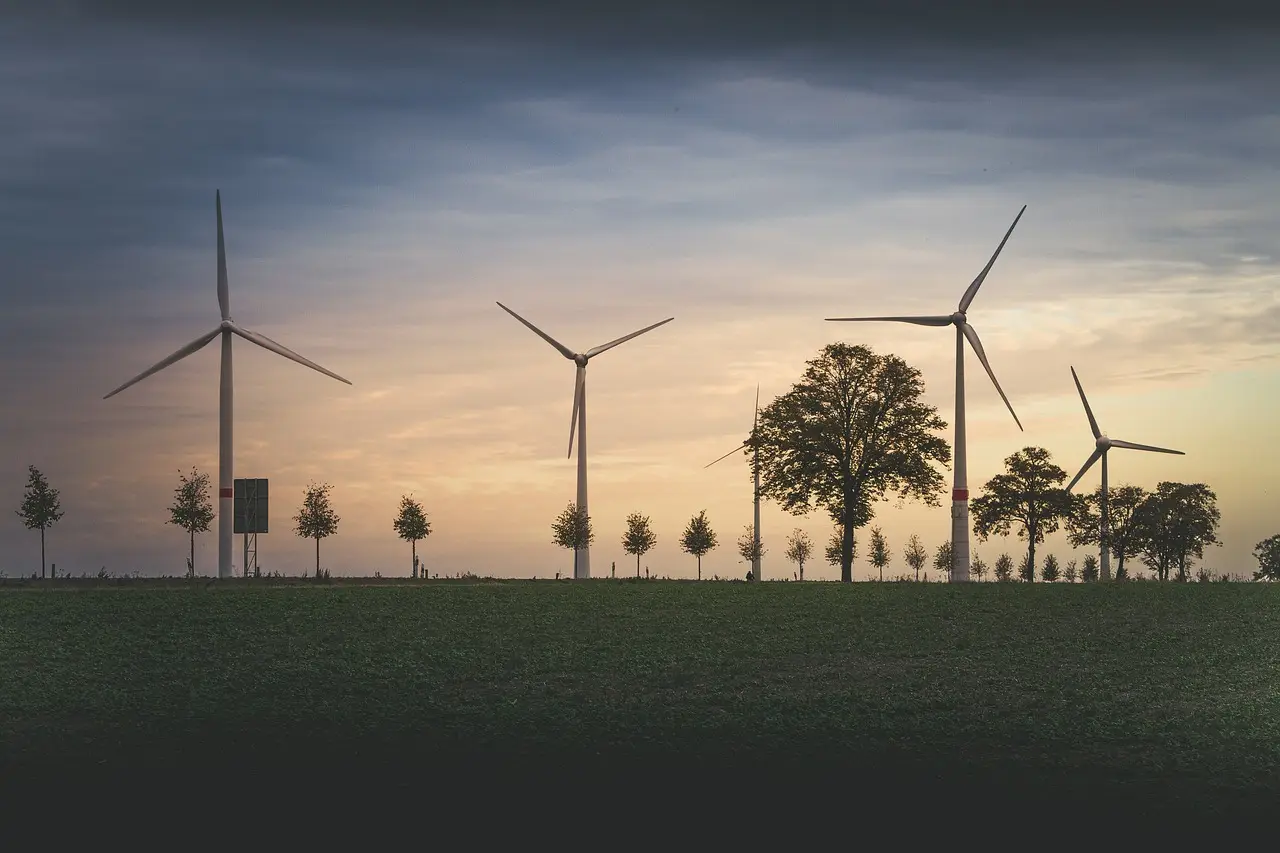
When European politicians compare the long-term strategy of China with the short-term, erratic actions of the Trump administration, Europe should know which path it must follow. Of course, Europe’s decision-makers and the national governments do not have the power that authoritarian leaders such as Xi Jinping hold. Nevertheless, the European Commission and the majority in the European Parliament should have the courage to stick to the programme of an energy transition that respects the needs of a sound climate policy. The European car industry, which missed its chance in the past to meet the new climate targets, should also adopt that strategy quickly. Yes, Europe must take care of its industry, which faces a difficult competitive situation. Compared with other regions, high energy costs are an issue that one should not neglect. Moreover, rising energy efficiency is not always a way to reduce energy costs. But while some transitional relief from the energy burden may help in the short run, the climate, environmental and economic arguments favour a forward strategy of continued electrification based on renewables, combined with investments in the European grid and in battery storage. Countries such as Austria, which has relied heavily on hydropower, must also take that path. Scarcity of water already shows the limitations of hydropower, but also of nuclear power.
Fortunately, the European Commission is very active in promoting electrification under the title “Electrify Now”. It proposed related activities at the London Climate Action Week in June 2026 and is now coordinating the Electrify Now government coalition. It is also actively pushing for targets to be agreed at the forthcoming COP31 in Antalya. The question remains whether it will be easy to enhance the electrification path in the coming years when Europe also wants to lessen its dependence on Chinese imports. In a recent contribution published by SWP, the author Susanne Dröge writes: “Chinese products will be indispensable in scaling up the clean-tech sector internationally and reducing the costs across the industry. European clean-tech manufacturers require imported raw materials, chips and processors that can only partially be substituted by domestic production. On the other hand, the EU wants to protect European clean-tech companies from Chinese competition and curb China’s dominance.” Of course, it would be wise to seek close cooperation with China, not only on electrification in the EU and China, but also in supporting poorer countries to gain access to clean-tech so that they can revolutionise their energy policies too. It would need wise representatives on both sides to agree on such cooperation. Only recently, a compromise has been found on the import of Chinese cars to Europe. But we also need positive steps towards coordinated activities, and the energy sector, combined with a joint climate strategy, could be one field in which to show such responsibility.
References
Dröge, S. (2026). A green electrification target for all? COP31 as a catalyst for European clean-tech diplomacy (SWP Comment No. 47/2026). Stiftung Wissenschaft und Politik. https://doi.org/10.18449/2026C47
International Energy Agency. (2026). Global energy review 2026.
McKinsey & Company. (2026). Global energy perspective 2026.
McKinsey Global Institute. (2026). Solar power: From intermittent sunshine to reliable power. https://www.mckinsey.com/mgi/our-research/solar-power-from-intermittent-sunshine-to-reliable-power
Pasupuleti, M. K. (2026). Global energy crises, geopolitical conflict, and economic vulnerability: Econometric evidence on inflation transmission, growth effects, and renewable transition resilience. International Journal of Academic and Industrial Research Innovations, 118–142.
Wolf, M. (2026, November 4). The economic risks of the AI boom. Financial Times.