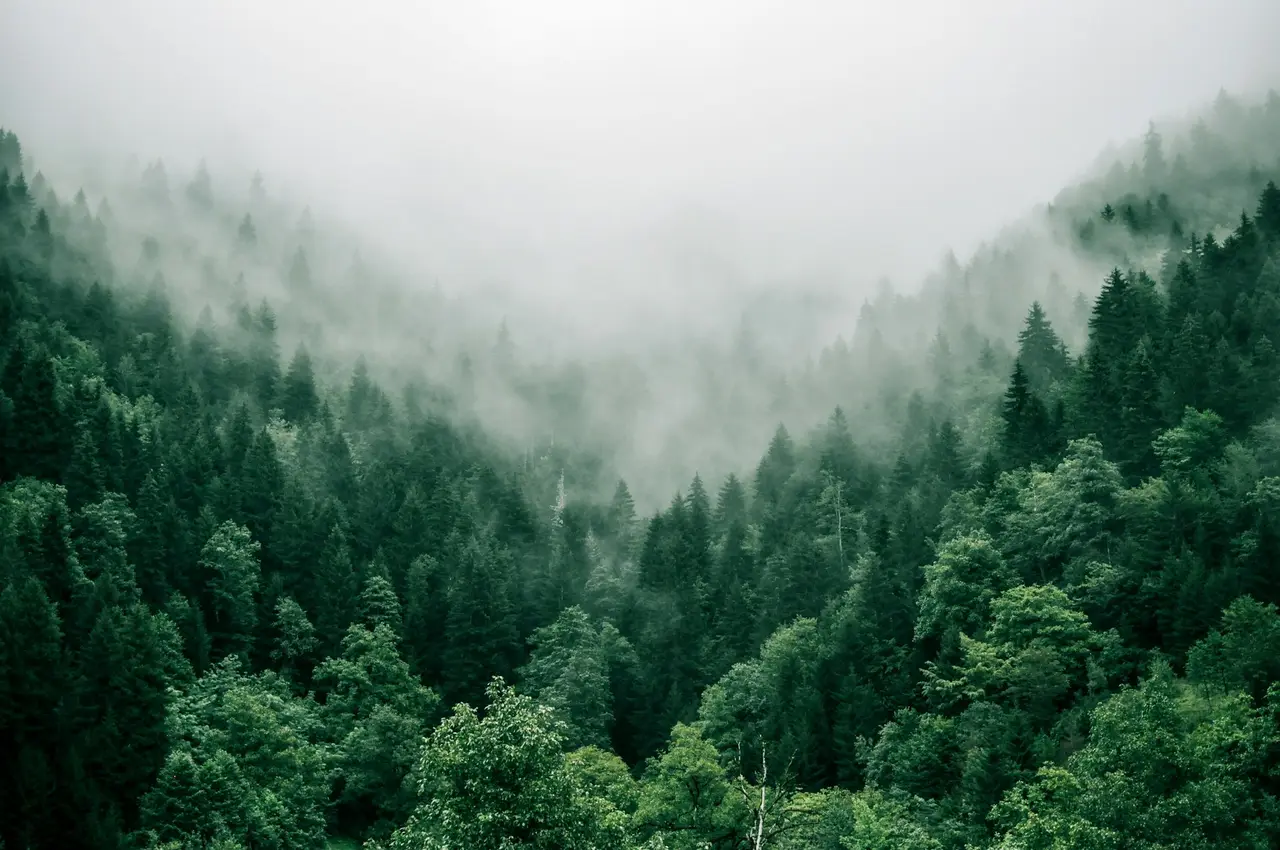

Forests are now expected to fulfil a growing number of functions, such as absorbing carbon, protecting biodiversity, providing timber and biomass, supporting employment and rural development, and offering spaces for tourism and recreation. However, climate change, droughts, fires, storms, pests and the loss of biodiversity are making them increasingly vulnerable.
Therefore, the problem cannot be reduced to a choice between conservation and economic development. The environmental, social and economic dimensions are interdependent: a degraded forest loses its ecological capacity, while a fragile economy may also lose the social conditions necessary for its management.
The challenge is to manage forest use in a way that does not compromise their long-term value (European Commission, 2021; EEA, 2026a; European Commission, 2026; FOREST EUROPE, 2026).
Problematization
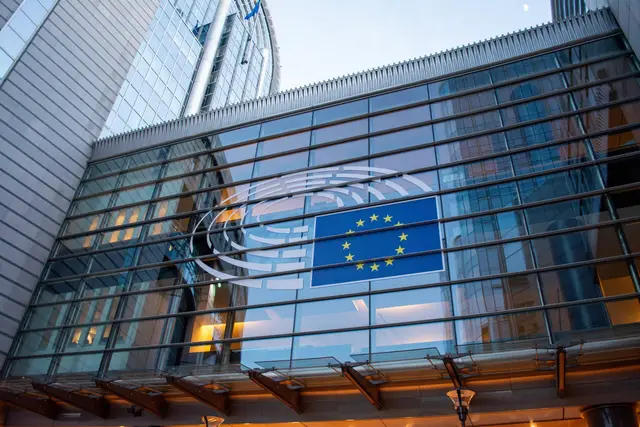
Although forests are local in their location, many of their functions affect areas beyond administrative boundaries. This means that governance involves the European Union, member states, regions, local authorities, landowners, communities, and economic operators.
However, this structure can give rise to a governance gap, in which objectives set at the European level differ from the actual conditions on the ground.
Adopting a perspective that considers natural heritage enables us to move beyond a purely economic view. Timber, biomass, and income represent only part of a forest’s value. Biodiversity, the landscape, ecological functions, culture and identity are equally important.
The concept of heritage also introduces an intergenerational dimension: preserving a forest ensures that it can continue to fulfil its functions in the future. From this perspective, the ecosystem can be viewed as a shared resource whose management requires shared rules, participation, and distributed responsibility (European Commission, 2021; EEA, 2023a; EEA, 2026a; FOREST EUROPE, 2026).
Protection, Restoration and Resilience
Protecting ecological integrity
Protection is the first level of conservation. The EU Forest Strategy for 2030, alongside the Green Deal and the European Biodiversity Strategy, incorporates forests into a wider ecosystem protection framework. Instruments such as Natura 2000 contribute to the protection of habitats and biodiversity.
However, protecting a forest does not simply mean preserving its area. The ecological quality of a forest depends on its ecosystem structure, species diversity, soil and water quality, and habitat connectivity (European Commission, 2021; EEA, 2023b; FOREST EUROPE, 2026).
Restoring what has been degraded
Where ecological functions are already compromised, protection alone is insufficient. The aim of restoration is to recover ecosystems’ ability to function through interventions that address biodiversity, forest structure, soil, water, and connectivity.
Therefore, restoration is not simply a matter of increasing the number of trees. Protection and restoration complement each other: protection conserves what maintains high ecological integrity, while restoration restores what has been degraded (EEA, 2023a; European Commission, 2024; EEA, 2025).
The forest resilience nexus
Forest resilience stems from the interplay of climate, environment, economy and communities. While forests contribute to climate mitigation, they are also vulnerable to droughts, fires and other extreme events. At the same time, forests support the timber sector, the bioeconomy, rural employment and tourism.
Local communities are another element of this system, as they contribute traditional knowledge, management practices and participation, which can enhance the adaptability of local areas.
Therefore, resilience must be understood not merely as an ecological property of the forest, but as the capacity of the local system to maintain its environmental, social and economic functions over time (European Commission, 2021; EEA, 2023b; EEA, 2026b; FOREST EUROPE, 2026).
The governance gap: from European policy to the local level
The European Union defines strategies, objectives and financial instruments, but their effectiveness depends on how they are implemented locally. The process can be summarised as follows:
EU → state → region → local institutions → local management.
The case of the Alto Bellunese region illustrates the importance of this step. Research in the area shows that European policies influence local strategies through direct funding and through principles, programmes and models of governance. The aim is to adapt the European framework to the area’s specific social, economic and environmental characteristics.
The result is a form of governance that is not solely vertical. Community participation, coordination between institutions, and the involvement of local stakeholders are essential for translating supranational objectives into local practices (European Commission, 2021; European Committee of the Regions, 2021; European Commission, 2023; Regione del Veneto, 2023; GAL Alto Bellunese, 2024a; GAL Alto Bellunese, 2024b; European Parliament, 2026).
A local perspective: the Alto Bellunese
Situated in the heart of the Dolomites, the Alto Bellunese provides a particularly useful case study for observing this process. This area boasts high biodiversity and a rich natural and cultural heritage, but faces challenges such as depopulation, tourism pressure, and the management of natural resources.
This area demonstrates how various stakeholders contribute to the implementation of European policies. The Alto Bellunese LAG (Local Action Group), the Belluno Dolomites National Park and the Ampezzo Dolomites Regional Nature Park are three distinct yet complementary examples of this.
The LAG promotes participatory local development by utilising European instruments to support initiatives related to cultural promotion, responsible tourism, agriculture, and sustainable land management. The two parks, on the other hand, play a central role in protecting ecosystems and promoting natural heritage.
The case of the Regole d’Ampezzo is particularly significant. Several studies describe this system as a form of community-based management that is deeply rooted in the local area. Rights of use and responsibilities for managing forests and pastures have been passed down through the generations. This model shows how conservation and resource use can be integrated into an institutional framework based on local participation.
Similarly, the Belluno Dolomites National Park’s Park Community provides a forum for local stakeholders to get involved. Research also emphasises the LAG’s role in facilitating dialogue between the local population, businesses, and public authorities when formulating medium- to long-term strategies.
However, this case does not demonstrate that a particular model can be replicated elsewhere. Rather, it offers a lesson in governance. European policies become more effective when integrated with local institutions, knowledge and community participation (GAL Alto Bellunese, 2024; Migotto G., 2025; Parco Nazionale delle Dolomiti Bellunesi, 2026; Regole d’Ampezzo, 2026a; Regole d’Ampezzo, 2026b).
Possible policy directions
To strengthen the resilience of Europe’s forests, there must be greater integration between the various policies affecting our forest heritage. This will ensure that biodiversity conservation, land management, rural development, the forestry sector and climate adaptation do not proceed in isolation from one another. Within this framework, protection measures should focus on maintaining the integrity of intact forest ecosystems, while restoration efforts should aim to recover the ecological functions, biodiversity and adaptive capacity of degraded ecosystems. This shift in focus is crucial to moving beyond a quantitative approach that focuses solely on increasing forest cover area. At the same time, multi-level governance must be strengthened by improving coordination between European institutions, Member States, regional and local authorities, forest owners, communities and economic operators. This will bridge the gap between objectives set at the European level and their practical implementation on the ground. This approach should recognise the value of forests as natural and cultural heritage by incorporating local knowledge, traditional practices and forms of collective management into decision-making processes. Finally, the greater involvement of local communities can help ensure that forestry policies are better tailored to local circumstances, fostering shared responsibility and transforming forest management from a purely administrative or economic issue into a key element in protecting a shared, intergenerational heritage (European Commission, 2020; European Commission, 2021; European Commission, 2022; EEA, 2023b; European Commission, 2024; European Commission, 2025).
Conclusion
European forests are ecosystems, economic resources, social spaces and cultural landscapes. This complexity means that a single-function approach to forest management is insufficient.
Protecting forests of high ecological integrity, restoring degraded ecosystems, and preserving long-term resilience are three inseparable objectives. However, the effectiveness of these measures depends on governance.
If forests are regarded as shared natural heritage, their conservation becomes a responsibility spanning institutional levels, territories, and generations. While the European Union can define a common framework, translating it into concrete results hinges on the link among European policies, national and regional implementation, and local management.
Therefore, the challenge is not to choose between protection and use, but to create the institutional conditions that allow forests to remain resilient, multifunctional and shared.
Transitioning from forest management to heritage governance ultimately means recognising that preserving a forest is not just about keeping trees standing; it involves sustaining the ecological, economic, social and cultural relationships that constitute a forest’s heritage value over time (European Commission, 2021; European Commission, 2024; FOREST EUROPE, 2026).
References
European Commission (2020). EU Biodiversity Strategy for 2030: Bringing nature back into our lives. European Commission.
https://environment.ec.europa.eu/strategy/biodiversity-strategy-2030_en
European Commission (2021). New EU Forest Strategy for 2030. European Commission, COM(2021) 572 final.
https://eur-lex.europa.eu/legal-content/EN/TXT/?uri=celex:52019DC0640
European Commission (2022). 8th Environment Action Programme to 2030. European Commission.
https://environment.ec.europa.eu/strategy/environment-action-programme-eap-2030_en
European Commission (2023). Proposal for a Regulation on a monitoring framework for resilient European forests. European Commission, Directorate-General for Environment.
https://environment.ec.europa.eu/publications/proposal-regulation-forest-monitoring-framework_en
European Commission (2024). Nature Restoration Regulation. European Commission.
https://environment.ec.europa.eu/topics/nature-and-biodiversity/nature-restoration-regulation_en
European Commission (2025). Commission adopts a user-friendly planning tool to support Member States in implementing the Nature Restoration Regulation. European Commission.
https://environment.ec.europa.eu/news/commission-adopts-user-friendly-planning-tool-support-member-states-implementing-nature-restoration-2025-05-20_en
European Commission (2026). Wildfires: EU action to monitor and prevent forest fires, and to restore burned areas. European Commission, Directorate-General for Environment.
https://environment.ec.europa.eu/topics/forests/wildfires_en
European Committee of the Regions (2021). The role of the regional and local levels in the EU Forest Strategy. European Committee of the Regions.
https://www.cor.europa.eu/en
European Environment Agency (2023a). European forest ecosystems: Key allies in sustainable development. European Environment Agency.
https://www.eea.europa.eu/en/analysis/publications/european-forest-ecosystems-key-allies-in-sustainable-development
European Environment Agency (2023b). How are European forest ecosystems doing? European Environment Agency, Briefing No. 04/2023.
https://www.eea.europa.eu/en/analysis/publications/how-are-european-forest-ecosystems-doing
European Environment Agency (2025). Nature-based solutions for fire-resilient European forests. European Environment Agency, Briefing No. 14/2025.
https://www.eea.europa.eu/en/analysis/publications/nature-based-solutions-for-fire-resilient-european-forests
European Environment Agency (2026a). Ecosystem services – Forests and society. Forest Information System of Europe.
https://forest.eea.europa.eu/topics/society/ecosystem-services
European Environment Agency (2026b). Drought impact on ecosystems in Europe. European Environment Agency.
https://www.eea.europa.eu/en
European Parliament (2026). The European Union and forests. Fact Sheets on the European Union. European Parliament.
https://www.europarl.europa.eu/factsheets/en/sheet/105/the-european-union-and-forests
FOREST EUROPE (2026). State of Europe’s Forests 2025. FOREST EUROPE.
https://foresteurope.org/publications/
GAL Alto Bellunese (2024). TRACCE – Strategia di sviluppo locale 2023–2027. GAL Alto Bellunese.
https://www.galaltobellunese.com/sviluppo-rurale/tracce-la-strategia-di-sviluppo-locale-2023-2027/
Migotto, G. (2025). The Alto Bellunese between Europe and Territory: EU Policies’ Role in Local Sustainable Development. Master Thesis, University of Trento, School of International Studies.
Parco Nazionale delle Dolomiti Bellunesi (2026). CETS 2026–2030. Parco Nazionale delle Dolomiti Bellunesi.
https://www.dolomitipark.it/ente-gestore/progetti-di-sviluppo/cets/cets-2026-2030/
Regione del Veneto (2023). Sviluppo locale LEADER 2023–2027. Regione del Veneto.
https://www.regione.veneto.it/web/agricoltura-e-foreste/sviluppo-locale-leader
Regole d’Ampezzo (2026a). Le Regole d’Ampezzo: Un altro modo di possedere. Regole d’Ampezzo.
https://www.regole.it/IT/pagina107-le-regole-d-ampezzo-un-altro-modo-di-possedere
Regole d’Ampezzo (2026b). Gestione del patrimonio. Regole d’Ampezzo.
https://www.regole.it/IT/pagina112-gestione-del-patrimonio