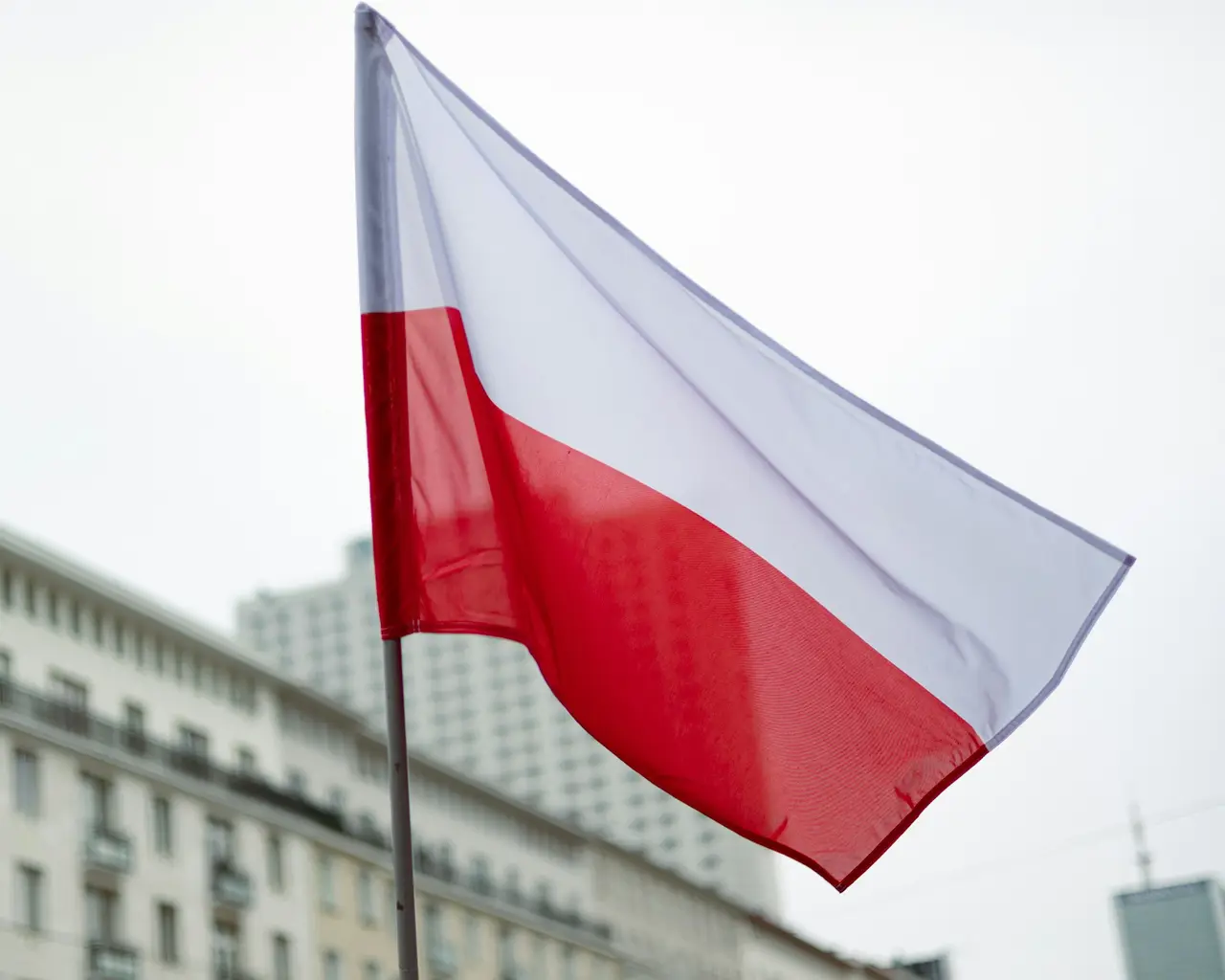

It was 22 October 2020. I was in my room, painting protest signs and preparing to take to the streets against a new restriction on Poland’s already extremely restrictive abortion law. I had skipped my university classes that day. I just had one more thing to do before leaving the house: write the phone number of an organisation providing legal support to protesters on my arm, in case I was arrested by the police.
Earlier that day, Poland’s Constitutional Tribunal had ruled that abortion in cases of severe and irreversible foetal abnormalities was unconstitutional. The decision came during the second wave of the COVID-19 pandemic, when government restrictions on public gatherings made protesting particularly difficult. I still remember the anger and the overwhelming sense of injustice I felt. Why did we still have to fight for our fundamental rights? Why were we still not treated as equal to men? And why, as a citizen of the European Union, did I not have the same reproductive rights as my female friends in the Netherlands, Germany or France?
The conservative government may have hoped that the pandemic would keep us at home. But we took to the streets anyway. The decision of the Constitutional Tribunal triggered the largest wave of public protests in Poland since the fall of communism in 1989. Over the following days, hundreds of thousands of people joined the demonstrations.
Abortion law in Poland was already highly restrictive at the time, with abortion on request being illegal. It was permitted only in three circumstances: when the pregnancy threatened the woman’s life or health, when it resulted from a criminal offence, such as rape, or in cases of severe and irreversible foetal abnormalities. They removed the last of these grounds, effectively eliminating the legal basis for approximately 97% of all officially recorded legal abortions performed in Poland.
The human cost of Poland’s abortion law
Determining whether a severe foetal condition poses a threat to the mother’s health or life can be medically complex, and in such a restrictive legal environment, doctors may hesitate to intervene out of fear of legal consequences. The deaths of Izabela, Dorota and other women following pregnancy complications raised serious concerns about delayed medical intervention under Poland’s restrictive abortion law. This is not just about laws and statistics – it is about real women’s lives.
Particularly controversial is forcing women to give birth in cases of severe foetal abnormalities, while the state fails to provide adequate support for families raising children with severe disabilities. These families, particularly mothers, often face huge financial and emotional burdens. A 2026 report by Poland’s Supreme Audit Office revealed disruptions in publicly funded care and assistance services, while a separate study highlighted the challenges parents, particularly mothers, face in balancing employment with caring for a child with disabilities.
Three years after the elections – what happened to the promises?
Abortion rights were a major issue in Poland’s 2023 elections. According to an OGB Pro exit poll, 16.6% of voters considered abortion and women’s rights their top priority. Almost three years later, we are still waiting. While women cannot be prosecuted for ending their own pregnancies, anyone helping them obtain an abortion outside the law can face up to three years in prison, including partners or family members helping them get abortion pills.
On 20 October 2026, the Sejm, Poland’s lower house of parliament, passed two bills: one to partially decriminalise abortion-related assistance and another to restore abortion rights in cases of severe foetal abnormalities. However, neither has entered into force yet, and both could face a presidential veto. It is a step forward, but Polish women have heard promises before.
Across Europe, the growing influence of the far right is putting women’s rights under increasing pressure. Poland’s struggle for reproductive freedom is part of the wider European challenge, making meaningful progress both more urgent and more difficult to achieve.
Six years later, still on the streets
On 22 October 2026, Polish women again took to the streets. Thousands of people protested under the slogan “A Red Card over Abortion Rights”, demanding legal abortion up to the 12th week of pregnancy, full decriminalisation of abortion, and unrestricted access to the morning-after pill. Protesters carried red cards and banners with slogans such as “Abortion ban kills women” and “Women’s hell continues”, showing that the anger and frustration felt in 2020 have not disappeared. The protests also served as a reminder to political leaders of their promises. Despite a change of government and recent legislative progress, women are still waiting for meaningful reform. We have protested and voted for change. Now we need to see that change become reality.
Why this is also Europe’s problem
Many Polish women have to travel abroad for an abortion, but not everyone can afford it. The European Citizens’ Initiative My Voice, My Choice gave us hope by proposing EU funding to help women access safe and legal abortion abroad. Despite over a million signatures, the European Commission did not establish the proposed fund. Instead, it confirmed that Member States could voluntarily use the European Social Fund Plus (ESF+) to support abortion care, including for women from other EU countries. However, Polish women still have no guarantee of receiving this support. The question now is how the Commission will encourage Member States to turn this possibility into real help for women.
Six years ago, I was painting protest signs in my room, hoping our voices would finally be heard. Today, I am still asking the same questions about my rights. Polish women have protested, voted and demanded change. Yet we are still being told to wait. We should not have to spend another six years fighting for the right to feel safe in our own country.