

Introduction: China’s Rise in Peacekeeping and the Reshaping of International Order
UN peacekeeping is a dynamic global network that goes beyond individual missions. As a political, security and social assemblage, it reconfigures relationships among actors and functions as a form of power through which competing visions, values and ideas shape how international order is contested and reshaped.
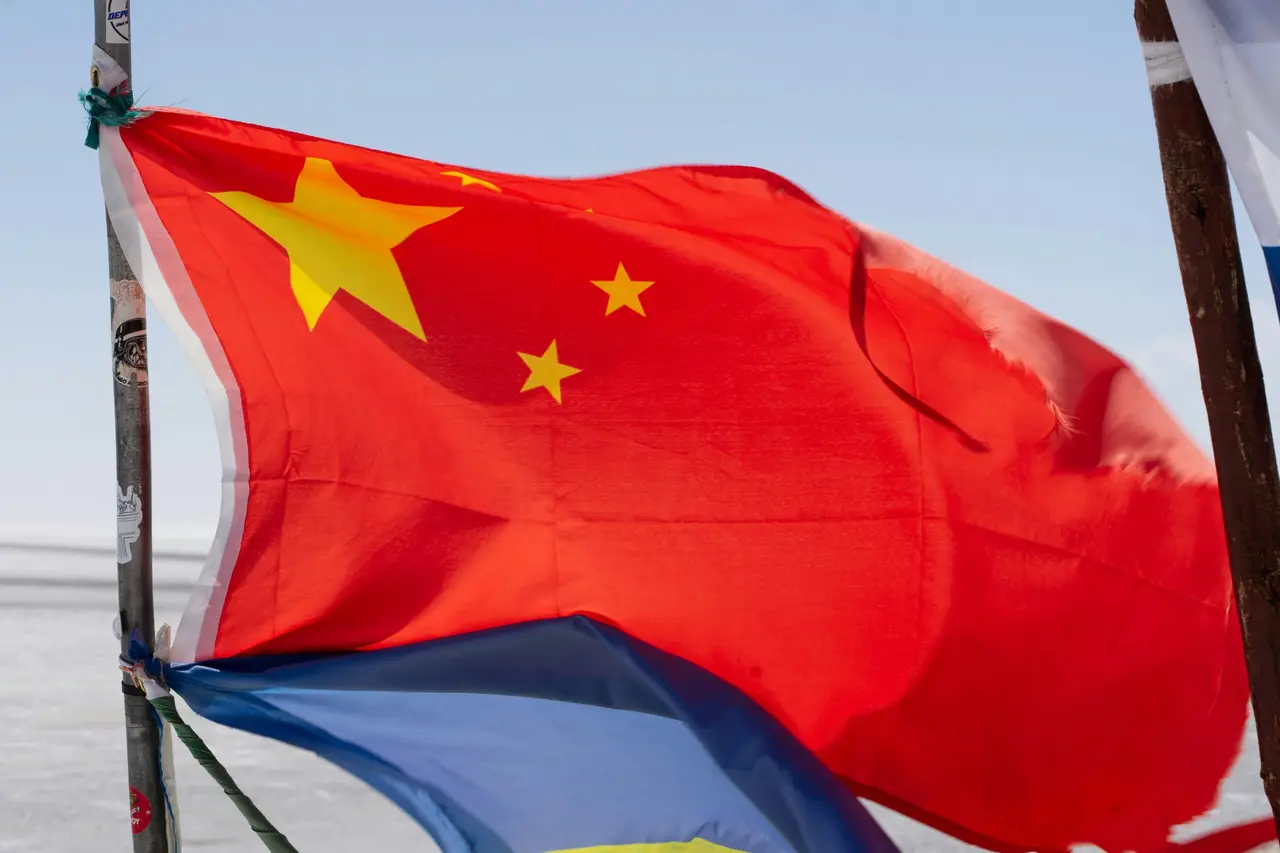
In this sense, China’s growing role within the United Nations system deserves renewed attention. China is currently the second largest assessed contributor to both the UN regular budget and UN peacekeeping, with assessment rates of around 20% and 18.69% respectively (United Nations, 2025). As a permanent member of the Security Council, China participates directly in the authorisation, renewal, and shaping of UN peacekeeping mandates, having a direct impact over the future of the 11 current UN peacekeeping operations. Furthermore, with over 1,600 troops and other personnel now serving UN peacekeeping operations, China has become now the eighth-largest provider of UN Peacekeeping personnel globally, exceeding the rest of the Security Council (P5) (United Nations, 2026).
This article asks how China’s recent engagement with UN peacekeeping illustrates broader contestation over the norms and hierarchy of the international order. While China is often portrayed as a systemic challenger to liberal peacekeeping, this article argues that, without seeking to abandon or undermine the UN system, China uses its position to advance alternative priorities and challenge Western dominance from within. UN peacekeeping is therefore treated as a window into the emerging multipolar order, where competing visions are increasingly being renegotiated, allowing us to understand not only the future of UN operations but also the reconfiguration of the international order.
UN Peacekeeping, Liberal Peace and Global Order Contestation
UN peacekeeping originated during the Cold War as an ideologically neutral tool based on host-state consent, impartiality and the use of force only in self-defence. From the mid-1960s onwards, operations were mainly based on ceasefire monitoring and were not aimed at altering state institutions or addressing the root causes of conflict (Coleman & Job, 2021).
After the end of the Cold War, liberal assumptions became increasingly embedded in UN peacekeeping. Peace operations began to reflect an “obvious connection between democratic practices (…) and the achievement of true peace and security” (Coleman & Job, 2021, p. 1453). Mandates expanded to include electoral support, post-conflict peacebuilding, human rights monitoring and related tasks. This transformation reinforced Western dominance, with the P3 shaping Security Council resolutions, while industrialised liberal democracies assumed most peacekeeping costs and retained influence within UN structures.
From the mid-1990s onwards, however, this liberal model began to show signs of fragility. Western states increasingly avoided UN peacekeeping in strategically important crises, preferring NATO-led operations or ad hoc coalitions. Its liberal ambitions were weakened by contradictions such as externally promoted elections, limited local participation and selective responses to authoritarian practices. By the 2010s, peacekeeping increasingly prioritised civilian protection, stabilisation and counterterrorism, sharpening tensions between mandate designers, funders and personnel contributors.
2.1 Norm Contestation and Order Making: The Ambiguity of UN Peacekeeping
Even if the chronology of events seems to point to a crisis of the liberal system, Hofmann (2024) offers a more nuanced interpretation: in peacekeeping and crisis management, the liberal order has never been fully consolidated. What emerged after the Cold War was a “liberal moment”, in which actors from the Global North attempted to make their interpretation of peace and security hegemonic.
However, this liberal moment did not lead to a stable liberal order. After the 1990s, other visions of order reappeared, showing that liberalisation was always accompanied by resistance, reinterpretation and competing ordering attempts. Kosovo illustrates this ambiguity: NATO justified its 1999 intervention on humanitarian grounds without Security Council authorisation, while Russia and China framed it as a violation of the UN Charter. Yet, actors later returned to the UN framework (Coleman & Job, 2021).
In this sense, the international system has been shaped by the coexistence of liberal, partially liberal and non-liberal visions of order, made possible by the ambiguity of the UN Charter and the system itself. Since norms remain open to interpretation, actors can pursue competing projects in the same institutional framework. Hofmann (2024) defines this as “dialectical ordering”: not a stable and closed order, but a continuous process of order-making through contestation.
Norm contestation, defined as the “discursive or non-discursive disapproval of a norm by relevant actors” (Yuan, 2022, p. 1801), helps explain this process. It may target procedure, content, validity or application, generating disagreement over meaning and scope. However, contestation does not necessarily imply erosion; it may clarify meaning, redefine application or strengthen acceptance.
Applied to peacebuilding, this means that the field is structured by norms that can themselves be contested. Yuan (2022) identifies three dimensions. First, peacebuilding rests on a (1) normative basis that defines why a problem should be addressed internationally. In liberal peace, this basis is rooted in sovereignty as responsibility (SAR) and the responsibility of the international community (RIC), which may legitimise international action in cases of massive human rights violations or security threats. Contesting these assumptions constitutes validity contestation.
Second, peacebuilding includes (2) content norms, which define the actions to be undertaken and the outcomes considered desirable. Within liberal peace, lasting peace is associated with liberal democracy, free-market economy, rule of law, human rights, institutional reform, civil society, democratisation, and “decent governance”. Disputing these priorities without rejecting international intervention would constitute content contestation.
Third, peacebuilding relies on implementation principles, which guide how these actions are operationalised. Yuan argues that liberal peace has relied on intrusive tools, including financial conditionality, imposed reforms, externally designed peace agreements, quasi-governmental functions and force. Although the “local turn” has softened this approach, international actors often still decide which local actors and proposals are legitimate. Challenging these implementation practices constitutes application contestation.
2.2 From Norm Contestation to Power Shifts in UN Peacekeeping
In this sense, contestation may produce power shifts within the United Nations system that are not measured only through institutional reforms, military capabilities, or economic resources, but through an actor’s capacity to influence others and achieve specific outcomes. Accordingly, Barnett and Duvall’s power framework (2005) distinguishes four forms of power: compulsory, institutional, structural, and productive.
(1) Compulsory power refers to the direct capacity of an actor to shape the behaviour of others through pressure, coercion, material resources, etc. In the UN context, this includes veto power, financial pressure, diplomatic lobbying, or efforts to block or redirect resolutions. (2) Institutional power operates more indirectly through rules, procedures, funding arrangements, bureaucratic structures, and agenda-setting mechanisms. Rather than forcing actors to behave in a certain way, it shapes the conditions under which decisions are made. (3) Structural power refers to the position an actor occupies within broader relations of hierarchy and authority, such as developed and developing states, donors and recipients, or those who authorise, finance, and implement international action. (4) Productive power concerns the ability to shape meanings, affecting how security, development, sovereignty, human rights and peace are defined (Haug, Foot & Baumann, 2024).
Power shifts are relevant to UN peacekeeping because they affect not only resources, but also the authority to define mandates, priorities and meanings. Norm contestation and power shifts therefore operate at different but complementary levels. Contestation is one mechanism through which power shifts occur, since actors challenge or reinterpret the norms guiding peacekeeping mandates and practices, making peacekeeping both operational and normative.
This connection resonates with Hofmann’s (2024) idea of dialectical ordering. If international order is continuously made through contestation, power shifts unfold through the reinterpretation of that order from within. Ambiguity allows the same institutions to accommodate competing visions of peace, security, sovereignty and intervention, enabling actors to reshape existing hierarchies rather than acting outside or against the UN framework.
| DIALECTICAL ORDERING: CONTINUOUS ORDER-MAKING THROUGH CONTESTATION | ||||
| NORMATIVE STRUCTURE | CONTESTATION | WHAT IS CONTESTED | IMPACTS ON POWER SHIFTS | HOW IT OPERATES IN UN PEACEKEEPING |
| Normative basis | Validity Contestation | The legitimacy of international intervention | CompulsoryInstitutionalStructural | Through Security Council authorisation, vetoes, abstentions and mandate negotiations, actors define whether intervention is legitimate and under what conditions missions can operate. |
| Content | Content Contestation | The priorities of peacekeeping | ProductiveInstitutionalStructural | Through mandate language, mission priorities and budget debates, actors decide whether peacekeeping prioritises liberal reform, stabilisation, development, security or state capacity. |
| Implementation Principles | Application Contestation | The implementation of peacekeeping | InstitutionalCompulsoryStructural | Through operational planning, funding, training and ownership debates, actors determine how norms are applied and who counts as a legitimate local partner. |
Figure 1. Matrix of Norm Contestation, Power Shifts and Dialectical Ordering in UN Peacekeeping.
China’s Engagement with UN Peacekeeping: Contestation Within Order
Contrary to a simplistic view of China as merely rejecting liberal peace, China has generally accommodated part of its normative basis since the 2000s. Although its foreign policy continues to revolve around sovereignty and non-intervention, the 2005 Position Paper on UN Reforms recognised that large-scale humanitarian crises may be a legitimate international concern (Yuan, 2022). The 2020 White Paper further confirms China’s formal commitment to international peace and UN-authorised peacekeeping (Kim, 2024). Thus, China does not fully reject peacebuilding’s normative basis, but tactically reinterprets non-intervention by restricting when, where and how international action is legitimate.
Darfur, East Timor and Syria illustrate this selective accommodation. In Darfur, China accepted an AU-UN hybrid operation once host-state consent and regional involvement were secured. East Timor also shows China’s acceptance of UN-authorised intervention when it does not create a broader right to external intervention (Gill & Huang, 2009). Syria, by contrast, marks the limits of this accommodation, as China blocked resolutions perceived as enabling regime change, bypassing sovereignty or expanding coercive intervention, including P3 resolutions calling for Al-Assad to step down (Sun, 2014).
This is where China’s power shifts become particularly visible. As Foot (2024) argues, China’s clearest power shift has occurred through compulsory power, especially through the actual or anticipated use of the veto. With it, China not only expresses normative disagreement, but also directly constrains the Security Council’s capacity to act, making China’s validity contestation consequential.
However, China’s main contestation does not lie in the normative basis of peacebuilding, but rather in its content and application. Regarding content, China does not deny the need for peacebuilding, but challenges the priorities attached to it. It promotes an alternative agenda based on two elements: the democratisation of the international system and the sequencing of development and stability before democratic institution-building (Yuan, 2022).
3.1 The Democratisation of the International System: Sovereign Equality, Global South Representation and Cooperative Security.
First, China considers that the unequal and exclusive nature of the international system often nourishes conflict, and as claimed by President Xi Jinping: “All countries have the right to participate in international and regional security affairs on an equal footing.” (quoted in Yuan, 2022, p. 1807) This perspective challenges Western dominance and relocates part of the explanation for conflict from the domestic to the international level.
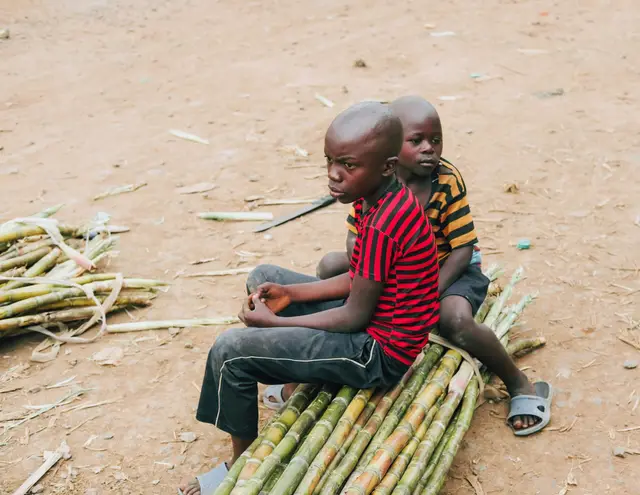
A clear example of China’s democratising efforts can be found in its relationship with Africa. Africa is the largest troop-contributing region in UN peacekeeping and the continent where most missions are deployed, making its role central to the future of the UN system. These dynamics are linked to Xi Jinping’s Global Security Initiative, which promotes China’s vision of cooperative international security governance (Kim, 2024).
Although China and African actors do not have identical interests, their priorities are sufficiently complementary to reorient aspects of UN peacekeeping. The Rwandan genocide promoted the African principle of non-indifference, which supports the use of force to protect civilians. China partially supports this position if host-state sovereignty is not questioned. South Sudan and Mali illustrate this synergy: in both UNMISS and MINUSMA, China accepted more robust peacekeeping when framed around stabilisation and state security.
Both actors also challenge Western predominance; however, African states have significant operational relevance but limited formal power, since their financial contribution is reduced and they lack permanent representation on the Security Council. This is where complementarity appears again: by supporting African demands, China can weaken the dominant position of the P3 while reinforcing its own influence within the UN system (Coleman & Job, 2021).
Through the democratisation of the international system, China seeks to become a leading security actor of the complex Global South, understood not only as a geographical or economic category, but also as a political one. However, the Global South is not monolithic: its actors pursue different interests. By supporting them, China promotes an alternative security discourse and builds a wider support base (Kim, 2024).
Through content contestation, China shifts the focus of UN peacekeeping towards sovereign equality, cooperative security, development, stability and host-state authority. This challenge may translate into institutional, structural and productive power shifts. Institutionally, China uses its Security Council position, contributions, peacekeeping engagement and diplomacy to shape agendas. Structurally, China’s support for ownership by Global South countries challenges the hierarchy between those who design and finance mandates and those who implement or host missions. Productively, China seeks to redefine security governance by contesting the liberal vocabulary through which UN peacekeeping has traditionally been understood (Foot, 2024).
3.2 Development First: Alternative Sequencing, National Ownership and State-Centred Peace.
Secondly, regarding alternative sequencing, from the Chinese perspective, the rights to subsistence and development prevail over civil and political rights. When it comes to application, China defends national ownership and rejects externally imposed solutions. However, its understanding of ownership is strongly state-centred. For China, “local actors” usually means the host state and its institutions, rather than civil society, communities or non-state actors. China contests the externally driven implementation of liberal peace, but it does not necessarily promote a participatory or bottom-up model. Instead, it reinforces a model in which the state remains the primary actor.
In practice, China’s bilateral programmes in conflict-affected settings are mainly economic, with infrastructure projects that “offer a practical approach to reconciliation” (Yuan, 2022, p. 1808). Yuan (2022) identifies three main mechanisms: demonstration, non-conditional aid and small-scale knowledge transfer.
These mechanisms can be applied to UN peacekeeping through China’s institutional support for capacity-building. The China–UN Peace and Development Trust Fund is the clearest example (United Nations, n.d.). It works as a demonstration by presenting China’s development- and security-oriented approach as a practical contribution to peace; as non-conditional aid because its support is channelled through UN mechanisms and is not formally tied to democratisation, civil society-building or imposed governance reforms; and as small-scale knowledge transfer through technical training, operational readiness, field medical procedures and peacekeeper security. UNPDF-funded training for Formed Police Units illustrates this logic. By focusing on technical standards, operational preparedness and trainer certification rather than political reform, it shows how China’s alternative sequencing enters UN peacekeeping practice through capacity, security and operational effectiveness (United Nations, 2021).
Taken together, China’s alternative sequencing and state-centred understanding of national ownership operate as content and application contestation. They contest liberal priorities and implementation practices such as conditionality, imposed reforms and intrusive intervention. This also connects to institutional and productive power shifts. Institutionally, China uses voluntary funding, the China–UN Peace and Development Trust Fund and Security Council agenda-setting to promote development-centred approaches to peace. Productively, China reframes peace as the result of development, stability and state capacity rather than democratic transformation and human rights promotion (Foot, 2024).
| CHINA’S DIALECTICAL ORDERING: CONTEST AND RESHAPE FROM WITHIN | |||||
| NORMATIVE STRUCTURE | ACCEPTANCE | CONTESTATION | WHAT IS CONTESTED | IMPACTS ON POWER SHIFTS | HOW IT OPERATES IN UN PEACEKEEPING |
| Normative basis | Partially | Validity Contestation | Scope of international intervention | Compulsory InstitutionalStructural | China uses Council debates, abstentions, vetoes and threatened vetoes to condition mandates around sovereignty, host-state consent and resistance to regime change. |
| Content | No | Content Contestation | Liberal democratisation | Institutional Structural Productive | China uses mandate debates, diplomatic discourse and Global South partnerships to redirect peacekeeping priorities towards development, stability, state capacity and sovereign equality. |
| Implementation Principles | No | Application Contestation | ConditionalityImposed reformsExternal mandate designThe role of civil society | Compulsory Institutional Structural | China uses voluntary funding, UNPDF projects, peacekeeper training and capacity-building to promote technical readiness and state-centred ownership over political reform. |
Figure 2. Matrix of China’s Contestation Within UN Peacekeeping.
Conclusion: From Liberal Peacekeeping to Contested Multilateralism?
At a time when peace has become an increasingly scarce and contested good, UN peacekeeping offers a lens through which to observe international transformation. In an emerging multipolar system, China presents itself as a responsible power that contests the existing order from within. It does not reject peacekeeping or multilateralism but selectively contests post-Cold War liberal priorities and hierarchies.
China has not fully transformed UN peacekeeping, but it has made it more contested. It has been most successful in limiting interventionist practices perceived as threatening sovereignty or enabling regime change through the use or threat of veto. It has gained institutional influence through financial contributions, peacekeeping participation, voluntary funding and support for Global South representation. Discursively, China promotes development, stability, state capacity and national ownership as alternatives to democratisation, human rights and externally driven reform.
However, this transformation remains partial. Western actors play a central role in financing, designing and authorising mandates, while liberal norms such as civilian protection, human rights and individual security remain embedded in the UN framework. Yet Western predominance is less secure. Declining resources, reduced budgets and reluctance to sustain ambitious operations have created space for other actors. China’s rise is part of contested multilateralism, in which emerging powers and Global South actors seek to redefine priorities from within.
Therefore, UN peacekeeping does not signal the collapse of the existing order, but its renegotiation within multilateral institutions. Its mandates and practices help define peace, sovereignty and legitimate authority, while reflecting the distribution of power within the international system. In this sense, peace is not a fixed or neutral concept, but a politically contested category, showing how changes in peacekeeping mirror broader transformations in global order.
References
Barnett, M., & Duvall, R. (2005). Power in international politics. International Organization, 59(1), 39–75. https://doi.org/10.1017/S0020818305050010
Coleman, K. P., & Job, B. L. (2021). How Africa and China may shape UN peacekeeping beyond the liberal international order. International Affairs, 97(5), 1451–1468. https://doi.org/10.1093/ia/iiab113
Foot, R. (2024). Reining in a liberal UN: China, power shifts, and the UN’s peace and security pillar. Global Policy, 15(Suppl. 2), 18–28. https://doi.org/10.1111/1758-5899.13327
Gill, B., & Huang, C.-H. (2009, February). China’s expanding peacekeeping role: Its significance and the policy implications (SIPRI Policy Brief). Stockholm International Peace Research Institute. https://www.sipri.org/sites/default/files/files/misc/SIPRIPB0902.pdf
Haug, S., Foot, R., & Baumann, M.-O. (2024). Power shifts in international organisations: China at the United Nations. Global Policy, 15(S2), 5–17. https://doi.org/10.1111/1758-5899.13368
Hofmann, S. C. (2024). Dialectical order-making through ambiguity: Contestation is the norm in international peace and security maintenance. Global Studies Quarterly, 4(2), ksae021. https://doi.org/10.1093/isagsq/ksae021
Kim, Y. (2024). Can China be a leading security actor in the Global South?: Focusing on the case of China’s growing role in Africa. Journal of International and Area Studies, 31(1), 55–73. https://doi.org/10.23071/jias.2024.31.1.55
Sun, Y. (2014, December 15). China’s approach to the Syrian crisis: Beyond the United Nations. Stimson Center. https://www.stimson.org/2014/china-approach-syrian-crisis-beyond-united-nations/
Naciones Unidas Mantenimiento de la Paz. (2026). Países que aportan contingentes de soldados y policías. Retrieved July 8, 2026, from https://peacekeeping.un.org/es/troop-and-police-contributors
United Nations Peacekeeping. (2025). How we are funded. Retrieved July 8, 2026, from https://peacekeeping.un.org/en/how-we-are-funded
United Nations. (2021). Peace and Security 2020-02. China–UN Peace and Development Fund. https://www.un.org/en/node/235207
United Nations. (n.d.). United Nations Peace and Development Trust Fund. https://www.un.org/en/unpdf
Yuan, X. (2022). The Chinese approach to peacebuilding: Contesting liberal peace? Third World Quarterly, 43(7), 1798–1816. https://doi.org/10.1080/01436597.2022.2074389