
In April 2023, the bloody conflict between the officially recognised in the international community SAF (Sudanese Armed Forces) and its competitor the RSF (Rapid Support Forces) led to the outbreak of the contemporary (Booty et al. 2025). The main reason I chose to pay attention to this conflict is that, despite Western media coverage, knowledge of this humanitarian suffering remains relatively limited in Western European societies. To address the research question, I have chosen two studies by the UN (2025) and Milner et al. (2026), which specifically focus on developments in Chad and South Sudan, respectively. My core argument is that, to save lives and prevent escalation in the conflict, it is of utmost importance that both community leaders and international organisations build an inclusive system to address political concerns before they escalate further. I expect to use the sources as a tool to argue for a more inclusive policy-making mechanism within the conflict.
Pathways of Conflict spillover
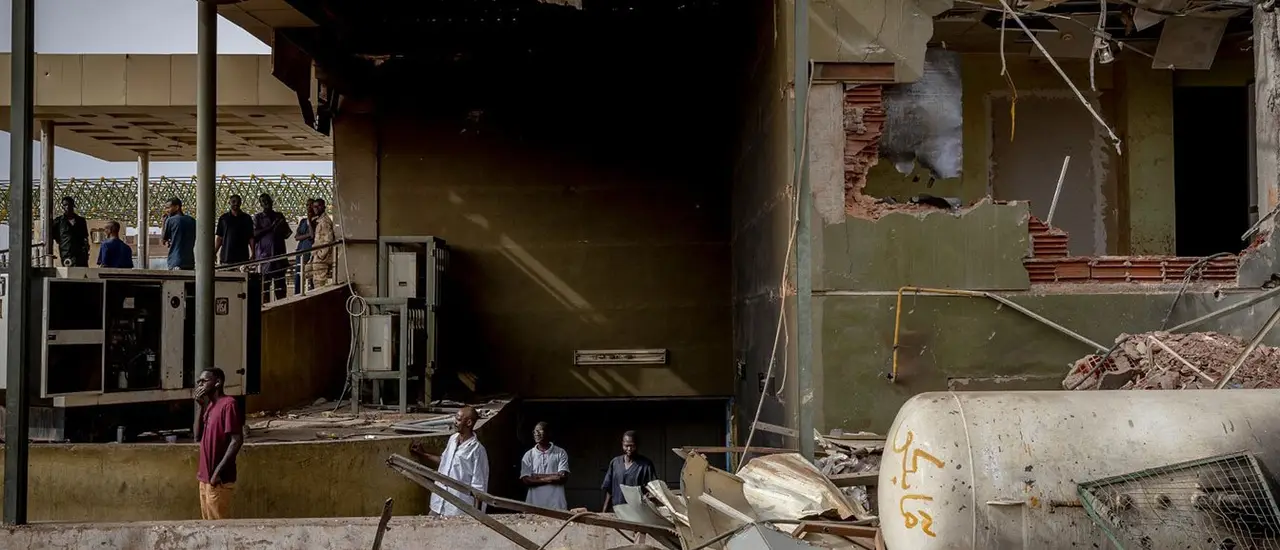
To analyse conflict spillover, it is important to begin with the risks associated with a local approach towards preventing conflict spillover from Sudan into its neighbouring countries. I will pay attention to two distinct pathways through which the Sudan conflict has spilt over into neighbouring countries. Firstly, the people fleeing the country to neighbouring states have created extra pressure on the institutions of Chad, one of Sudan’s neighbouring countries, as found in the UN Report Displacement & Destruction: Two years of civil war in Sudan and its spillover effect in Chad (UN, 2025). The report found that the already understaffed social service system of Chad is overwhelmed by the influx of people into the country, with the UN stating, “The number of refugees and internally displaced is now over 1,000,000.” There are more than 773,000 Sudanese refugees, 216,300 Chadian returnees in addition to the 400,000 existing refugees from Darfur since 2003. This influx has overwhelmed social services already undermanned and underfunded¨ (pp. 3). Secondly, conflict spillover is also likely to destabilise the political system in an affected country. In Milner et al. (2026), it is concluded that, in South Sudan, spillover from Sudan has resulted in increased insecurity and militarisation in the border areas of the Ruweng Administrative Area, Northern Bahr al Ghazal, and Unity State. These points of attention establish the core focus of this paper.
Role of local actors within the area
The chosen local actors to address conflict spillover from Sudan into neighbouring countries focus on 2: Youth/local community networks and civil society/women-led organisations. In line with the UN’s 2025 report on pressure on neighbouring countries’ existing social service institutions (UN, 2025), local actors can be of great benefit in supporting inclusive decision-making and conciliation within local communities. Local actors can address the idea of international dialogue between Chad and Sudan, since community leaders speak the language and usually have a greater understanding of the nuances of internal social and political relations. This bottom-up approach should be inclusive, so that every relevant actor, as much as possible, has the opportunity to be heard. In the dialogue among local community leaders, the main goal should be to prevent conflict from escalating. This also goes hand in hand with the report by Milner et al. (2026), who address the continued militarisation in the borderland of South Sudan. Also here, the importance of both youth/community networks and that of civil society should not be underestimated. What is of great importance is that concerns from all kinds of groups can be voiced, so that relevant actors, if willing to do so, can mediate them. This promotes a diplomatic effort to solve issues or at least to try to prevent further eruption of conflict, so that more lives can be saved.
Recommendation for preventing spillovers: Combining local initiatives with broader regional policy
When addressing the idea of supporting local actors such as community leaders and mediators, it is important to also understand that, to try to save more lives, local initiatives would also strongly depend on the support of state authorities and organisations in Sudan and its wider region, such as the African Union and the League of Arab States. With the inclusion of experts with knowledge of regional and national actors, combined with policymakers who can represent the interests of all relevant actors, every possible actor has the possibility to have their voice heard, and the conflict can be tried to be addressed from a bottom-up approach with special knowledge about resources and changes within the field of security.
Chad has shown us, as seen in the UN (2025) report, that it is of utmost importance to strengthen local institutions so that neighbouring countries can assist people in all kinds of states. Additionally, Milner et al. (2025) have shown that both economic and security relations can be fundamentally changed within Sudan’s neighbouring countries. This highlights the importance of addressing escalations in the Sudan conflict before they worsen. This, in my opinion, also highlights the need for a greater awareness of this conflict, both in the Western world and beyond. At the other hand, one risk of not addressing these issues from the western world is the current geopolitical order which is more fractioning, with the US emphasising ‘America First’ ‘and a Europe which struggles to balance the costs of its welfare state while also needing to prioritise humanitarian missions around the world’.
Conclusion
In conclusion, the Sudan conflict has shown that conflicts within a state’s borders risk worsening conditions in neighbouring countries, such as South Sudan and Chad. Research on the topic has shown that the social service system in Chad is fragile and therefore in dire need of support at both the local and international levels through organisations such as the African Union. What is important as well is that important actors such as humanitarian organisations and Western states are able and willing to articulate the consequences of this war to its population, which I expect will increase the policy input into policy-making decisions by states and organisations to push for measures which hopefully is able to reduce the number of victims following this civil war.
References
United Nations Development Programme. (2025, April 16). Displacement & destruction: Two years of civil war in Sudan and its spill over effect in Chad. https://www.undp.org/chad/publications/displacement-destruction-two-years-civil-war-sudan-and-its-spill-over-effect-chad
Milner, C., Majok, J., & Luoi, M. (2026, April 24). CSRF analysis: Borderlands of resilience—Navigating conflict impacts on communities and aid on the Sudan–South Sudan frontier. Conflict Sensitivity Resource Facility. https://csrf-southsudan.org/repository/csrf-analysis-borderlands-of-resilience-navigating-conflict-impacts-on-communities-and-aid-on-the-sudan-south-sudan-frontier/
Booty, N., Chothia, F., & Chibelushi, W. (2025, July 4). Sudan war: A simple guide to what is happening. BBC News. https://www.bbc.com/news/articles/cjel2nn22z9o