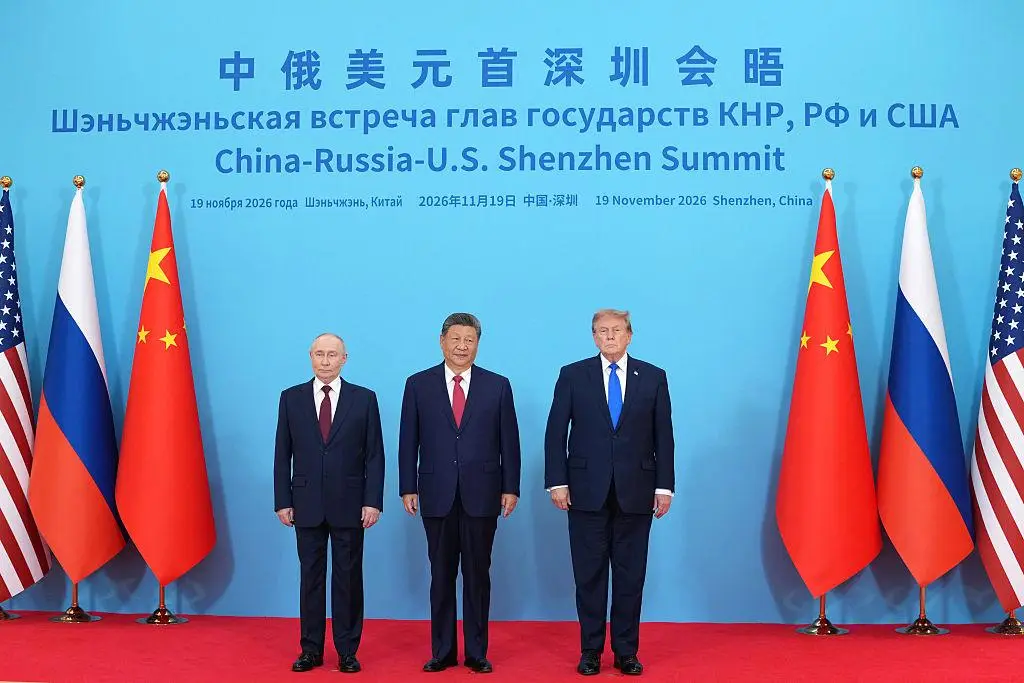
The Shenzhen Peace Declaration
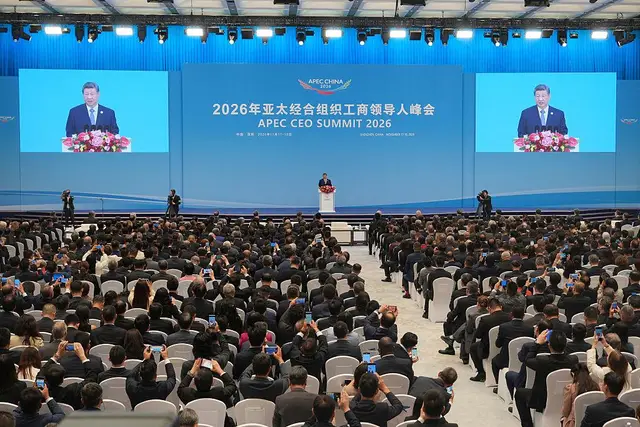
On Thursday 19 November, the heads of state of China, the United States and Russia met for the first time on the sidelines of the APEC Summit in Shenzhen, China. They issued a joint “peace declaration”, committing to advancing UN reform and increased supply of refined petroleum products. They also called on the International Criminal Court and similar institutions not to abuse their jurisdiction, reaffirmed the importance of state sovereignty and official immunity, and warned of the dangers of nuclear war. Other issues, such as Russia’s war against Ukraine and the US war in Iran, were reportedly discussed, but were not mentioned in the final declaration. Following the summit, Xi emphasised the mutual recognition and respect for sovereignty, different social systems, and core interests.
Xi’s Diplomatic Success
The summit marked a significant diplomatic opportunity for Xi Jinping. Although it was first Putin and later Trump who raised the idea of the meeting, Xi succeeded in presenting himself as a neutral mediator and a responsible statesman. Xi provided a platform not only for Putin, whose international engagement has been restricted, but also for Trump, whose Republican Party had suffered substantial losses in the midterm elections. The declaration largely reflects Beijing long-standing emphasis on souvereignity and great-power cooperation. The prioritisation of mutual recognition of interests and questioning of the jurisdiction of international institutions further undermines the liberal, rules-based world order. Moreover, not addressing international conflicts like the war in Ukraine or Iran shows the reluctance to get involved in others’ conflicts, having significant implications for Taiwan. While regional conflict is not condemned, the warning against nuclear weapons and the recognition of sovereignty serve to defuse the risk of a conflict between the major powers, a scenario against which Xi has repeatedly warned, invoking the Thucydides Trap.