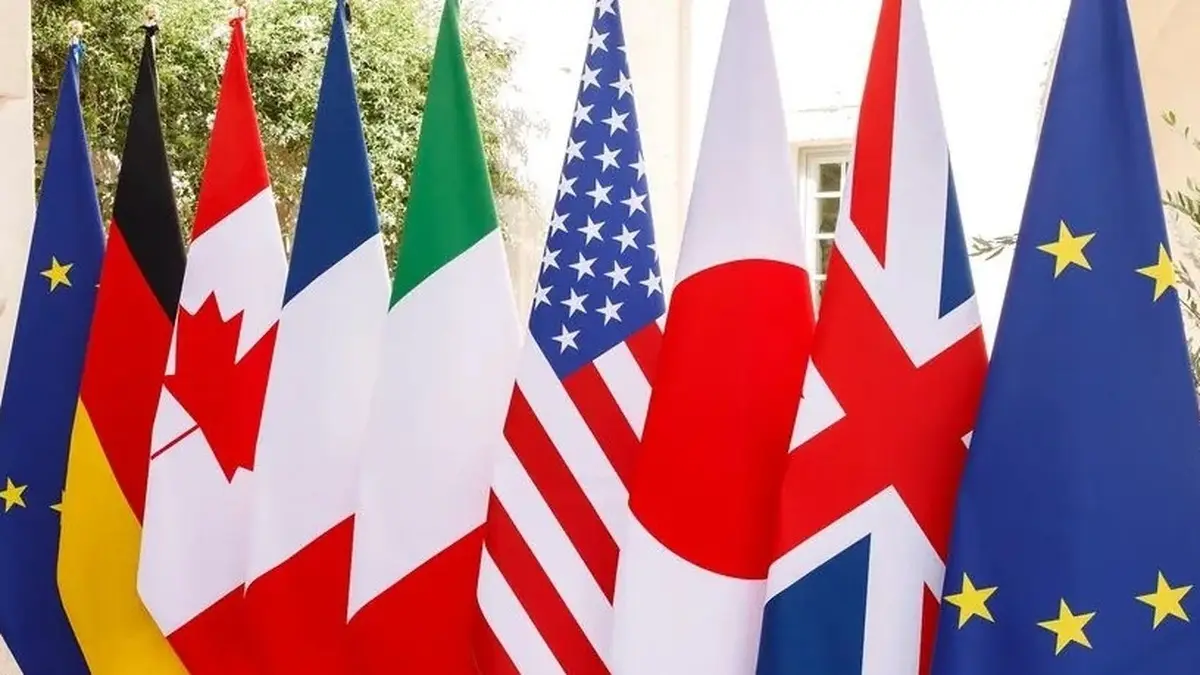
As documented by the Presidency of the French Republic (2026), multilateral economic governance has historically emerged not during periods of stability, but as an emergency response to acute supply shocks. Established in 1975 in the immediate aftermath of the first major global oil crisis, the Group of Seven (G7), initially convened as the G6, was founded on the premise that no single state can navigate severe macroeconomic and energy imbalances on its own. While the forum lacks formal legal personality or a permanent secretariat, its rotating presidency and compact membership, comprising Canada, France, Germany, Italy, Japan, the United Kingdom, the United States, and the European Union since 1977, render it a decisive agenda-setter for international economic security.
This flexible architecture was subsequently mirrored on a broader scale in 1999 through the formation of the G20, which consolidated systemic financial oversight following the emerging-market crises of the late 1990s. Yet, this informal structural design produces a profound governance disconnect. While high-level communiqués issue strategic mandates to safeguard energy transit corridors and strategic trade hubs, the institutional framework provides no binding mechanisms or pooled supranational funds to execute them. Consequently, the fiscal, technical, and operational burden of hardening critical infrastructure falls directly upon national treasuries and regional public entities operating within strict budgetary caps (Élysée, 2026).
The policy dilemma confronting European public administrations is fundamentally shaped by the intersection of unfavourable macroeconomic baselines and compounding fiscal commitments. As established by the European Central Bank, the 2026 energy disruption, driven predominantly by global crude oil and diesel volatility, unfolded under significantly narrower fiscal headroom than the 2022 crisis, which was marked by higher structural deficits and elevated debt refinancing costs (ECB, 2026). This structural rigidity is corroborated by empirical tracking from the European Energy Crisis Fiscal Response Tracker (2026), which records how successive national interventions, such as primarily excise tax suspensions, consumer energy subsidies, and liquidity injections, have systematically depleted contingency reserves across member states (Bruegel, 2026). As a result, the interaction creates a severe crowding-out effect: treasuries burdened by ongoing consumer price shielding lack the unencumbered capital expenditure necessary to fulfil G7 and EU mandates for hardening maritime ports, physical pipelines, and cross-border power grids.
The practical operationalisation of critical infrastructure protection reveals a deepening structural friction between stringent multilateral security mandates and the constrained administrative and financial bandwidth of European public authorities (Hobhouse, 2025). As noted in the European Parliamentary Research Service’s appraisal, national competent authorities incur a considerable administrative burden when transposing and implementing the core energy security acquis, specifically the Security of Gas Supply Regulation and the Electricity Risk Preparedness Regulation (Dalli et al., 2026). This complexity has generated widespread disparities in national compliance, culminating in formal infringement procedures initiated by the European Commission against Member States that fail to submit the required risk-preparedness documentation (Dalli et al., 2026). Furthermore, while horizontal EU frameworks mandate heightened physical and cyber hardening, sectoral energy regulations continue to lack unified, operationalised procedures to effectively counter hybrid sabotage, cyberattacks on automated maritime gateways, and physical disruptions to pipelines (Dalli et al., 2026).
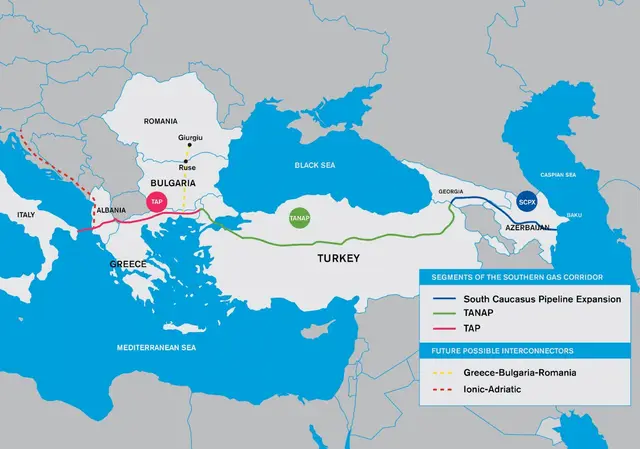
This regulatory compliance dilemma directly translates into severe capital infrastructure gridlock (Hobhouse, 2025). According to Hobhouse (2025), cross-border interconnection projects supported through the Connecting Europe Facility have frequently been handled as boutique, bureaucratic agreements governed by parochial national cost-benefit assessments rather than overarching strategic resilience, causing vital grid enhancements to face decade-long delivery timelines and prohibitive cost overruns (Hobhouse, 2025). Consequently, public administrations are trapped in a regulatory paradox: they must satisfy escalating EU compliance and solidarity benchmarks precisely when fiscal constraints prevent the direct underwriting of critical asset hardening, leaving strategic energy and trade arteries vulnerable to systemic disruption (Dalli et al., 2026; Hobhouse, 2025).
Safeguarding energy stability and hardening critical infrastructure against geopolitical disruptions remain central priorities across advanced economies, as underscored by the Group of Seven’s commitments to multilateral coordination, reducing strategic dependencies, and protecting cross-border supply routes (G7 Leaders’ Statement, GOV.UK). However, implementing these high-level mandates is often hindered by short-term fiscal trade-offs: as documented in the International Energy Agency’s 2026 Energy Crisis Policy Response Tracker (IEA), extensive public spending on retail subsidies, price caps, and energy tax relief has severely strained sovereign budgets without resolving structural grid vulnerabilities. To prevent future compounding shocks, public policy must pivot toward a comprehensive systems framework, as advocated by the World Economic Forum (2026). This strategy requires shifting capital allocation away from fossil fuel supply defence toward decentralised renewable power generation, multi-directional cross-border interconnections, and flexible demand-side management, thereby securing long-term systemic resilience without overburdening sovereign public finances.
While in 2023 the G7 Clean Energy Economy Action Plan emphasised accelerating the commercialisation of zero-emission technologies and reducing monopolistic dependencies across global supply chains through open trade and market incentives, contemporary realities demand a much stricter focus on direct systemic protection and crisis containment. The initial framework primarily relied on expanding clean energy supply and securing alternative fossil fuel corridors to replace Russian imports (Consilium, 2023). However, the International Energy Agency’s 2026 Energy Crisis Policy Response Tracker shows that escalating geopolitical turmoil in the Middle East and severe fuel market disruptions have prompted governments to shift from purely supply-oriented strategies to aggressive demand-side interventions. Faced with dwindling fiscal space after years of expansive subsidies, states have increasingly turned to mandatory conservation measures, including public-sector remote work mandates, institutional travel bans, cooling and heating restrictions in public buildings, and direct transportation fuel rationing. Consequently, energy security has evolved from commercial expansion and broad supply diversification to the urgent operational requirement to manage structural demand bottlenecks and harden critical infrastructure against immediate shocks (IEA, 2026).
State-level climate policymakers, legislators, and agencies often struggle with fragmented policy implementation, siloed cross-sector strategies and a lack of standardised statutory benchmarking across peer states. This public finance and regulatory dilemma is not only confined to the European Union; it is equally evident across the Atlantic in the United States, another core G7 member. While the federal administration commits to overarching multilateral goals, the operational and fiscal burden of execution cascades down to sub-national governments and state-level regulators.
At this point of energy crisis, the central challenge is clear: how can states accelerate economy-wide decarbonization without placing upward pressure on retail electricity rates and wholesale capacity costs? As tracked and documented by Climate XChange (2024), the enactment of Building Performance Standards (BPS) and Clean Energy Standards (CES) forms the primary regulatory backbone of state climate governance; however, these top-down mandates risk inflating utility rate bases if public utility commissions (PUCs) rely primarily on traditional utility capital expenditures. Offsetting this ratepayer risk, the Business Council for Sustainable Energy (2025) demonstrates that states can protect wholesale power affordability by deploying off-balance-sheet financing models that modernise the municipal and commercial building stock with zero public balance-sheet debt.
Furthermore, scaling dual-purpose microgrids and localised Renewable Natural Gas capture from municipal and agricultural waste streams functions as critical Non-Wires Alternatives, injecting flexible, dispatchable peak capacity onto regional grids facing rapid load growth from artificial intelligence and electrification (BCSE, 2025). Consequently, harmonising Climate XChange’s regulatory benchmarking with BCSE’s private capital instruments allows state regulators to achieve ambitious economy-wide decarbonization while shielding consumers from retail cost volatility through verified performance guarantees and third-party risk transfer.
In conclusion, while market mechanisms and private capital instruments are essential for deploying non-debt financing and containing wholesale energy costs, they cannot replace the foundational role of the public sector in ensuring energy security and protecting infrastructure. The public sector remains indispensable for establishing enforceable risk-preparedness frameworks, absorbing geopolitical supply shocks through mandatory demand-side conservation, and directing strategic cross-border grid investments where short-term market incentives fail to account for long-term systemic resilience. Ultimately, private markets supply the innovative financial agility required to shield consumers from cost volatility, but it is the regulatory authority, public procurement power, and strategic planning of the public sector that legally underwrite and anchor critical national infrastructure.
References
Bruegel. (2026). 2026 European energy crisis fiscal response tracker. Bruegel Datasets. https://www.bruegel.org/dataset/national-fiscal-policy-responses-energy-crisis
Business Council for Sustainable Energy, & BloombergNEF. (2026). Sustainable energy in America factbook (14th ed.). Business Council for Sustainable Energy. https://bcse.org/market-trends/
Climate XChange. (2024). State climate policy dashboard: Comprehensive tracking of state-level climate policies. Climate Program Portal. https://www.climatepolicydashboard.org/
Council of the European Union. (2023). G7 clean energy economy action plan. https://www.consilium.europa.eu/en/press/press-releases/2023/05/20/g7-clean-energy-economy-action-plan/
Dalli, H., Kramer, E., & Duborgel, M. (2026, April). Revision of the EU energy security framework: Implementation takeaways . European Parliamentary Research Service
European Central Bank. (2026). A tale of two energy crises – initial conditions matter. ECB Economic Bulletin. https://www.ecb.europa.eu/press/blog/date/2026/html/ecb.blog2026_energy_crises.en.html
Foreign, Commonwealth & Development Office. (2026). G7 leaders’ statement on global energy security and market stability. GOV.UK. https://www.gov.uk/government/news/g7-leaders-statement-on-global-energy-security-and-market-stability
Group of Seven. (2026). Leaders’ statement for a more balanced, durable, resilient growth. G7 Presidency. https://www.g7.fr/en/documents/LEADERS-STATEMENT-FOR-A-MORE-BALANCED-DURABLE-RESILIENT-GROWTH.pdf
Hobhouse, C. (2025, February). Reimagining European energy security: Towards a whole-of-system approach (Brief No. 6). European Union Institute for Security Studies. https://doi.org/10.2815/0157290
Interfax-Ukraine. (2026). Ambassadors of G7 countries respond positively to meeting with Economy Ministry leadership [Photograph / News report]. Interfax-Ukraine. https://en.interfax.com.ua/news/economic/987654.html
International Energy Agency. (2026). 2026 energy crisis policy response tracker. IEA Publications. https://www.iea.org/reports/energy-crisis-policy-response-tracker
Présidence de la République française. (2026). What is the G7? | G7 Évian 2026. Élysée. https://www.elysee.fr/en/g7-evian-2026/what-is-the-g7
World Economic Forum. (2026). Avoiding the next energy crisis requires a systems approach. World Economic Forum Agenda. https://www.weforum.org/agenda/2026/01/avoiding-the-next-energy-crisis-requires-a-systems-approach/