

The European Union has set an ambitious goal of becoming climate-neutral by 2050, positioning itself as a global leader in the fight against climate change (European Union, 2021). Achieving this goal requires fundamental transformation of the EU’s energy system and industry, which is known as a green transition. It includes the mass expansion of electric vehicles, renewable energy infrastructure, and battery storage technologies. This process heavily depends on securing access to critical raw materials such as lithium, copper and clean fuels such as green hydrogen. However, the EU currently relies on a small number of countries, including China, which dominates the supply of these materials. The EU defines economic security as the ability to secure stable and varied supply chains, a central concern to European policymakers (European Commission, 2023a). Currently, China holds a near-monopoly over the world’s critical mineral processing capacity (International Energy Agency, 2025a). This concentration leaves European industry exposed to supply disruptions and potential economic coercion.
In this context, Chile emerges as a strategic partner for the EU, holding the world’s largest lithium reserves and having the largest copper reserves. Chile alone holds approximately 27% of the world’s known lithium reserves, a mineral essential for electric vehicle batteries (International Trade Administration, 2025), and recent studies suggest its resources are 28% larger than previously estimated (Solomon & Cambero, 2025). The recently modernised EU-Chile Interim Trade Agreement, which includes dedicated provisions on critical minerals and green hydrogen, offers a concrete and legally binding framework through which the EU can reduce its dependence on China while advancing its climate goals (European Commission, 2024).
Therefore, this article examines how cooperation with Chile helps the European Union achieve its green transition and economic security goals, focusing on trade agreements, critical raw materials, and strategic partnership. In the following chapters, the research will explore in more detail the EU’s economic security framework and critical raw material needs in the context of the green transition, before analysing Chile’s strategic resource position and its national lithium strategy, followed by an assessment of the EU-Chile Interim Trade Agreement and its key provisions, the challenges and limitations of this partnership, and finally a future outlook for EU-Chile cooperation. Taken together, these sections assess both the opportunities and the limits of the partnership.
The European Green Transition and Economic Security
Before turning to Chile’s role, it is necessary to first situate the EU’s own green transition and economic security needs, since these are what ultimately make external partners like Chile relevant. The European Green Deal (2019) translated the EU’s climate-neutrality ambition into binding policy, notably the European Climate Law, which targets a 55% cut in net emissions by 2030 (European Union, 2021). The Fit for 55 package operationalises this across transport and energy (European Commission, 2021). Delivering it requires expanding electric vehicles, renewable generation, battery storage and, increasingly, a hydrogen economy for sectors hard to electrify directly. Each pillar is materials-intensive: EV batteries need lithium, cobalt and rare earths; turbines and panels need copper and silicon; electrolysers need platinum-group metals. The Commission projects EU lithium demand will grow roughly twelvefold by 2030, and rare earth demand sixfold, turning the green transition into a question of resource access as much as regulation (European Commission, 2024).
Economic security, in EU usage, means stable, diversified, affordable access to inputs underpinning its industrial base, without exposure to coercion from a single supplier (European Commission, 2023a), closely linked to the EU’s broader idea of open strategic autonomy (Consilium, 2024). The Commission has identified 34 critical raw materials and a narrower list of 17 strategic ones, including lithium, essential for the green and digital transitions (European Commission, 2024). For several, China supplies close to all EU imports (European Parliament & Council of the European Union, 2024), concentrating risk in ways that could disrupt European industry. Reducing this exposure has become a political as well as an economic priority.
The EU’s main legislative response is the Critical Raw Materials Act, in force since May 2024 as Regulation (EU) 2024/1252 (European Parliament & Council of the European Union, 2024). It sets 2030 benchmarks: at least 10% of strategic materials extracted, 40% processed and 25% recycled within the EU, with no single non-EU country supplying more than 65% of any strategic material. Because domestic measures alone cannot close this gap, the Act’s external dimension commits the EU to diversifying supply through Strategic Partnerships and trade agreements, channelled partly through Global Gateway (European Commission, 2024), the policy logic that connects EU economic security to Chile. Securing reliable external partners is therefore not optional but central to the Act’s success.
Chile as a Strategic Partner
Chile’s importance lies in its natural resources, renewable energy potential, and policies aimed at promoting long-term development, which together make it an attractive partner for a Union seeking to diversify its supply.
Critical Raw Materials
Chile holds an estimated 27% of known lithium reserves, mostly in the Salar de Atacama, and ranks as the world’s second-largest producer after Australia (International Trade Administration, 2025). SQM and Albemarle account for most output through concessions dating to the 1979 framework reserving lithium for the state (Carey y Cía., 2023). Chile is also the world’s largest copper producer, and copper features in the EU-Chile trade framework for its role in electrification and grid infrastructure (International Trade Administration, 2025), making Chile relevant across the EV and grid supply chains, not only batteries. This dual position in lithium and copper sets Chile apart from most other potential suppliers.
Green Hydrogen Potential
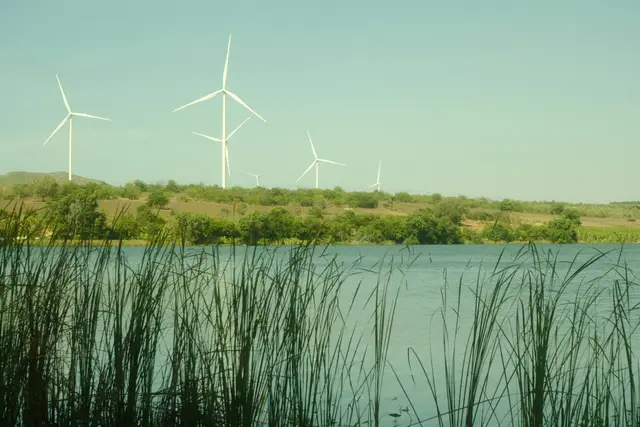
The Atacama Desert has among the world’s highest solar irradiation, and Patagonia offers wind conditions rivalling offshore sites elsewhere (Envisioning, 2024), giving Chile renewable potential many times its domestic needs. Chile’s National Green Hydrogen Strategy (Ministry of Energy of Chile, 2020) targets 5 GW of electrolyser capacity by 2025, the world’s cheapest hydrogen by 2030, and a top-three export position by 2040. Chile has signed hydrogen cooperation agreements with Germany, the Netherlands and Belgium, and the EU backs the sector directly through the Team Europe Initiative for Renewable Hydrogen. Deployment nonetheless remains early-stage, with installed capacity well short of targets (European External Action Service [EEAS], 2025). The gap between potential and delivery is examined further below.
Chile’s National Lithium Strategy
Building on this state-reserved framework, President Boric’s April 2023 National Lithium Strategy formalised how that control would now be exercised: through public-private partnerships rather than full nationalisation, with the state retaining majority control of strategically significant projects. New projects proceed via direct state exploitation or Special Lithium Operation Contracts (Gobierno de Chile, 2024). The strategy also created a Strategic Committee for Lithium and Salt Flats and a public research institute focused on lower-impact extraction methods and envisaged a state-owned National Lithium Company, though Codelco and Enami have carried out this role in practice (OECD, 2025). In late 2025, this produced its most concrete outcome yet: Codelco and SQM finalised the joint venture Nova Andino Litio SpA, with Codelco holding a majority stake through 2060. The joint venture therefore serves as an early test of the strategy’s public-private model. Beyond ownership, the strategy commits to protecting 30% of Chile’s salt flats by 2030 and to moving Chile up the value chain toward battery-grade and cell production rather than raw exports (Gobierno de Chile, 2024). For European partners, this means that access to Chilean lithium will increasingly be negotiated with the Chilean state rather than with private firms alone.
The EU-Chile Interim Trade Agreement
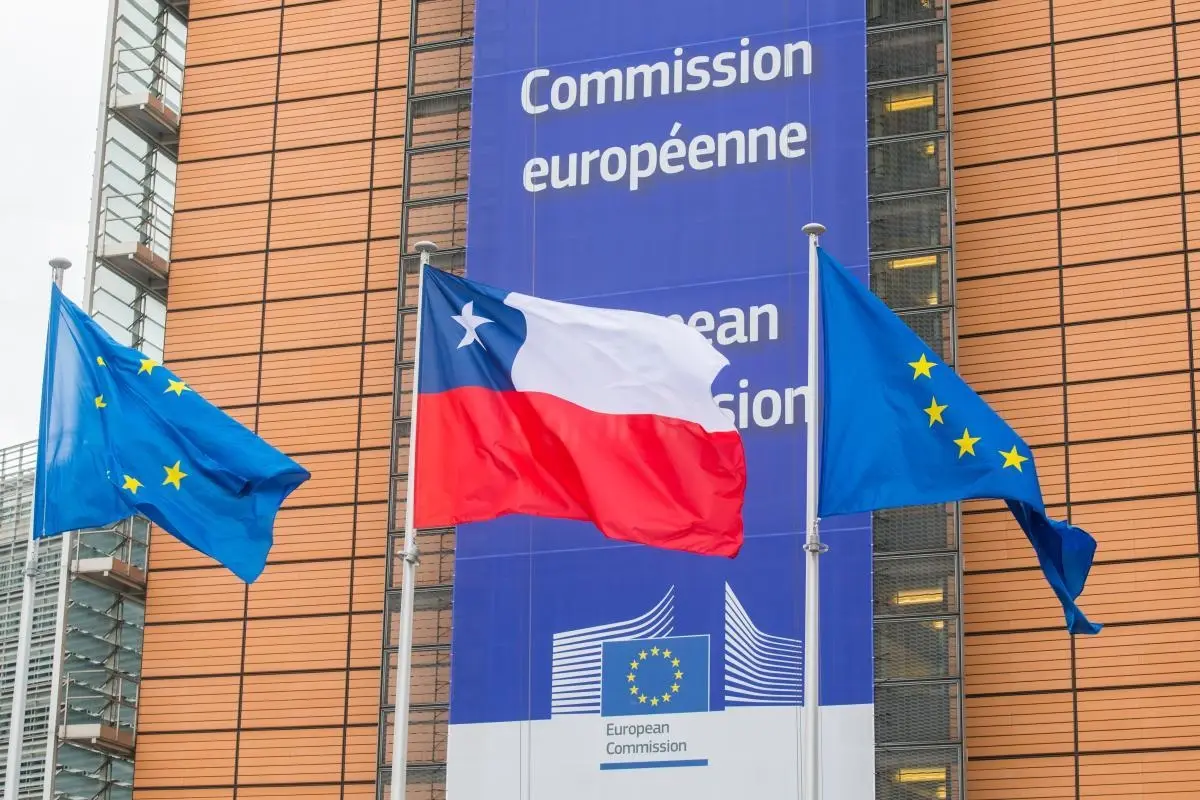
The EU and Chile modernised their 2003 Association Agreement between 2017 and 2022 and signed the resulting texts on 13 December 2023 (European Commission, 2023b). This produced two parallel instruments: the Advanced Framework Agreement (AFA), covering political cooperation and investment protection, and the Interim Trade Agreement (ITA), covering EU-exclusive competences. The ITA entered into force on 1 February 2025 and will apply until the AFA is fully ratified (Directorate-General for Trade, 2025). This two-track structure allowed the trade provisions to take effect without waiting for ratification by every EU member state.
The ITA is important because it goes beyond reducing trade barriers and strengthens cooperation in areas relevant to the EU’s green transition and economic security. It eliminates tariffs on 99.9% of EU exports and includes a dedicated Energy and Raw Materials chapter that supports access to resources needed for clean technologies. Its sustainability provisions also show how the EU uses trade policy to promote broader environmental and social objectives (European Commission, 2025). Therefore, the agreement strengthens Chile’s role as a strategic partner in achieving the EU’s economic and environmental goals. It also gives both sides a stable legal basis for long-term investment decisions.
Critical Raw Materials Cooperation
Alongside the trade talks, the EU and Chile signed a Memorandum of Understanding on sustainable raw materials value chains on 18 July 2023, making Chile the sixth EU raw materials Strategic Partner, a network that has since grown to fourteen countries. The MoU covers value-chain integration, local processing, joint research, environmental standards and capacity-building (EEAS, 2023). In principle, this goes beyond a simple supply arrangement. The ITA’s raw materials chapter aims to ensure stable EU access to lithium and copper while allowing Chile to support domestic value creation, including through domestic pricing measures. The stakes are high, as the EU sources around 80% of its lithium imports from Chile (European Commission, 2024). However, critics argue that the agreement may remain largely focused on extracting raw materials because its value-addition rules can be difficult to enforce. In practice, it may be difficult to ensure that companies process more resources in Chile rather than simply exporting them, especially when the agreement provides limited mechanisms to require specific levels of local processing (Cáceres Bustamante, 2022). This creates a risk that Chile supplies critical resources to the EU without gaining the full economic benefits of processing and developing related industries. Addressing this imbalance will be essential if the partnership is to be seen as mutually beneficial in Chile.
Green Hydrogen Cooperation
Cooperation runs mainly through Team Europe Initiative RH2 (2024) (Team Europe RH2, 2024), an initiative co-financed by the EU and Germany and implemented by GIZ and AECID under the Global Gateway strategy. It supports Chile’s regulatory framework, technical studies, and business development in the sector. A joint steering committee coordinates investment, alongside European Investment Bank financing for Chile’s wider energy transition (European Commission, 2023c). For the EU, this secures future fuel imports for heavy industry, shipping and aviation; for Chile, it lowers the risk of developing an industry that still lacks processing and port infrastructure. Both sides therefore share a clear interest in accelerating the sector’s development.
Contribution to Economic Security
Together, the trade agreement, the raw materials MoU and hydrogen cooperation diversify the EU’s supply base away from concentrated, often China-centred sources, through a stable and like-minded democratic partner with an existing legal relationship dating to 2003 (Carry, 2025). The EU-Chile relationship functions as a test of whether the EU’s economic security strategy can move from legislation and declarations to a durable supply relationship in practice. Its outcome will therefore carry lessons for the EU’s other raw materials partnerships.
Challenges and Limitations
Several structural challenges could nonetheless limit how far this partnership advances either side’s goals. Competition is intensifying: the US and China are both courting Chilean lithium and copper, Chinese capital already holds a stake in SQM, and Chile’s market share has stagnated as Argentina and Australia expand output faster, with analysts projecting Chile could lose its position as the second-largest producer (Gajardo & Redón-Gómez, 2025). For the EU, this means that Chilean supply cannot be taken for granted.
Environmental costs remain unresolved. Brine evaporation in the Salar de Atacama is highly water-intensive in one of the world’s driest environments; water levels there have fallen roughly 30% since 2005, and a 2024 satellite study found evidence of land subsidence, prompting a formal complaint from the Council of Atacameño Peoples (Delgado et al., 2024). Indigenous communities, including the Lickanantay and Colla, continue to raise concerns about free, prior, and informed consent and water access, with the UN Human Rights Office warning in 2026 that the transition risks reproducing extractivist patterns without genuine community inclusion (Office of the United Nations High Commissioner for Human Rights [OHCHR], 2026). The trade agreement’s sustainability provisions do little to directly regulate this, leaving it largely to Chilean domestic law. Without stronger safeguards, these tensions could undermine the social licence on which future extraction depends.
Green hydrogen infrastructure is also developing more slowly than planned. According to the International Energy Agency, the installed and planned capacity remains below the target set for 2025, and large-scale facilities for hydrogen exports are still limited (2025b). This gap between ambition and deployment reduces the near-term value of hydrogen cooperation for the EU. At the same time, Chile moved away from the original plan to create a fully state-owned National Lithium Company and instead adopted a joint-venture model. The financial difficulties faced by state-owned companies such as Codelco and Enami also raise concerns about how lithium revenues will be managed and reinvested (Sari & Toft, 2024). Finally, even if the EU successfully increases its supply of raw materials from Chile, this may not fully reduce its dependence on China. Many raw materials still need to be processed in China, where much of the global processing capacity is concentrated. Therefore, new supply agreements with Chile could shift the location of extraction without solving the EU’s dependence on foreign processing. To address this problem, the EU would also need to invest in processing and other midstream capacities. Without such investment, diversification at the extraction stage alone will offer only partial protection.
Conclusion
Cooperation with Chile helps the EU achieve its green transition and economic security in three concrete ways. First, the modernised trade agreement and raw materials MoU diversify supply: they lock in access to lithium and copper from a stable democratic partner rather than a China-centred source, directly targeting the concentration risk the Critical Raw Materials Act was designed to reduce. Second, the ITA’s Energy and Raw Materials chapter and hydrogen cooperation through Team Europe RH2 give the EU a legal and financial channel to shape how those resources are developed, supporting environmental standards, joint research and future hydrogen imports rather than simply purchasing on the open market. Third, the relationship offers the EU a working model of open strategic autonomy in practice: a test of whether legislative targets like the CRMA’s 2030 benchmarks can be met through negotiated partnerships rather than domestic extraction alone. In this sense, Chile does not just supply materials; it gives the EU a template for converting economic security policy into an operational supply relationship. This makes the partnership significant beyond its immediate economic value.
Nevertheless, the extent of the partnership’s contribution will ultimately depend on practical implementation. Several questions remain unresolved: whether Chile will advance further along the lithium value chain, whether extraction can be made compatible with indigenous water rights and consent, whether hydrogen infrastructure will develop at the pace envisioned by current targets, and whether the EU will invest sufficiently in processing capacity to reduce its reliance on China. A well-designed agreement can diversify the sources of raw materials, but it cannot, on its own, resolve the environmental, social and industrial constraints that will determine how fully this potential is achieved. How the EU and Chile address these questions over the coming decade will determine whether the partnership becomes a model for other resource partnerships or a cautionary tale.
References
Cáceres Bustamante, J. (2022). Brief on the Chile inclusion of environment commitments in trade agreements and the current EU-Chile trade agreement negotiations. Centre for International Sustainable Development Law. /api/wp-media/2022/05/Brief-on-the-Chile-Inclusion-of-Environment-Commitments-in-Trade-Agreements-and-The-Current-EU-Chile-Trade-Agreement-Negotiations_Javiera-Caceres-Bustamante_revised.pdf
Carey y Cía. (2023). Chilean government announces National Lithium Strategy. Carey Abogados.
Carry, I. (2025). Raw materials partner Chile: More than just a supplier. How the EU should strengthen strategic raw material partnerships and leverage geopolitical dynamics (SWP Comment 2025/C 26). Stiftung Wissenschaft und Politik. https://doi.org/10.18449/2025C26
Delgado, F., et al. (2024). Basin-wide assessment of land deformation in the Salar de Atacama and implications for monitoring under brine extraction. IEEE Transactions on Geoscience and Remote Sensing.
Directorate-General for Trade. (2025). EU-Chile agreement. European Commission. https://policy.trade.ec.europa.eu/eu-trade-relationships-country-and-region/countries-and-regions/chile/eu-chile-agreement_en
Envisioning. (2024). Patagonian wind energy systems. https://www.envisioning.com/research/grid/latam-ex-brazil__cl-wind-energy-patagonia
European Commission. (2019). The European Green Deal (COM(2019) 640 final). https://eur-lex.europa.eu/legal-content/EN/TXT/?uri=CELEX:52019DC0640
European Commission. (2021). ‘Fit for 55’: Delivering the EU’s 2030 Climate Target on the way to climate neutrality (COM(2021) 550 final). https://eur-lex.europa.eu/legal-content/EN/TXT/?uri=CELEX:52021DC0550
European Commission. (2023a). Joint communication to the European Parliament, the European Council and the Council on “European Economic Security Strategy” (JOIN(2023) 20 final). https://eur-lex.europa.eu/legal-content/EN/TXT/PDF/?uri=CELEX:52023JC0020
European Commission. (2023b). EU-Chile: Text of the agreement. https://policy.trade.ec.europa.eu/eu-trade-relationships-country-and-region/countries-and-regions/chile/eu-chile-agreement/text-agreement_en
European Commission. (2023c). EIB to finance climate action projects in Chile with more than €300 million including its first green mortgage loan outside Europe [Press release]. https://ec.europa.eu/commission/presscorner/detail/ga/ip_23_3864
European Commission. (2024). The European Critical Raw Materials Act. https://single-market-economy.ec.europa.eu/sectors/raw-materials/areas-specific-interest/critical-raw-materials/critical-raw-materials-act_en
European Commission. (2025). The EU-Chile Interim Trade Agreement (ITA) explained. https://policy.trade.ec.europa.eu/eu-trade-relationships-country-and-region/countries-and-regions/chile/eu-chile-agreement/eu-chile-interim-trade-agreement-ita-explained_en
European External Action Service. (2023). Global Gateway: EU and Chile strengthen cooperation on sustainable critical raw materials supply chains.
European External Action Service. (2025). Chile: EU, EIB and KfW to finance renewable hydrogen projects in Chile with up to €216.5 million. Delegation of the European Union to Chile. https://www.eeas.europa.eu/delegations/chile/chile-eu-eib-and-kfw-finance-renewable-hydrogen-projects-chile-%E2%82%AC2165-million_en
European Parliament & Council of the European Union. (2024). Regulation (EU) 2024/1252 of 11 April 2024 establishing a framework for ensuring a secure and sustainable supply of critical raw materials and amending Regulations (EU) No 168/2013, (EU) 2018/858, (EU) 2018/1724 and (EU) 2019/1020. Official Journal of the European Union. https://eur-lex.europa.eu/eli/reg/2024/1252/oj/eng
European Union. (2021). European Climate Law. https://climate.ec.europa.eu/areas-action/european-climate-law_en
Gajardo, G., & Redón-Gómez, J. (2025). Global overview of the lithium market and opportunities for development. Resources, 14(2), 33. https://doi.org/10.3390/resources14020033
Gobierno de Chile. (2024). These are the main definitions of the National Strategy. https://www.gob.cl
International Energy Agency. (2025a). Global critical minerals outlook 2025. https://www.iea.org/reports/global-critical-minerals-outlook-2025
International Energy Agency. (2025b). Global hydrogen review 2025. https://www.iea.org/reports/global-hydrogen-review-2025
International Trade Administration. (2025). Chile: Mining [Country commercial guide]. U.S. Department of Commerce.
Ministry of Energy of Chile. (2020). National green hydrogen strategy. Government of Chile. https://www.gob.cl/en/news/chilean-government-presents-national-strategy-convert-chile-global-leader-green-hydrogen/
OECD. (2025). OECD economic surveys: Chile 2025. OECD Publishing.
Office of the United Nations High Commissioner for Human Rights. (2026). Resisting in the age of lithium: The right to a healthy environment in Indigenous territories, Chile. https://www.ohchr.org/en/stories/2026/02/resisting-age-lithium-right-healthy-environment-indigenous-territories-chile
Sari, A., & Toft, C. (2024). Chile’s state-centric lithium policy may deter investment. Center on Global Energy Policy, Columbia University. https://www.energypolicy.columbia.edu/chiles-state-centric-lithium-policy-may-deter-investment/
Solomon, D. B., & Cambero, F. (2025, April 7). Chile has 28% more lithium than previous estimates, studies find. Reuters. https://www.reuters.com/markets/commodities/chile-has-28-more-lithium-than-previous-estimates-studies-find-2025-04-07/
Team Europe RH2. (2024). Team Europe Initiative – Hidrógeno Renovable (RH2). https://teameuroperh2.com/en/team-europe-initiative-rh2/