


Lessons from Ukraine
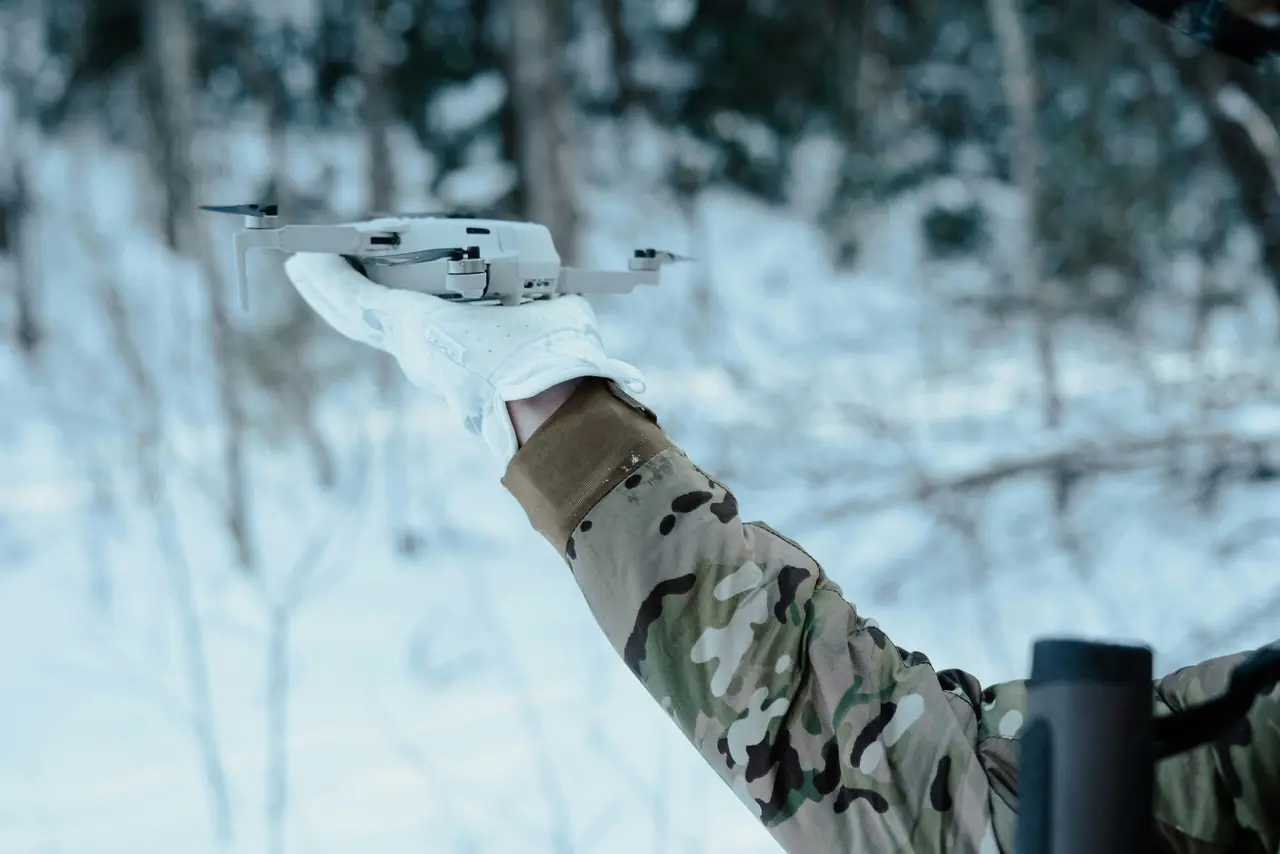
Drone warfare has been a new frontier of warfare and human rights discussion for more than a decade. The increasing use of drones attracted significant attention during conflicts throughout the 2010’s. Notably, in the Obama era, drone usage increased dramatically, generating much debate about its legal and humanitarian implications. However, nothing compares to the recent innovations and developments occurring in the current Russo-Ukrainian war. This conflict is changing how warfare is fought and is opening up new areas of concern for humanitarian efforts.
Ukraine has been leading innovation in drone technology, and the battlefield is serving as a test field for new technologies from around the world. Ukraine’s strides in drone innovation have allowed it to hold the line and even push russian forces back. They have done this through short- to medium-range drones, disrupting and cutting vital supply lines for russian troops at the front. They are also hitting deep into russian territory, targeting oil refineries and causing domestic issues for Putin and his resource empire, with the use of long-range drones.
However, with the recent success of Ukraine’s defence, the Russian military has been hitting harder, particularly at big cities in Ukraine, including Kyiv, Poltava, Zaporizhzhia, and more. Notably, this heavy bombardment, particularly in Kyiv, has caused many casualties and has come at a time when Ukraine has started to hit back harder due to their advantage in drone warfare. This demonstrates a new dimension of humanitarian concern, where big superpowers like Russia can hit back with spite over an evening out of the battlefield with drone technology. This is the dilemma of warfare, and it more than ever reminds us that de-escalation and diplomatic efforts are top priorities. As well as humanitarian support for those affected.
Russia is also developing their drone technology, and it has inflicted large civilian damage all over Ukraine. One of the most notable case studies is Kherson. Drones are being used to incite terror on the civilian population. In January 2025, short-range drone attacks accounted for 70% of civilian casualties recorded in Kherson (United Nations Human Rights Monitoring Mission in Ukraine, 2025). Human Rights Watch reports that “healthcare facilities and ambulances and their personnel, including rescue workers responding to drone attacks on civilians”, with humanitarian workers “could no longer respond to calls in some areas” due to fears of being targeted (Human Rights Watch 2025). This precedent is backed up by the OHCHR, which testifies that short-range drones have become the “Most Dangerous Weapon for Civilians” (OHCHR 2025).
There are three threats unique to drone technology that we are learning from this conflict:
- Commercial Availability and Accessibility
- Targeting Accuracy and Precision
- Low Cost and Scalability
Human Rights Watch has highlighted how Russia has used “commercially available quadcopter drones”. These drones can be modified by attaching explosives and using them as fatal weaponry against civilians, infrastructure, and other targets (Human Rights Watch, 2025). Human Rights Watch emphasises that policymakers should work with commercial companies and make it a “contractual agreements, to respond to allegations” and “restricting any future sales to prevent risk”. Sanctions against such companies have also been imposed, and reviews of these sanctions should continue. Considerations should be made to establish further, hard-hitting sanctions on states and companies that facilitate the sale of such drones to international agents who are breaking international law.
Drones also have a remarkable advantage in hitting targets with extreme accuracy. This has caused much disruption to civilians and humanitarian workers in conflict zones. To combat HRW stresses, there must be a process to ensure greater accountability. This could be done by ensuring that drones used in conflict maintain logs and allowing oversight bodies to access them. Ensuring accountability will deter crime.
A prominent factor in why drones have become the most deadly weapon in conflict zones is their scalability. Because many models are low-cost, states and other actors can produce them in large numbers and use them for constant surveillance, reconnaissance, and direct attacks. Also, cheap drones raise concerns about their lack of accuracy in distinguishing between military and civilian targets (Sotoudehfar, Sarkin & Chaari, 2025). The Iranian kamikaze drones have largely been used by Russia in Ukraine and have demonstrated the consequences for civilians. There must be a greater international movement to regulate the use of cheap drones. This could be done through sanctions on actors who misuse them or treaties to limit their use in warfare.
Artificial Intelligence and Autonomous Weapon Systems
In recent decades, warfare has evolved: traditional warfare has been supplanted by new technologies, particularly Artificial Intelligence. What was once a domain in which human judgment ruled the battlefield is nowadays increasingly shaped by algorithms instead (de Arimateia da Cruz & Pedron, 2020). In this panorama, Lethal Autonomous Weapon Systems (LAWS), defined as “weapon systems that, once activated, can select and engage targets without further intervention by a human operator” (US DoD 2017, p. 2), are becoming increasingly prominent (Longpre et al., 2022). Yet, LAWS are part of a spectrum: they range from decades-old semi-autonomous systems, such as the U.S. Navy’s Phalanx Close-In Weapons System, specialised in automatic detection and engagement against anti-ship missiles since the 1980s, to newer drones that can patrol, identify a target, and strike it in complete autonomy (de Arimateia da Cruz & Pedron, 2020; Longpre et al., 2022).
Furthermore, different types of systems exist based on the degree of autonomy the individual using them has. In the international debate, three categories of systems are distinguished: “human-in-the-loop”; “human-on-the-loop”; and “human-out-of-the-loop” (Longpre et al., 2022). In the first, an operator is central to deciding the target; in the second typology, the operator acts in the identification and engagement process; and the last one requires no human intervention to operate, raising questions about accountability.
Another matter of concern regards AI-enabled Decision Support Systems (AI-DSS). AI-DSS, rather than applying force themselves, process data to inform targeting decisions for the individual in command, as reportedly used by belligerents in the Russia-Ukraine war (Blanchard & Bruun, 2025). However, as noted by Blanchard and Bruun (2025), while AWS executes its functions strictly at the mission-execution level, AI-DSS are able to influence the decision-making process of locating a target, from setting objectives to post-strike assessment, which means their risks of unintended harm, though generally less direct than those of AWS, are arguably more diffuse and harder to regulate.
The international community is divided over AI and LAWS. One side, made up of more than 70 states, is calling for strict regulations on the latter through legally binding international treaties, with the efforts coordinated under the Campaign to Stop Killer Robots coalition (Longpre et al., 2022), while on the other side, countries with the most capabilities to develop these technologies, such as the United States, the United Kingdom and Russia, have resisted these efforts. They affirm that human judgment remains a central requirement through appropriate levels of oversight within the kill chain, while arguing that these technologies can provide significant humanitarian benefits and tactical advantages that would otherwise be limited by a ban (Longpre et al. 2022).
Implications for the Humanitarian Scene
The proliferation of these drones is also redefining how aid workers experience war. The Center for Civilians in Conflict (CIVIC) has reported that drone attacks in conflict settings increased by roughly 4,000 per cent between 2020 and 2024, a massive difference from around 4,525 attacks in 2023 to around 19,704 in 2024, a trend understandable thanks to the cheap and commercially available systems that can cost only as much as $2,000 (Spink 2025). Due to this low cost, access for both state and non-state armed groups has been facilitated, thereby complicating attribution when civilians are harmed, as it is harder to pinpoint than with traditional weapons (Spink 2025).
As reported by OCHA (2026), armed drones were responsible for 80 per cent of civilian deaths in Sudan during the first four months of 2026, while in Ukraine, 80 civilians died because of drone attacks in April alone. Humanitarian workers have also been victims of such attacks, such as the killing of an aid worker in the Democratic Republic of the Congo and strikes against four humanitarian convoys in Ukraine within a single week.
The psychological trauma is also part of the destruction drones leave in their path. The persistent sound and sight of drones have been identified by the ICRC as both a generator and amplifier of post-traumatic stress disorder among civilians. Particularly affected are children, whose rights to schooling and play are disrupted (ICRC 2025). A Ukrainian civilian interviewed by CIVIC captured this shift starkly, describing how, once drones became commonplace, ordinary sleep became an exercise in fear (Spink 2025).
As the UN’s Emergency Relief Coordinator, Tom Fletcher stated, “Weaponised drones have become the new face of an old danger: the deliberate or reckless destruction of civilian life” (Carmo 2026), showing how these developments prove that nowadays, drones are protagonists in the main threats to both civilians and humanitarian deployments.
References
Blanchard, A., & Bruun, L. (2025). Autonomous weapon systems and AI-enabled decision support systems in military targeting: A comparison and recommended policy responses. Stockholm International Peace Research Institute. https://doi.org/10.55163/yqby3151
Carmo, A. (2026, August 19). Aid workers under fire as drones reshape warfare. UN News. https://news.un.org/en/story/2026/08/1168153
de Arimateia da Cruz, J., & Pedron, S. M. (2020). The future of wars: Artificial intelligence (AI) and lethal autonomous weapon systems (LAWS). International Journal of Security Studies. https://www.academia.edu/75093688/The_Future_of_Wars_Artificial_Intelligence_AI_and_Lethal_Autonomous_Weapon_Systems_LAWS_
Emin Erendor, M. (2026). Cyber security in the age of artificial intelligence and autonomous weapons. CRC Press.
Feldman, P., Dant, A., & Massey, A. (2019). Integrating artificial intelligence into weapon systems. arXiv. https://arxiv.org/abs/1905.03899v1
Gómez de Ágreda, Á. (2020). Ethics of autonomous weapons systems and its applicability to any AI systems. *Telecommunications Policy, 44(6), 101953. https://doi.org/10.1016/j.telpol.2020.101953
Haner, J., & Garcia, D. (2019). The artificial intelligence arms race: Trends and world leaders in autonomous weapons development. Global Policy, 10(3), 331–337. https://doi.org/10.1111/1758-5899.12713
Human Rights Watch. (2025, June 3). Hunted from above: Russia’s use of drones to attack civilians in Kherson, Ukraine. https://www.hrw.org/report/2025/06/03/hunted-from-above/russias-use-of-drones-to-attack-civilians-in-kherson-ukraine
International Committee of the Red Cross. (2025, December 10). Frequently asked questions: International humanitarian law and the use of drones in armed conflict. https://www.icrc.org/en/document/international-humanitarian-law-and-use-drones-armed-conflict
Longpre, S., Storm, M., & Shah, R. (2022). Lethal autonomous weapons systems & artificial intelligence: Trends, challenges, and policies. MIT Science Policy Review, 3, 47–56. https://doi.org/10.38105/spr.360apm5typ
Office for the Coordination of Humanitarian Affairs (OCHA). (2026). World Humanitarian Day 2026: Aid workers under fire as armed drones transform war-making. United Nations Office for the Coordination of Humanitarian Affairs. https://www.unocha.org/news/world-humanitarian-day-2026-aid-workers-under-fire-armed-drones-transform-war-making
Pillai Rajagopalan, R. (2025). Future warfare and technologies: Issues and strategies. Global Policy Journal. https://www.globalpolicyjournal.com/projects/gp-e-books/future-warfare-and-technologies-issues-and-strategies
Sotoudehfar, S., Sarkin, J. J., & Chaari, M. Z. (2025). Cheap drones, costly consequences: The legal and humanitarian risks and outcomes of low-tech drone warfare. Defense & Security Analysis, 42(1), 139–166. https://doi.org/10.1080/14751798.2025.2546712
Spink, L. (2025, November 4). Drones are changing how wars harm civilians. Just Security. https://www.justsecurity.org/123474/drones-are-changing-how-wars-harm-civilians/
United Nations Human Rights Monitoring Mission in Ukraine. (2025, February 11). In Ukraine, short-range drones become most dangerous weapon for civilians, UN Human Rights Monitors say. https://ukraine.ohchr.org/en/In-Ukraine-Short-Range-Drones-Become-Most-Dangerous-Weapon-for-Civilians-UN-Human-Rights-Monitors-Say
U.S. Department of Defense. (2023). DOD directive 3000.09: Autonomy in weapon systems. https://www.esd.whs.mil/Portals/54/Documents/DD/issuances/dodd/300009p.pdf