


Latvian Public Service Media (2026, May 21) highlights Latvia’s severe demographic decline. Between 2005 and 2025, its population decreased by 17%, the largest relative decline among EU countries. This trend continued in 2025, when only 11,931 children were born, compared with 26,109 deaths (Central Statistical Bureau of Latvia, 2026). Latvia is not alone: Europe is experiencing declining fertility, population ageing, and population decline in several countries. These demographic changes extend beyond births and deaths, affecting labour markets, healthcare, social services, and the organisation of society. Consequently, Europe’s changing demographic structure also has significant implications for the protection and fulfilment of human rights.
The demographic figures
The European Union (EU) is in Stage 4 of the demographic transition, characterised by low fertility and mortality (Poston & Heo, 2023). The EU’s fertility rate fell from 1.53 children per woman in 2021 to 1.34 in 2024, the lowest level since records began in 2001 and well below the replacement level of 2.1 (Eurostat, 2025). In 2024, around 3.55 million children were born, compared with 3.67 million deaths, resulting in a negative natural population change. Nevertheless, the EU population grew by approximately 2.4 per 1,000 inhabitants, mainly due to net migration (Eurostat, 2026). While 19 member states experienced population growth, eight recorded a decline. The EU population is projected to peak at 453.3 million in 2029 before declining (figure 1). By 2050, it is expected to be around 8 million lower, and by 2100, below 400 million (Eurostat, 2026). Consequently, the EU’s share of the global population is projected to decline from approximately 5.4% today to 3.4% in 2100 (European Commission, 2026).
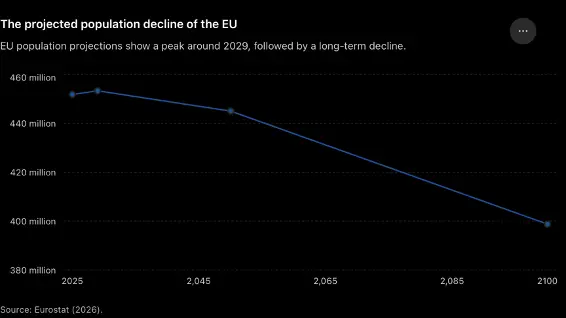
Figure 1. Created using data from Eurostat, 2026.
There are, however, substantial demographic differences between EU member states. In 2024, Bulgaria recorded the highest fertility rate, at 1.72 children per woman, followed by France (1.61) and Slovenia (1.52) (Eurostat, 2026). The lowest fertility rates were recorded in Malta (1.01), Spain (1.10), and Lithuania (1.11) (Eurostat, 2026). Some European countries are increasingly exhibiting characteristics associated with a fifth stage of the demographic transition, in which deaths are persistently higher than births (Benmoussa, 2023). In this stage, natural population decline becomes more pronounced, making it increasingly difficult to maintain population size without migration. However, this development is not unique to Europe. It forms part of a broader demographic trend across much of the Western world. Among the world’s 15 largest economies, fertility rates are now below the replacement level (The Economist, 2023).
Global comparison
Although the world’s population is still growing, the growth rate is declining. Population ageing and low population growth are particularly evident in Europe, parts of Asia, the United States, and Australia. Africa is a notable exception, projected to account for 37.6% of the global population by 2100 (UN, 2024). Sub-Saharan Africa is expected to contribute substantially to future global growth, with its population projected to increase by approximately 79%, from 1.2 billion in 2024 to 2.2 billion in 2054 (UN, 2024). In nine countries, including Angola, Mali, and Somalia, populations are expected to at least double, together accounting for more than one-fifth of global population growth between 2024 and 2054 (difference in fertility rates in figure 2).
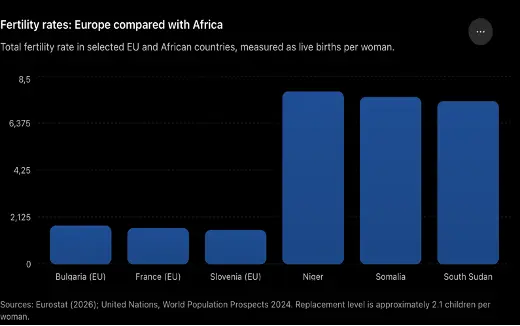
Figure 2. Created using data from Eurostat, 2026; UN, 2024.
Consequences
The consequences of the demographic transition are significant. Between 2025 and 2050, the EU is expected to lose an average of 1.2 million working-age people each year. According to the European Commission, by around 2038, the number of people aged 20 to 40 will be surpassed by the number of people aged 65 and over. This will worsen the ratio between the working-age and non-working-age population (European Commission, 2023; Novotný, 2023). Currently, approximately one in five people in Europe is over 65 (Figure 3). From 2050 onwards, this is expected to be almost one in three. At the same time, the number of people requiring long-term care is increasing, while the number of people aged 80 and over is expected to double (Eurostat, 2025; Eurostat, 2026). The financial and social costs of these developments will largely fall on an increasingly smaller working population, further increasing pressure on the labour market and the welfare state (Novotný, 2023). Economists also warn that population ageing may limit innovation and economic dynamism. As a result, the economic centre of gravity could shift further towards countries such as China and India. This is at odds with the objective of the Draghi report (2024) to strengthen European competitiveness.
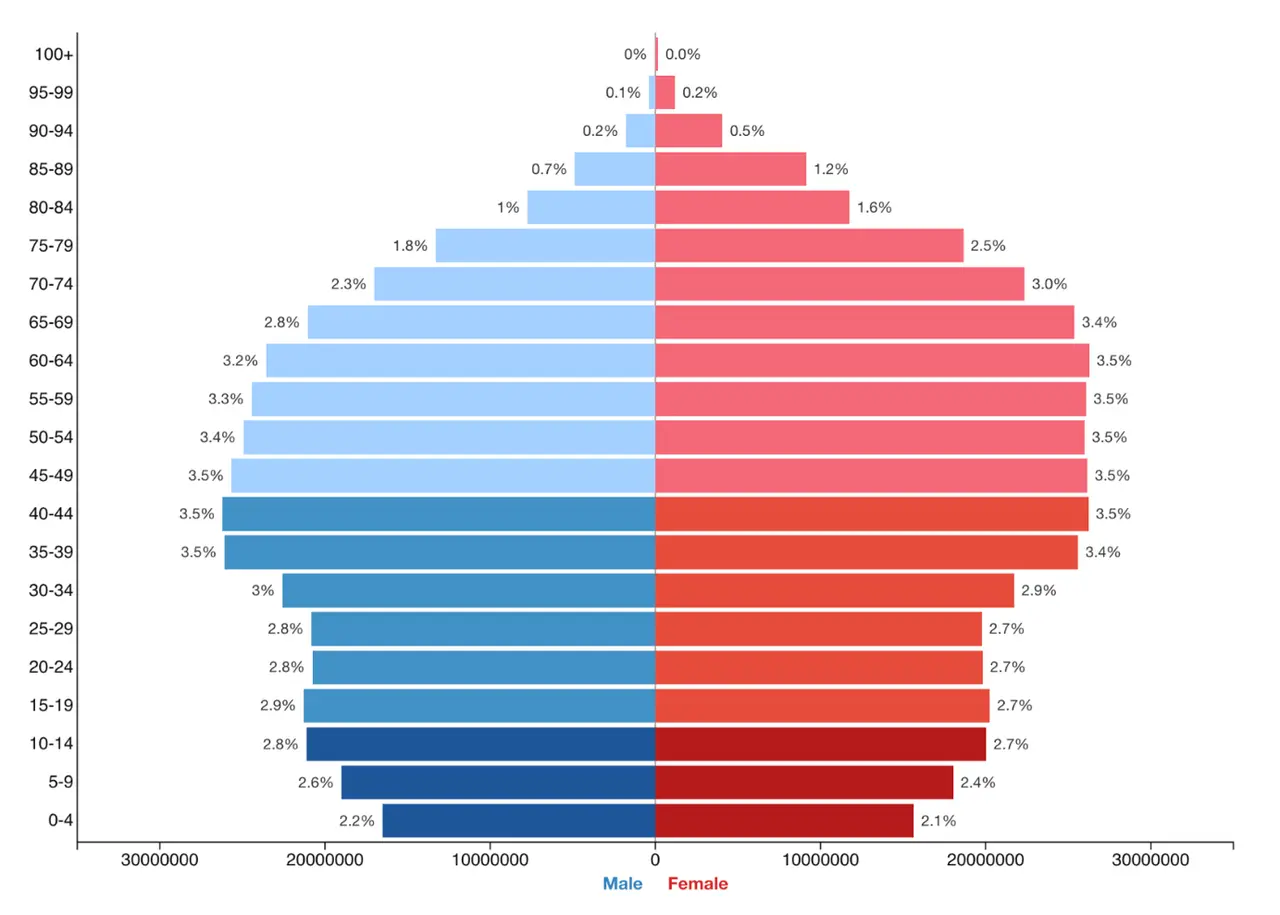
Figure 3. Europe population pyramid 2026. Mishomp, 2026.
Human Rights
The decline in fertility and the resulting ageing of populations put several human rights under pressure. Three human rights are particularly relevant in this context: the right to social security, the right to health, and the right to an adequate standard of living.
First, demographic change affects the distribution of social provisions between generations. A smaller working-age population will have to support a growing proportion of older people, particularly through pension and healthcare systems. From a human rights perspective, this creates a complex challenge for states. They must ensure adequate social protection and healthcare for older people while also taking into account the interests and rights of future generations (The Economist, 2023).
Second, the right to health may come under increasing pressure as demand for healthcare and long-term care grows. As populations age, healthcare expenditure is expected to increase, while the number of people available to provide care may decline. The European Commission (2023) similarly identifies population ageing as a major source of pressure on healthcare and long-term care systems. This could make it more difficult for states to guarantee accessible and adequate healthcare for everyone.
Third, the right to an adequate standard of living may be affected by the financial consequences of demographic decline. If governments have fewer resources available for social services, pensions and other public provisions, this may affect people’s ability to maintain an adequate standard of living.
But why?
The decline in the birth rate in Europe cannot be explained by one single cause. An important reason is that people are having children later in life. Longer periods of education, later entry into the labour market, and changing lifestyles mean that people start families later in life. As a result, there is also less time to have several children (Novotný, 2023). Economic and social uncertainty also play an important role. For many young Europeans, affordable housing, financial stability and job security are important conditions for starting a family. Recent crises, including the COVID-19 pandemic, wars and the rising costs of housing and energy, have increased uncertainty about the future (Soler, 2026; European Commission, 2023).
Finally, changing social norms and personal preferences also play a role. Having children is increasingly seen as a personal choice rather than a social obligation (The Economist, 2023).
Recommendations
European countries have introduced various measures, including child benefits, tax incentives, and parental leave. So far, such measures have had only limited success in structurally increasing fertility rates (Novotný, 2023). So, what can actually help alleviate the pressure on human rights?
- Increasing the birth rate has a limited effect in the short term. However, policies can help people achieve their desired number of children, for example, through affordable childcare, higher incomes for young families, and affordable housing (State Commission on Demographic Developments 2050, 2024; European Commission, 2023). A higher number of children will not solve labour shortages over the next 25 years. However, these supportive measures can help reduce the negative effects in the long term.
- As the number of potential workers is decreasing, Europe needs to produce more with fewer workers. Automation, robotics, education and innovation are therefore important tools (State Commission on Demographic Developments 2050, 2024; Den Butter, 2008). In this context, AI could also make a fundamental contribution by supporting workers and increasing their productivity. However, AI should primarily be used to augment human work rather than fully automate it. Excessive automation could reduce human interaction and make work and society feel less personal, which could also negatively affect birth rates.
- Targeted labour migration can help address labour shortages and contribute to a productive economy (European Commission, 2023). Highly skilled migrants can also strengthen the innovation mentioned in point 2. At the same time, the Dutch State Commission on Demographic Developments 2050 emphasises that migration is not a general solution to an ageing population and that attention should be paid to housing, integration, and the wider social effects. Uncontrolled and poorly targeted migration can place additional pressure on the welfare state, especially when it involves people whose cultural backgrounds are more distant from Western culture (Van de Beek, 2024; 2026; UN, 2024). This is an important consideration, given that Africa, as mentioned earlier, is experiencing significant population growth, and almost 30% of its population wants to migrate to Europe (Sanny et al., 2019).
Conclusion
The demographic transition and its consequences are developments that we need to accept. We will undoubtedly face population decline and enter stage 5, in which the consequences of this decline will become noticeable. We therefore need to develop adaptive policies while also developing a visionary long-term strategy.
Reflection on democracy
Adaptive policies are something that democracies regularly introduce. Examples include climate adaptation policies and certain migration measures. Long-term policies, however, are often more difficult for Western democracies because of their rigid systems. It was therefore already a question for the philosopher Tocqueville whether this system is capable of dealing with a problem that extends across generations. Democracies focus on temporary majorities and public opinion to achieve electoral success. As a result, democratic decision-making does not extend much further than the four-year term for which a government is elected. It is therefore important that different political movements reach a consensus over a longer period on recognising the problem and how to deal with it. A contract among the dead, the living, and those yet to come is needed to help the West’s population grow again and to address the challenges of the future.
Bibliography
Benmoussa, O. (2023). Population and economic development: A counterintuitive relationship for a sustainable world. International Journal of Advanced and Applied Sciences, 10, 14–25. https://doi.org/10.21833/ijaas.2023.03.003
Dutch State Commission on Demographic Developments 2050. (2024). Keuzes voor Nederland: Handelingsperspectieven voor de demografische ontwikkelingen tot 2050 (hoofdstuk 8). https://open.overheid.nl/documenten/c06c6800-351f-401f-9d7f-942c756a264a/file
Beek, van de, J. (2024). Migratiemagneet Nederland: Mythe en werkelijkheid.
Beek, van de, J. (2026). Demographic Analysis and Fiscal Costs of Non-Western Immigration in Europe.
Butter, den, F. A. G. (2008). Bevolkingskrimp: bedreiging of zegen voor de economie? Beleid en Maatschappij, 35, 330-335. https://research.vu.nl/ws/portalfiles/portal/2399041/215205.pdf
Central Statistical Bureau of Latvia. (2026, June 2). Latvia has a population of 1.845 million. Official Statistics Portal of Latvia.https://stat.gov.lv/en/statistics-themes/population/population/press-releases/27583-number-population-latvia-2025
Draghi, M. (2024). The future of European competitiveness: A competitiveness strategy for Europe. European Commission.
European Commission. (2023, October 11). Demographic change in Europe: A toolbox for action (COM(2023) 577 final). https://eur-lex.europa.eu/legal-content/EN/TXT/?uri=CELEX%3A52023DC0577&
European Commission. (2026). Demographic change in Europe. https://commission.europa.eu/topics/employment-and-social-affairs/demographic-change-europe_en
Eurostat. (2025). Demography of Europe – 2025 edition. European Commission. https://ec.europa.eu/eurostat/web/interactive-publications/demography-2025
Eurostat. (2026). Demography of Europe – 2026 edition. European Commission. https://ec.europa.eu/eurostat/web/interactive-publications/demography-2026
Eurostat. (2026). Fertility statistics. European Commission. https://ec.europa.eu/eurostat/statistics-explained/index.php?title=Fertility_statistics
Mishomp. (2026, March 7). Europe population pyramid 2026 (Population pyramid). Wikimedia Commons. https://commons.wikimedia.org/wiki/Category:Population_pyramids_of_European_Union#/media/File:Europe_population_pyramid_2026.png
Novotný, V. (2023). Europe’s demography and what to do about it. European View, 22(2), 205-212. https://doi.org/10.1177/17816858231205403
Poston, D. L., Jr., & Heo, N. (2023). Population. In Introduction to demography. Texas A&M University.
Sanny, J. A.-N., Logan, C., & Gyimah-Boadi, E. (2019, March 26). AD288: In search of opportunity: Young and educated Africans most likely to consider moving abroad. Afrobarometer. https://www.afrobarometer.org/publication/ad288-search-opportunity-young-and-educated-africans-most-likely-consider-moving-abroad/
Soler, P. (2026, September 2). Europe’s population decline has no easy fix. The Parliament Magazine. https://www.theparliamentmagazine.eu/news/article/why-europes-shrinking-population-doesnt-have-a-quick-fix
The Economist. (2023, June 1). Global fertility has collapsed, with profound economic consequences. https://www.economist.com/leaders/2023/06/01/global-fertility-has-collapsed-with-profound-economic-consequences
United Nations, Department of Economic and Social Affairs, Population Division. (2024). World Population Prospects 2024: Summary of results (UN DESA/POP/2024/TR/No. 9). United Nations.