
Right now, the world faces new military conflicts while many from previous years remain unresolved. One of the biggest challenges is the lack of stable, long-term mediators ready to act throughout these conflicts. The ACE model presented in this article allows an external observer, such as the UN, to evaluate potential mediators using common criteria and recommend the most suitable candidate for a defined mandate to both conflicting parties and the international community. Such a choice should consider not only the chances of peace, but also the reduction of humanitarian damage, the consequences of war for other states and the risks of escalation. The Russia–Ukraine war is used to illustrate the practical application of this framework.
The Problem of Contemporary Mediation
Currently, states willing to act as mediators may do so partly out of their own interests, such as domestic benefits or international prestige (Zartman and Touval, 1996). This can turn mediation into a political game, in which accepting failure as a mediator may sometimes appear more politically preferable than continuing a prolonged negotiation process. As a result, competition for this role may encourage states to seek quick and visible successes rather than maintain stable, long-term mediation, and the UN itself warns that multiple mediators risk competing with each other (United Nations, 2012, p. 18). This creates a problem for conflicts where comprehensive peace is not immediately achievable, but smaller agreements could still reduce humanitarian suffering. A mediator’s failure to achieve a final peace agreement should not automatically mean the failure of mediation itself.
Introducing the ACE Framework
These requirements are not new: the UN Guidance for Effective Mediation already states that a mediator “must be accepted, credible and well supported” (United Nations, 2012, p. 5), recommends a single lead mediator, and suggests choosing that mediator on the basis of comparative advantage and acceptability (pp. 18–19). ACE does not replace these principles but tries to turn them into a transparent and repeatable procedure for comparing, selecting and later reviewing potential mediators.
The first pillar is Acceptance, introduced in the author’s previous article, “The EU and the Limits of Mediation” (Golikov, 2026). It should be considered separately for each side: Likelihood of Acceptance = Credibility × (Benefits − Costs). The three elements are drawn from Bercovitch and Gartner (2008), while the formula itself is the author’s heuristic adaptation rather than a measured probability. Credibility refers to how each side perceives the mediator: its reliability, influence and ability to affect the implementation of a potential agreement.
The second pillar is Capacity: the mediator’s actual resources and practical ability to promote the negotiation process under a given mandate and maintain it over a long period. The actor with the greatest resources is not automatically the best option: pressure and incentives are most effective for reaching formal agreements, while facilitation is more associated with a lasting reduction of tensions (Beardsley et al., 2006).
The third pillar is Engagement: the willingness of a potential mediator to sustain diplomatic engagement without guarantees of a quick and visible solution. This does not require permanent formal talks, but the continuity of diplomatic channels and readiness to seek achievable agreements even when full peace is out of reach. States directly affected by a conflict may have stronger incentives to engage, although this does not guarantee their willingness to sustain it.
All three pillars must be sufficiently present for the given mandate. They can partially reinforce each other: stronger Engagement may compensate for limited Capacity, but not for its absence, and even very high Capacity cannot compensate for a lack of Acceptance. This is why ACE sets a minimum standard rather than a ranking formula.
The Usage of the ACE Framework
Currently, mediators often emerge through their own initiatives and approval from both sides. First, an external observer, such as the UN, defines the mediation mandate, taking into account the interests of the warring parties, humanitarian consequences, and wider international interests. Second, it lists potential mediators, both volunteers and candidates it identifies itself. Third, it evaluates each against the same criteria, relying on observable evidence: the parties’ expressed willingness to accept mediation, the candidate’s demonstrated practical capabilities and its record of sustained diplomatic involvement. It then checks whether all three pillars meet the minimum level. Finally, it recommends the most suitable candidate to the conflicting parties and the international community, possibly with political and resource support. Because Acceptance and Engagement can change after elections, escalations, or diplomatic shifts, the assessment should be reviewed periodically.
Such a recommendation does not constitute consent or a legal mandate; acceptance remains necessary. However, international support may in some cases increase the political and reputational costs of refusal and strengthen the mediator’s Capacity and Engagement. A lead mediator can also be supported by a coalition and specialised actors so other mediators do not necessarily become competitors.
The mandate of this mediator is not to force either side to concede or to legitimise an aggressor, but to promote diplomatic negotiations and encourage both sides to accept at least the most necessary agreements involving relatively limited concessions, such as the return of human remains, exchanges of prisoners, and agreements to avoid strikes on nuclear facilities. Such agreements may be possible even when major political disagreements remain unresolved.
Applying the ACE Model to Ukraine
Several actors have attempted to mediate the Russia–Ukraine war with different tasks: the US has tried to promote a comprehensive peace agreement, while Türkiye has mainly focused on specific agreements, such as the Black Sea Grain Initiative. ACE evaluates all candidates under the same mandate: sustained mediation to reduce the humanitarian and international consequences of war while preserving opportunities for a comprehensive peace agreement. Each candidate’s past experience is treated as evidence for this one mandate. Four illustrative candidates, chosen for their prominent roles in recent mediation efforts, are examined: the US, the EU, the UAE, and Türkiye. Only open-source information is used, so confidential diplomatic considerations are excluded from this assessment.
Today, the US is accepted by both sides: Ukraine supported a US proposal for three-way talks, and the Kremlin said Putin agreed to resume US-mediated talks (Reuters, 2026a). Yet Peskov said that “it is impossible to make such efforts while being involved in the war on one of the sides” (Reuters, 2026b), while Zelenskyy spoke about “decisions on the American side that are hard to explain between friends” (Reuters, 2026c). Thus, American Acceptance is now confirmed, but it is conditional and not guaranteed for the entire war.
American Capacity for a broad political settlement is the most significant among the candidates. American military assistance remains important for Ukraine, while the Graham Act gives Washington potential sanctions instruments against Russia, although in October the President waived several of its provisions (The White House, 2026).
Engagement is the most uncertain American pillar. After the operation against Iran, US-led peace talks paused for six months, until September 2026 (Mills, 2026). This pause raises questions about the stability of American long-term Engagement. The November 2026 congressional elections may change the political constraints on the administration, and the 2028 presidential election may bring a new administration with different priorities.
The EU illustrates ACE’s filtering function. Ukrainian Acceptance of the EU is high, but the author’s previous article concluded that under current conditions the EU cannot be a lead mediator “because of the high, unpredictable costs for Russia and low credibility in Russia’s eyes” (Golikov, 2026), and Putin has publicly rejected Europe as a mediator (Serohina, 2026). Its significant Capacity and Engagement cannot compensate for this. However, it can still support any recommended mediator economically, politically and organisationally.
According to its Ministry of Foreign Affairs, the UAE has conducted 27 successful humanitarian mediations between Russia and Ukraine (UAE Ministry of Foreign Affairs, 2026). This shows repeated practical results and sustained Engagement. However, the UAE has been accepted in specific humanitarian formats, which does not prove its Acceptance as the lead mediator for the whole conflict, and its Capacity for a broad political settlement is limited. It could still lead a defined humanitarian mandate or act as a specialised participant within a wider process.
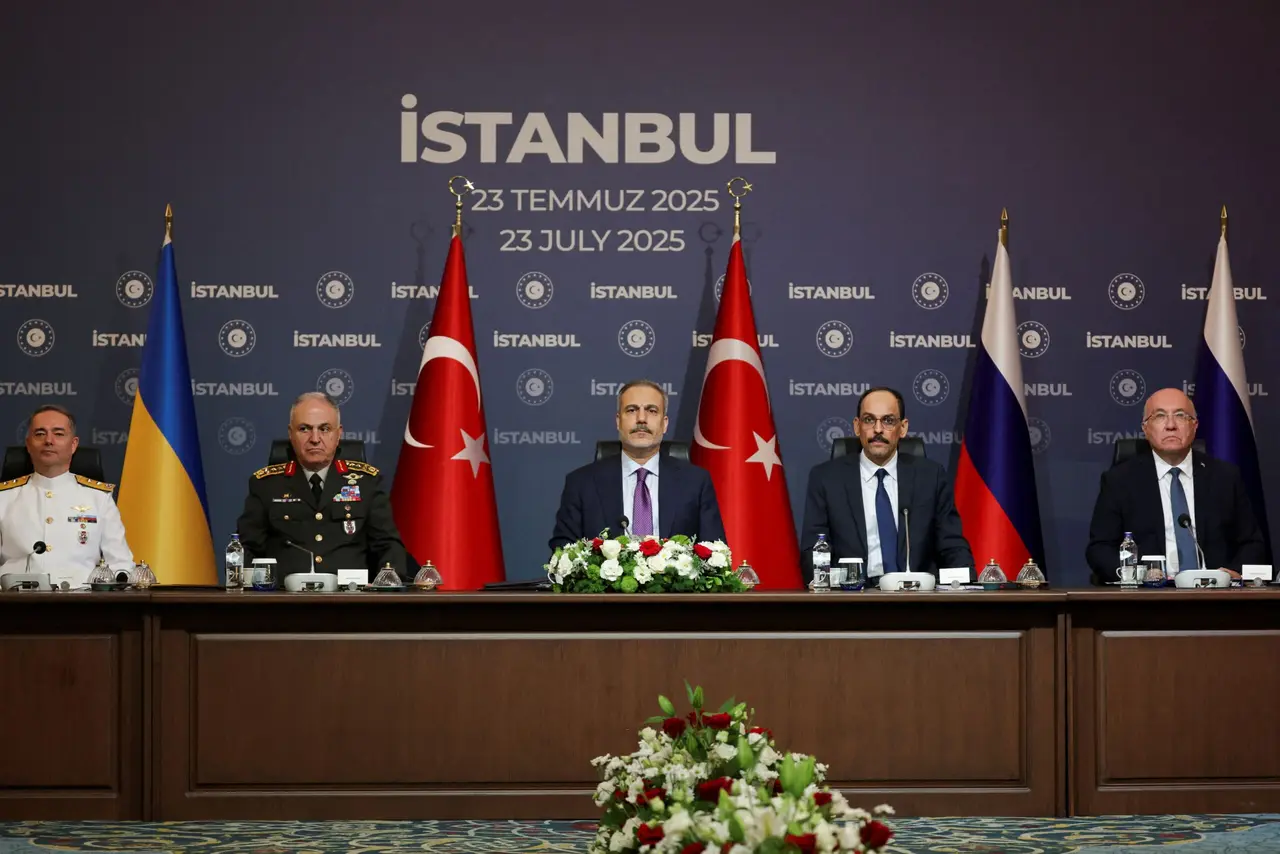
As for Türkiye, in March 2026 Zelenskyy thanked Erdoğan for offering to host the next round of talks and credited earlier Istanbul meetings with progress in the return of prisoners (President of Ukraine, 2026), while in June Russia’s Foreign Minister thanked Türkiye for facilitating dialogue (Hürriyet Daily News, 2026). This suggests Turkish acceptance of specific negotiating formats, although it does not yet prove both sides’ consent to a permanent lead role. Türkiye has demonstrated the capacity to involve additional actors, for example, the UN, in the Black Sea Grain Initiative, which enabled the export of over 32 million tonnes of food before Russia withdrew in July 2023 (United Nations, n.d.). However, its leverage over each side is limited: this withdrawal showed the limits of Türkiye’s ability to guarantee an agreement. Its Engagement is visible in repeated initiatives: “We have prepared a plan, and we are in contact with both sides regarding this plan,” said Foreign Minister Hakan Fidan (Reuters, 2026d).
The US offers the greatest Capacity for a broad settlement but uncertain long-term Engagement, while Türkiye offers proven continuity of diplomatic channels but fewer instruments of pressure and enforcement. Türkiye is therefore a serious alternative, especially if continuity becomes the main priority, but the available data are not enough to prove the superiority of either.
Conclusion
ACE does not guarantee the success of mediation. It shows whether a candidate meets the minimum requirements for a defined mandate, what its limits are and what support it needs. It may identify several suitable candidates, or none, which is a more honest result than declaring one state the best. ACE is therefore a decision-support framework, not a mechanical selection tool. The ACE framework was created not to stop real negotiations that can lead to positive results, but to propose a possible solution when existing mediation efforts are absent, fragmented or ineffective. How the UN could institutionalise such assessments will be examined in the author’s next article.
The ACE model does not establish the maximum standard of mediation for an armed conflict, but rather the minimum necessary one.
References
Beardsley, K. C., Quinn, D. M., Biswas, B. and Wilkenfeld, J. (2006). Mediation Style and Crisis Outcomes. Journal of Conflict Resolution, 50(1), 58–86.
Bercovitch, J. and Gartner, S. S. (2008). International Conflict Mediation. Routledge.
Golikov, K. (2026, August 20). The EU and the Limits of Mediation. EPIS Think Tank.
Hürriyet Daily News. (2026, June 16). Fidan in Moscow renews offer to host Ukraine talks.
Mills, C. (2026). Ukraine: A new push for peace (CBP-12198). House of Commons Library.
President of Ukraine. (2026, March 10). The President of Ukraine and the President of Türkiye discussed the situation around Iran and the negotiation process for achieving peace in Ukraine.
Reuters. (2026a, October 21). Ukraine’s Zelenskiy hopes for new talks with Russia, US by early November.
Reuters. (2026b, June 25). Russia says US understands you can’t mediate war while supporting one side.
Reuters. (2026c, October 19). Ukraine’s Zelenskiy says US decisions on Ukraine hard to explain.
Reuters. (2026d, August 31). Turkey says it has Black Sea grain plan, is in contact with Russia, Ukraine.
Serohina, K. (2026, June 5). Putin rejects Europe as mediator in talks and names his own candidate. RBC-Ukraine.
The White House. (2026, October 16). Implementing the Lindsey O. Graham Sanctioning Russia and Iran Act of 2026 (Executive Order 14436).
UAE Ministry of Foreign Affairs. (2026, October 23). Latest UAE Mediation Efforts Succeed in Exchange of 540 Captives Between Russia and Ukraine.
United Nations. (n.d.). Black Sea Grain Initiative: Background.
United Nations. (2012). United Nations Guidance for Effective Mediation.
Zartman, I. W. and Touval, S. (1996). International Mediation in the Post-Cold War Era. In C. A. Crocker, F. O. Hampson and P. Aall (eds.), Managing Global Chaos (pp. 445–461). United States Institute of Peace Press.