

Senegal’s growing vulnerability to Jihadist spillover from Mali
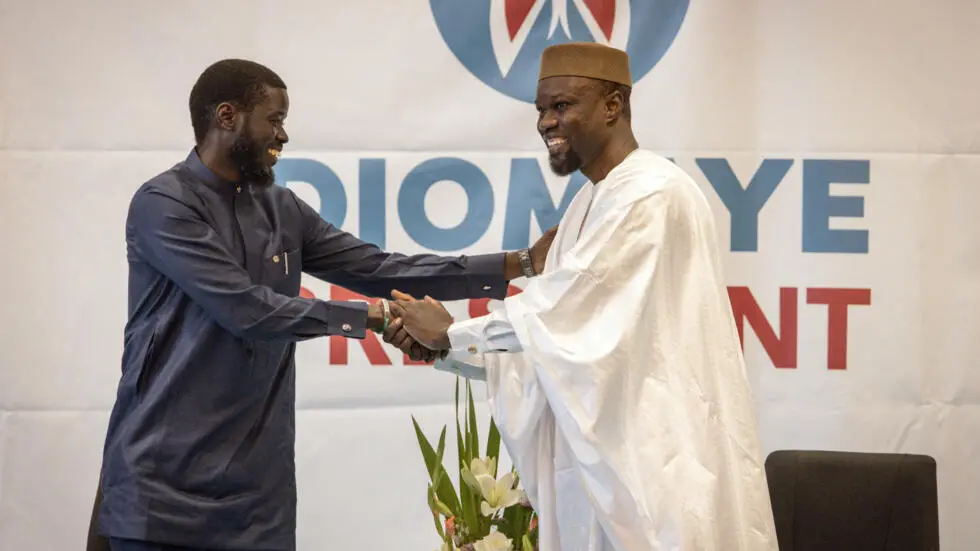
In March 2024, PASTEF’s candidate, Bassirou Diomaye Faye, won the presidential election in the first round. Due to a previous conviction, PASTEF leader Ousmane Sonko could not stand for election, but Faye appointed him prime minister. After substantial budgetary gaps were revealed following the election, prompting negotiations with the IMF, a dispute developed between Faye and Sonko over how to address the country’s new debt situation. While Sonko rejected IMF involvement in Senegal’s internal budget restructuring, Faye adopted a more moderate position and showed willingness to negotiate. These differences culminated in Sonko’s dismissal in May 2026, after which PASTEF’s parliamentary majority elected him President of the National Assembly. As party leader, he also announced that PASTEF would remain in opposition.
Two allies turned foes
At the end of June, a constitutional conflict emerged after the PASTEF-majority parliament passed a constitutional amendment intended to limit presidential powers and expand those of the parliament. The government referred the matter to the Constitutional Council, which confirmed the law’s unconstitutionality. Senegal therefore appears to be facing a political deadlock. With PASTEF controlling 130 of 165 seats while acting as opposition, any prime minister faces a vote of no confidence, significantly threatening the country’s political stability. Prime Minister Lo’s new government may govern in practice but depends on parliament for major reforms and the budget.
Escalating Jihadism in neighbouring Mali
This political stalemate considerably increases the risk of a jihadist spillover from the Malian Kayès region into the eastern Senegal regions of Kédougou and Tambacounda. Since the withdrawal of French troops in 2022, Mali has experienced a sharp increase in terrorist activity and, together with Burkina Faso, has become the main hotbed of global jihadism. The Malian military junta has faced growing pressure in recent months. In 2026, the FLA-JNIM coalition launched coordinated offensives, gaining strategically important nodes and population centres including Kidal and Gao. It also attacked the major military base at Kati, killing Defence Minister Camara. The offensives renewedly involved a strategy of economic strangulation, aimed particularly at disrupting oil imports from Senegal and Côte d’Ivoire. Although its main strongholds remain in northern Mali, the coalition has expanded westward since the late 2010s, controlling entire regions and trade routes.
Domestic drivers of a potential spillover
The terrorist threat to Senegal, however, is not rooted solely in high levels of terrorist activity in Mali. Several domestic factors also increase the likelihood of both a spillover of jihadism and its subsequent domestication.
First, the border regions contain significant gold deposits that are insufficiently controlled by the Senegalese state. Gold represents a major source of terrorist financing in the Sahel: illegal miners face protection payments, while jihadists tax gold transported through areas they control. Integration into illicit gold economies also facilitates fighter recruitment and the establishment of logistical and storage hubs. Senegal likewise has numerous poorly regulated gold mines, particularly along the Falémé River on the Malian border, which could become breeding grounds for new terrorist cells.
Furthermore, Senegal’s eastern border regions are economically marginalised and sparsely populated. Kédougou and Tambacounda are among the country’s poorest regions, with more than 60% of their populations living below the poverty line. More than 20,000 refugees from Mali further increase local social pressures and economic competition. Mali and Burkina Faso demonstrate how Islamists exploit local grievances and feelings of abandonment, presenting themselves as an alternative and embedding in local communities. This risk is heightened by the recent gold rush in Eastern Senegal, as groups with limited resource access may become more susceptible to recruitment.
Finally, the porous border with Mali facilitates the expansion of terrorist networks. Criminal networks involved in the smuggling of gold, drugs, weapons and stolen livestock have long operated across the border. The transnational nature of terrorist organisations, which strategically exploits the limitations of (national) military and police forces, further increases their operational potential in border regions. This is compounded by the decline in regional coordination and cooperation against terrorism since Mali, Niger and Burkina Faso left ECOWAS. Senegal’s mediating position regarding their withdrawal has nevertheless recently enabled closer security cooperation, including joint border patrols. However, an integrated regional strategy and coordination structure to address a threat that transcends national borders remains unlikely in the near term.
Political deadlock as a further enabling factor?
Senegal has been preparing militarily for a possible spillover for some time. The police have established several rapid-response units in the border region, while the army has built heavily fortified bases in the border-town of Kidira and in Goudiry, as well as additional surveillance posts along the Falémé River. Given the considerably greater military capabilities of the Senegalese army compared with its Malian counterparts, a large-scale incursion remains unlikely in the medium term.
Nevertheless, the demonstrated ability of jihadist groups to exploit local grievances, combined with economic incentives in eastern Senegal’s border regions, porous borders and weak state presence, suggests that military capabilities alone can contain the threat only to a limited extent. A coherent political strategy to combat poverty and factionalism in the eastern regions will therefore remain essential. This should include expanding social and economic infrastructure, particularly schools, hospitals and access to electricity, while ensuring fair, environmentally sustainable and equitable access to the gold resources of Kédougou and Tambacounda. In the fight against terrorism, prevention and societal resilience must remain high on the agenda of policymakers in Dakar. Given the current political deadlock, there is a growing risk that eastern communities will be left to fend for themselves, potentially increasing the attractiveness of jihadist groups’ offers.