



Iran’s war with the US and Israel is costing the region, and its neighbours are setting new terms
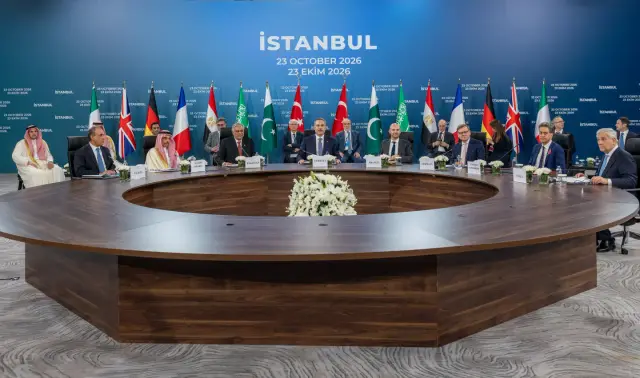
On 27 October, Qatar’s foreign ministry said Iran must “show goodwill” by ending threats against regional states and reopening the Strait of Hormuz, while signalling Gulf readiness for regional deescalation. The statement came a day after Saudi Arabia’s defence minister, Pakistan’s army chief and Turkey’s intelligence chief jointly visited Tehran, and days after the first R4+E3 foreign ministers’ meeting in Istanbul. On 28 October, a senior Iranian official told Reuters the latest Qatari mediation ideas were “unacceptable”, ruling out flexibility on nuclear and maritime issues.
For decades, Tehran’s regional strategy has rested on dealing with neighbours individually: pressuring some, courting others, and relying on hedgers such as Qatar to relay messages to Washington. This model is seemingly eroding. The R4 is forming a new regional middle-power security bloc, and Qatar, Iran’s most dependable regional partner, appears to be publicly aligning itself with this emerging consensus.
This constricts Iran’s strategic options. Its main leverage, the disruption in Hormuz, still works against Washington: shipping flows remain below normal and oil prices high. But each attack on ships also aggravates the regional partners Iran relies on as mediators, turning kinetic action into a diplomatic liability. Qatar’s more hawkish stance towards Iran encapsulates how this leverage is waning: a divided GCC is shifting towards a consensus position in favour of deescalation, the reopening of the Strait of Hormuz, and negotiations with the US.
Whether Iran engages with the new regional security bloc or holds out for direct talks with Washington will show whether it is adapting to, or resisting, a regional order it no longer shapes. Tehran appears increasingly isolated in its fight against the US and Israel.