
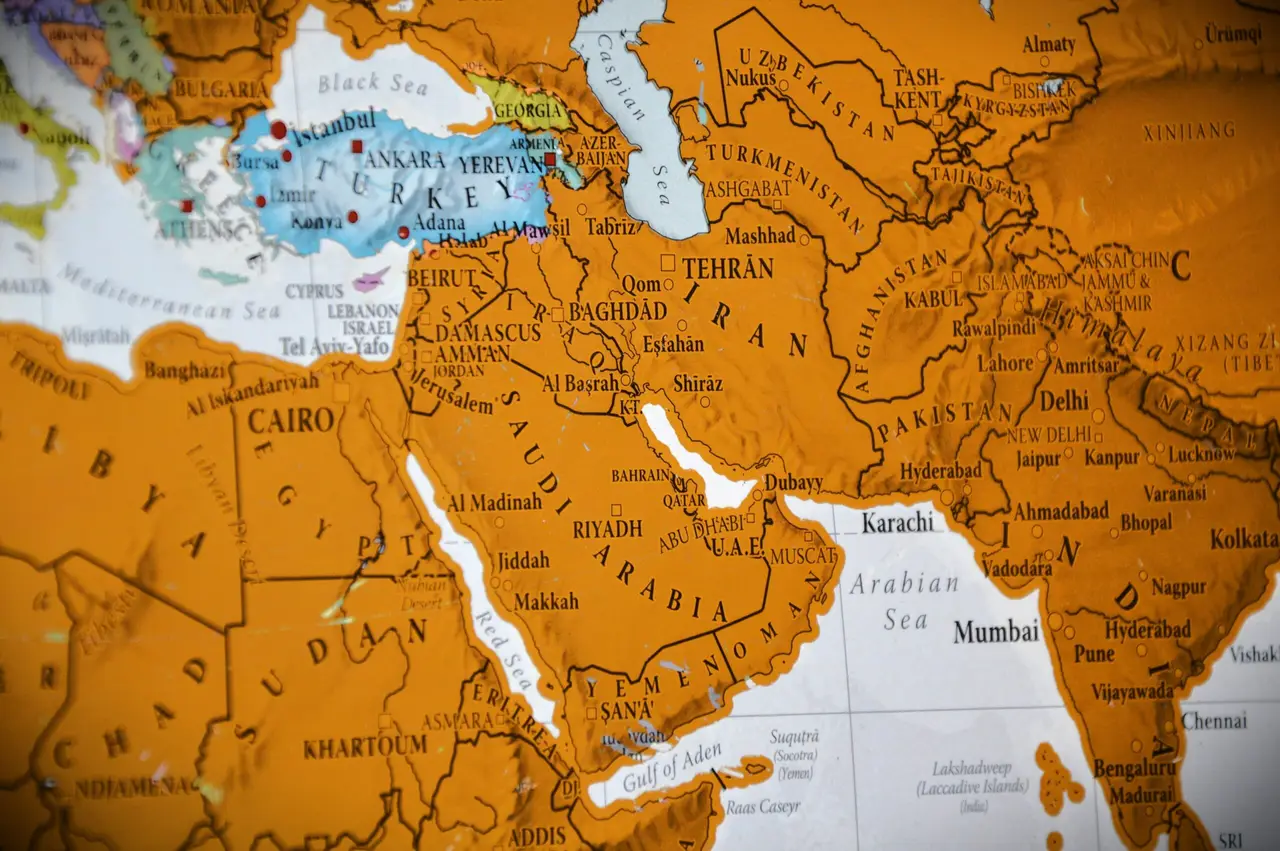

Following the recent US – Israeli air attacks on Iran and Tehran’s consequent actions in the Gulf, the global energy market has experienced the most severe crisis of the modern era. This crisis has been primarily caused by the closure of the Strait of Hormuz – the most vital bottleneck in global energy trade, since the Hormuz handles the 20% of the global oil supply, along with liquified natural gas (LNG) (Basquel, 2026). Indeed, this closure has made Europe particularly vulnerable to the energy crisis due to shortages of LNG, especially after the war in Ukraine, when Europe decided to diversify its energy supply sources and reduce its dependence on Russian gas. Therefore, Europe is facing its most critical energy security challenge in more than a decade (Basquel, 2026).
In response to this crisis, the South Caucasus has gained significant attention as the non-Russian, non-Gulf route for Europe (Cutler, 2026). As a result, this paper will focus on the strategic significance of the region for Europe’s energy security amid the closure of the Strait of Hormuz. It will argue that the South Caucasus has become increasingly important to Europe’s energy security by providing an alternative supply route that bypasses both the Gulf and Russia. The ongoing cooperation among Azerbaijan, Georgia, and Armenia aims to enhance regional connectivity and position the South Caucasus as a regional energy hub. These regional initiatives are further strengthened by the European Union and its allies through their solid efforts to prioritise and deepen these partnerships. To demonstrate this argument, this paper will examine the respective roles of Azerbaijan, Georgia, and Armenia.
Azerbaijan
As part of the Southern Gas Corridor (SGC), Azerbaijan is the principal actor in the region as the main producer of natural gas, possessing the world’s twelfth-largest proven natural gas reserves (Geohistory, 2026). The SGC consists of three interlinked gas pipelines: the South Caucasus Pipeline (SCP) – connecting Azerbaijan’s Shah Deniz gas field in the Caspian basin to Turkey via Georgia, operating in parallel with the Baku-Tbilisi-Ceyhan oil pipeline; the Trans-Anatolian Natural Gas Pipeline (TANAP) – connecting the SCP in Georgia with Greece via Turkey; and the Trans-Adriatic Pipeline (TAP) – linking Turkey to Italy through Greece and Albania (Geohistory, 2026). Through this established pipeline system, Europe has imported over 50 billion cubic metres of Azerbaijani gas since 2020, when the pipeline system became fully operational (eureporter, 2026). To date, Azerbaijani gas has been exported to 16 European countries, including 10 EU member states (eureporter, 2026). However, Azerbaijan’s ambitions exceed these numbers. Specifically, it aims to launch four new projects between 2026-2029: the Azeri Chirag Gunashli field, the complete improvement of the Absheron field, Umid phase two (under the Umid-Babek Gas Development Project), and a new phase of Shah Deniz anticipated for 2028 (Agamalizade, 2026). In total, these projects are expected to produce an additional 10-15 billion cubic metres annually (eureporter, 2026). These existing and planned projects clearly illustrates the strategic significance of the South Caucasus for Europe’s energy security amid the recent Middle East crisis. Consequently, if these projects will be well-financially supported, Europe will be able to have a long-term energy security by bypassing both Russian and Gulf routes for natural gas.
Moreover, apart from the pipeline system-based gas exports, Azerbaijan is investing heavily in the development of renewable energy projects, thereby promoting the Green Energy Corridor (SpecialEurasia, 2026). In this regard, Azerbaijan aims to implement around 10 internal renewable energy projects by 2027, installing 2 GW of generation capacity through more than $2.5 billion in cross-border investment, together with 250 MW of battery storage to enhance grid stability. Furthermore, by 2030, Azerbaijan plans to deploy over 6 GW of additional clean energy capacity, of which 4 GW is intended for export through interconnectors as part of the megaproject known as the “Caspian-Black Sea-Europe Green Energy Corridor” (SpecialEurasia, 2026). These projects are closely aligned with Azerbaijan’s national objective of reducing carbon emissions by 40% by 2035 (Enterdata, 2025), making Azerbaijan – and the South Caucasus more broadly – a strategically important partner for the EU, which is likewise committed to promoting green energy by 20250 (SpecialEurasia, 2026). Therefore, these initiatives clearly illustrate Azerbaijan’s potential and strong commitment to strengthening its integration with the European energy market and establishing itself as a regional energy hub. At the same time, Europe can enhance its energy security through this alternative supply route amid the ongoing Middle East crisis and its continuing efforts to reduce dependence on Russian energy, making this partnership strategically important for both sides.
However, when assessing Azerbaijan’s strategic significance for Europe’s energy security, it is also important to consider Israel-Azerbaijan relations, which have been strongly criticised by Iran. In 2025, Israel received oil through the BTC pipeline while Azerbaijan reportedly supplied military equipment in return (Holmberg, 2026). Although relations between Iran and Azerbaijan have stabilised so far, future developments remain uncertain (Holmberg, 2026). This uncertainty contributes to regional instability and may affect perceptions of the South Caucasus as a reliable and stable energy supplier.
Georgia
As part of the SGC, Georgia plays a crucial transit role for Caspian energy resources (Geohistory, 2026). Owing to its strategic geographical location, Georgia serves as an energy bridge between East and West (EDC, 2026). Azerbaijani oil and natural gas are transported to international markets through Georgia (Aliyeva, 2026), making the country a strategically important partner at both the regional and global levels. Furthermore, Georgia is quite rich in hydropower resources, with approximately 80% of its electricity generated from hydropower plants (Geohistory, 2026). In 2016, Georgia signed the Energy Community Treaty with the EU, committing itself to aligning its energy sector with EU regulations and standards (Geohistory, 2026). This represented a significant milestone in Georgia-EU energy relations, bringing Georgia closer to the European energy market and further reinforcing its strategic importance for Europe’s energy security.
Moreover, like Azerbaijan, Georgia is committed to promote green energy and, together with its regional and European partners, is actively developing renewable energy projects aimed at enhancing regional connectivity and strengthening the strategic importance of both Georgia and the South Caucasus for Europe amid the global uncertainty caused by the Middle East crisis. One of the most significant recent initiatives is the Black Sea Submarine Cable (BSSC), a flagship project under the EU Global Gateway strategy (EDC, 2026). This Cable will link Azerbaijan’s vast renewable energy resources to the European energy market through Georgia and Romania (Gamkrelidze, 2024). The electricity cable will extend approximately 1,195 kilometers, making it the longest submarine electricity cable in the world (Gamkrelidze, 2024), and is expected to facilitate the transmission of around 4 GW of renewable energy from the Caspian region to the European Union (AZERNEWS, 2024). Therefore, Georgia’s active contribution to these regional initiatives clearly demonstrates its strategic importance for Europe in addressing its current energy security challenges and strengthening the resilience of its energy supply.
Armenia
When assessing Armenia’s role in this context, it is important to note that the country possesses limited natural gas resources and therefore relies heavily on imports. However, Armenia has considerable renewable energy potential. With the continued deployment of green energy projects, renewable energy is expected to account for approximately 30% of the country’s energy mix, with plans to double this share by 2040 (Geohisotry, 2026).
Furthermore, Armenia is undergoing significant institutional reforms (EDC, 2026). This is where the strategic significance of the South Caucasus for the EU and the West more broadly becomes particularly evident. Recently, the Trump administration has made considerable efforts to promote peace between Armenia and Azerbaijan by proposing the Trump Route for International Peace and Security (TRIPP) initiative. At present, TRIPP focuses on expanding railway connectivity between Azerbaijan, Armenia, and Nakhchivan, through an additional 43-kilometre section across Armenia linking Baku with Nakhchivan and onward to Turkiye’s Dilucu-Kars line(Tsereteli, 2026). Alongside this initiative, plans for electricity integration between Armenia and Azerbaijan have already begun to emerge (Tsereteli, 2026). Such developments are expected to strengthen the role of the Middle Corridor while further enhancing the strategic importance of the South Caucasus for Europe’s energy security. Moreover, the active involvement of the US in facilitating the normalisation of relations between Armenia and Azerbaijan clearly illustrates the strategic significance of the South Caucasus for both European and global energy security amid the ongoing Middle East crisis. However, unless the necessary political and institutional reforms are successfully implemented, efforts to ease tensions are unlikely to succeed, which could, in turn, undermine regional stability and energy security. In this regard, integrating the TRIPP initiative into the C5+1 platform and expanding its scope to include the energy sector and related infrastructure projects, as suggested by Tsereteli (2026), could further strengthen regional cooperation and enhance the South Caucasus’ role as a secure and reliable energy corridor.
References
AZERNEWS (2024) Italian CESI S.p.A discusses the potential implementation of Black Sea Submarine Cable Project. Available from: https://www.azernews.az/region/226688.html [Accessed 05 July 2026]
Agamalizade, S. (2026) Energy minister: Azerbaijan to commission four upstream projects in four years. Available from: https://report.az/en/energy/energy-minister-azerbaijan-to-commission-four-upstream-projects-in-four-years [Accessed 05 July 2026]
Basquel, L. (2026) How the Iran war could trigger a European energy crisis. Available from: https://www.atlanticcouncil.org/dispatches/how-the-iran-war-could-trigger-a-european-energy-crisis/ [Accessed 05 July 2026]
Cutler, R. (2026) South Caucasus Energy and Europe’s Strategic Redundancy after Hormuz. Available from: https://strategyinternational.org/2026/06/12/publication270/ [Accessed 05 July 2026]
Eastern Digital Corridor (EDC) (2026) Strategic Convergence Of The South Caucasus And Mediterranean: Engineering A Trans-Continental Green Energy Axis For European Autonomy. Available from: https://easterndigitalcorridor.eu/strategic-convergence-of-the-south-caucasus-and-mediterranean-engineering-a-trans-continental-green-energy-axis-for-european-autonomy/ [Accessed 05 July 2026]
Enerdata (2026) Azerbaijan’s updated NDC aims to reduce GHG emissions by 40% by 2035. Available from: https://www.enerdata.net/publications/daily-energy-news/azerbaijans-updated-ndc-aims-reduce-ghg-emissions-40-2035.html [Accessed 05 July 2026]
Eureporter (2026) Baku’s dual energy strategy: Gas reliability meets green ambition. Available from: https://www.eureporter.co/energy/2026/03/06/bakus-dual-energy-strategy-gas-reliability-meets-green-ambition/ [Accessed 05 July 2026]
Gamkrelidze, N. (2024) Can the Black Sea Energy Corridor Power Europe’s Green Future? Available at: https://www.belfercenter.org/research-analysis/can-black-sea-energy-corridor-power-europes-green-future#:~:text=The%20Green%20Energy%20Corridor%20Project,this%20an%20initiative%20worth%20pursuing [Accessed 17 November 2025]
Geohistory (2026) A Guide to Energy Security in the Caucasus. Available from: https://geohistory.today/guide-energy-security-caucasus/ [Accessed 05 July 2026]
Holmberg, I. (2026) Iran war boosts strategic significance of South Caucasus. Available from: https://www.dw.com/en/iran-war-boosts-strategic-significance-of-south-caucasus/a-76518386 [Accessed 05 July 2026]
SpecialEurasia (2026) EU Prioritises Renewable Energy Cooperation with Azerbaijan. Available from: https://www.specialeurasia.com/2026/06/03/eu-azerbaijan-renewable/ [Accessed 05 July 2026]
Tsereteli, M. (2026) Will the Iran Trip up TRIPP? Available from: https://www.afpc.org/publications/articles/will-the-iran-war-trip-up-tripp [Accessed 05 July 2026]
Links for Visualisations
1. https://datawrapper.dwcdn.net/af1Cm/6/
2. https://datawrapper.dwcdn.net/PJCZR/4/