
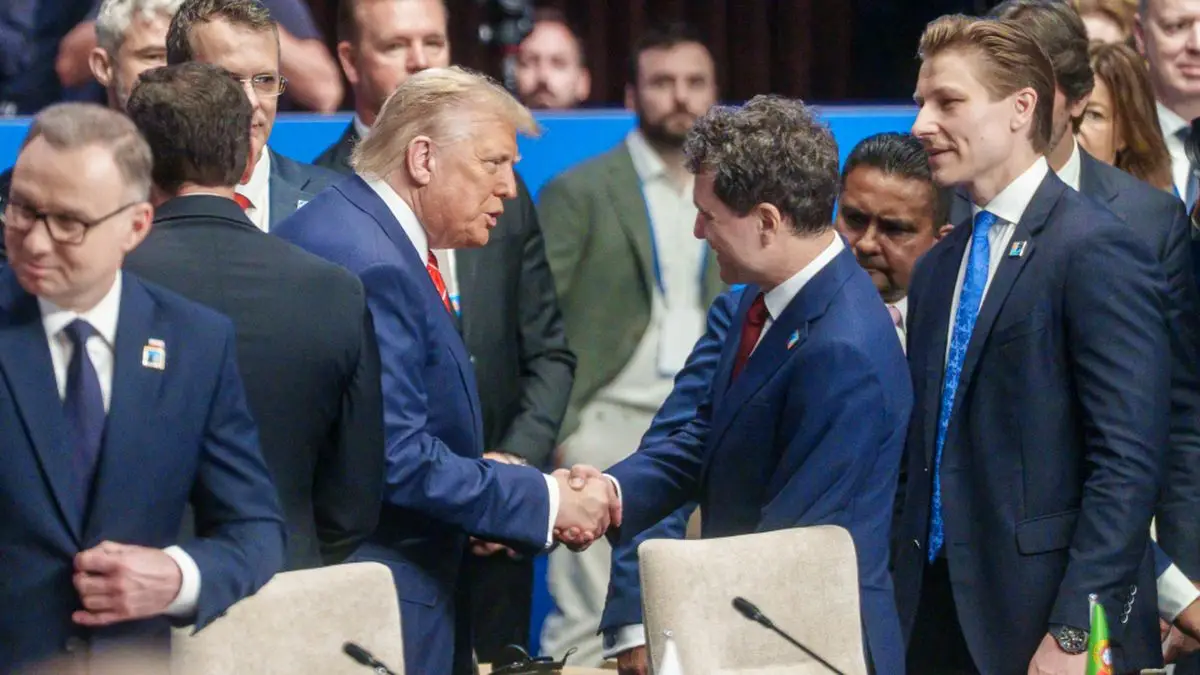
Source: Nicușor Dan, post on X, 24 June 2025, link to original post.
Introduction
At this year’s World Economic Forum in Davos, Canadian Prime Minister Mark Carney delivered a speech that crystallised what many in the room understood but preferred not to say aloud. The old rules-based international order, he argued, is no longer merely weakened; it has effectively dissolved, and pretending otherwise benefits great powers while costing everyone else (World Economic Forum, 2026). Middle powers are sustaining this fiction through habits of performance, invoking rules they know no longer bind the strongest actors. This “living within a lie” is not stabilising the system but accelerating its erosion. To name the condition, Carney reached for Václav Havel’s metaphor of the greengrocer during communist Czechoslovakia (Havel, 1985). The greengrocer displayed a sign in his shop window that he did not believe in — Workers of the world, unite! — out of habit and fear. The tragedy, Havel argued, was not that anyone took such signs seriously, but that everyone participated in the lie. Yet power lies in the performance itself: the moment the sign comes down, the lie can no longer be sustained. Carney’s warning was clear. Much of today’s international politics consists of similar signs. Governments continue to speak the language of a rules-based order that no longer exists. What does it mean for middle powers to stop living within the lie and start living in the truth?
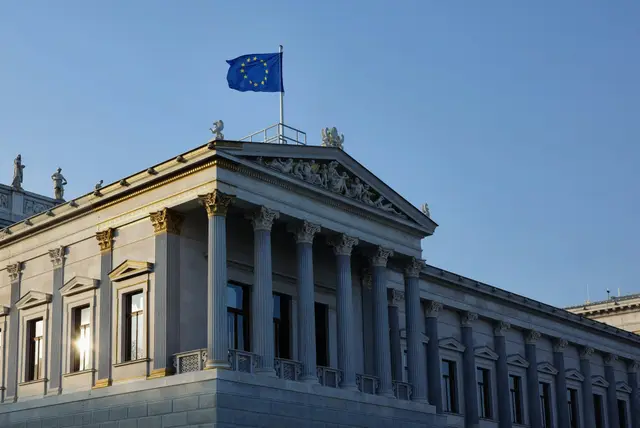
Romania was not at Davos, as President Nicușor Dan chose not to attend. He did not attend the Munich Security Conference either. He did, however, fly to Washington for the inaugural meeting of Donald Trump’s Board of Peace. What a head of state attends and what he declines is not in itself a policy, but it is a reliable indicator of where a government believes its most important audience sits. This article examines Romania’s foreign policy repositioning under President Dan, with the following research question: what structural forces explain Romania’s tilt toward Washington, and what are the consequences of that repositioning for Bucharest’s role within the EU order?
History of Romanian Foreign Policy
Romania’s relationship to great-power alignment is more complex than its post-2004 reputation for transatlantic reliability might suggest. In the First World War, Prime Minister Ion I. C. Brătianu waited two full years before committing to the Entente in August 1916, having extracted every territorial guarantee available under the circumstances. Some historians read this as effective small-state diplomacy — a frontier power maximising its leverage before assuming risk (Torrey, 1998; Hitchins, 2014). Others, following Sherman David Spector (1962), see it as something closer to a national art form: Spector described Brătianu’s manoeuvring as one of the most notable acts of political tightrope walking in modern diplomatic history, the product of centuries of precarious existence between larger powers.
In the Second World War, Romania fought alongside Nazi Germany under Marshal Ion Antonescu before King Michael’s royal coup of August 1944 switched the country’s allegiance ahead of the full Soviet advance into Romanian territory (Hitchins, 2014). Under Nicolae Ceaușescu, Romania cultivated the appearance of autonomy from Moscow, condemning the invasion of Czechoslovakia in 1968, hosting Richard Nixon in 1969 while remaining structurally obedient within the Soviet system (Gorun, 2025). After 1989, Ion Iliescu signed a friendship treaty with the Soviet Union in April 1991 that contained a clause barring Romania from joining alliances the other party deemed hostile, a formulation incompatible with NATO membership. The USSR collapsed before ratification, and the same Iliescu later presided over Romania’s NATO accession during his second term (Tudoroiu, 2008). One can criticise these episodes as following the same underlying logic of committing ambiguously, ensuring that the pledge can be reversed or reinterpreted if the balance of power shifts.
Since joining NATO in 2004 and the European Union in 2007, Romania’s foreign policy has been predictable and was built around a relatively stable consensus: security comes from the United States and NATO, while development, funding, and institutional modernisation come from the European Union. Romania could deepen its military cooperation with Washington while also benefiting from EU membership, cohesion funds, and access to European decision-making. Unlike Hungary which has openly challenged Brussels, or Poland, which has at times positioned itself against parts of the EU agenda, Romania avoided open confrontation with either of its main partners. However, changing transatlantic dynamics and competing pressures from the United States and the European Union since 2024 are putting this model under pressure.
The Logic of the Tilt
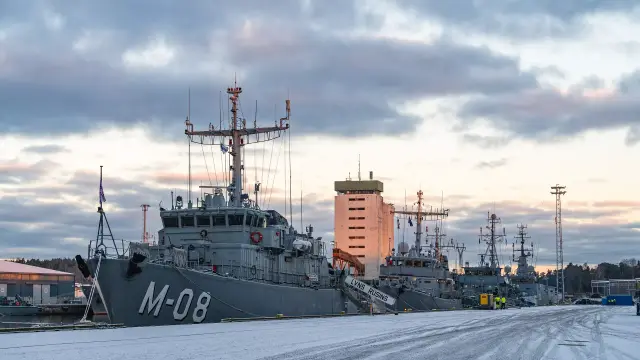
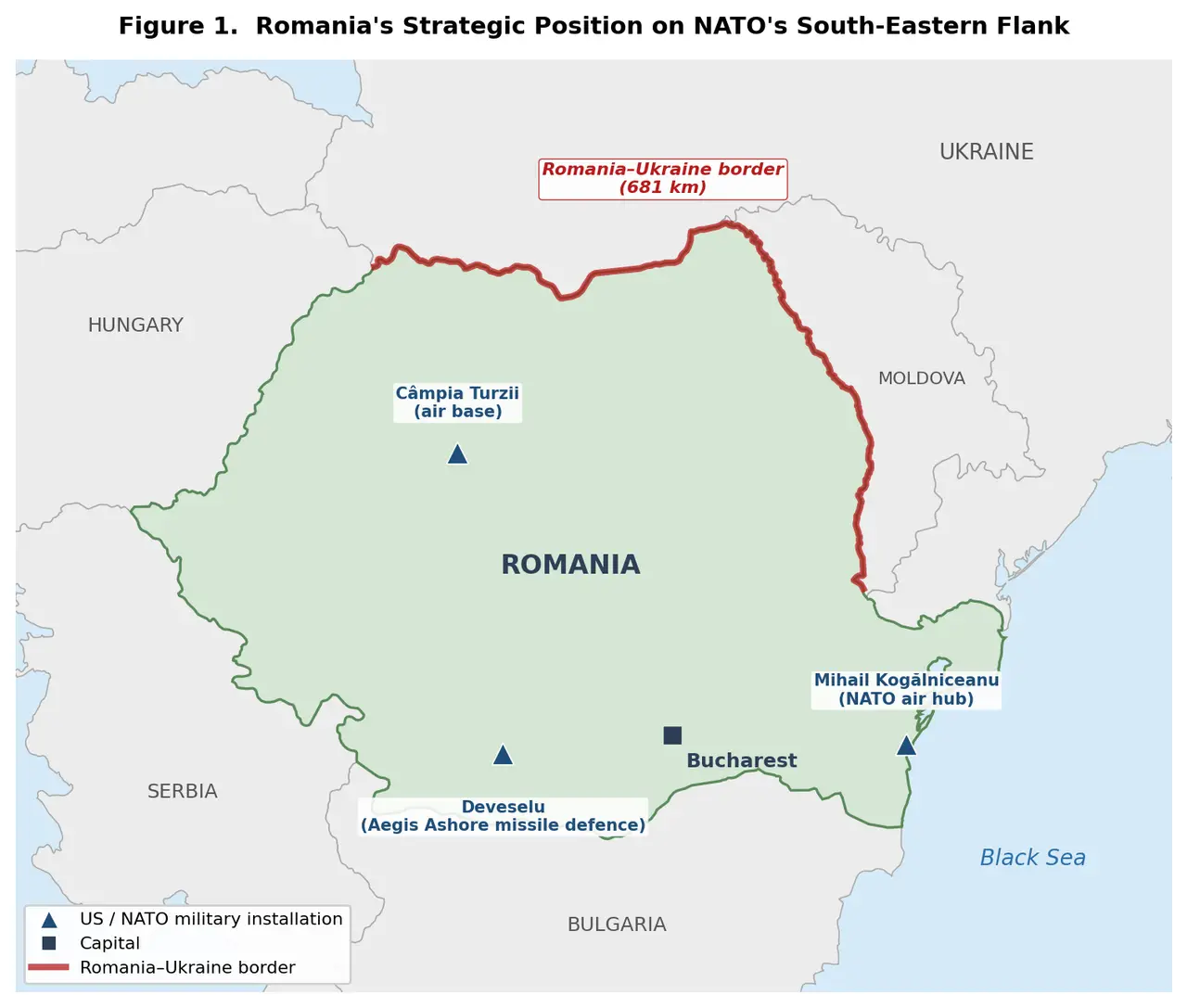
To understand Romania’s current repositioning, it is necessary to begin not with ideology but with threat perception. Romania sits on NATO’s south-eastern flank. It shares the longest border with Ukraine of any allied state. It hosts the Aegis Ashore missile-defence installation at Deveselu and the NATO air hub at Mihail Kogălniceanu. Russian drones have crossed into Romanian airspace dozens of times in recent months, and American intelligence has reportedly assessed that Moscow may test NATO’s cohesion with a limited action against an allied country (Dan, 2026b). For the government in Bucharest, this is a daily operational reality that makes the American security guarantee feel not like one option among several but like the only one that functions in real time.
This explains why the annulment of Romania’s December 2024 presidential election and the suspicion it generated in Washington produced something close to institutional panic in Bucharest. Senior Trump administration figures, including Vice President J.D. Vance, criticised the annulment. Romania’s governing establishment — centrist, pro-European, without significant ties to MAGA circles — found itself on the wrong side of a political divide it had not anticipated having to navigate (Całus, 2026). Washington translated its displeasure into concrete measures: the Visa Waiver Programme, granted under Biden on 9 January 2025, was suspended on 25 March and revoked entirely on 2 May — two days before the first round of the rerun presidential election (Całus, 2026). In autumn 2025, the Pentagon cut the rotational deployment of the 101st Airborne Division’s 2nd Brigade, reducing the American military presence in Romania from roughly 1,700 to 1,000 troops. Poland and the Baltic states were not similarly affected (Całus, 2026).
For Bucharest, the lesson drawn from these episodes was not that American commitments are unreliable (that conclusion would have required a different kind of strategic courage) but that the relationship needed more active maintenance. The tilt that followed was, in this sense, a response to perceived abandonment.
Loyalty Gestures
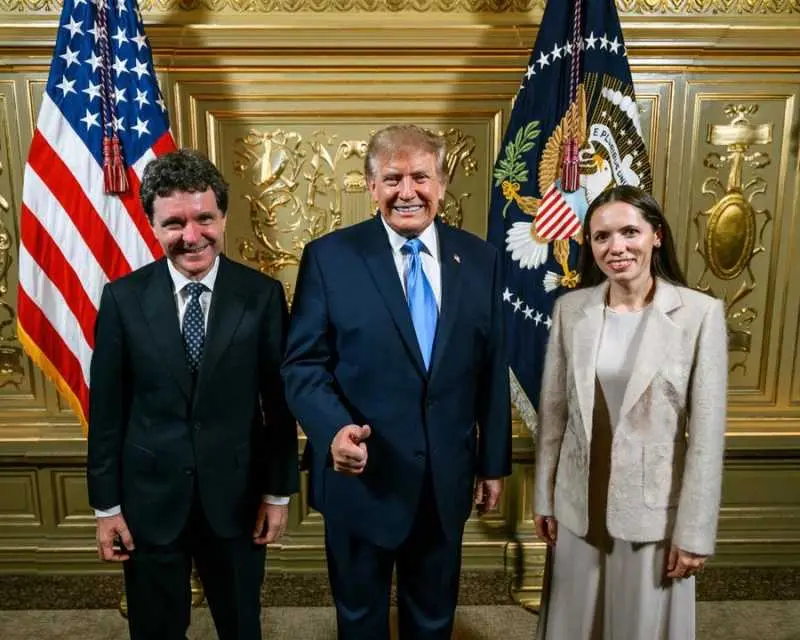
Romania joined Trump’s Board of Peace as an observer, and Dan attended the inaugural meeting in person, one of the very few EU leaders to do so alongside Viktor Orbán. Dan proposed Romanian expertise for postwar institution-building in Gaza and justified his attendance by arguing that Romania should be present “where decisions are made” (Presidency of Romania, 2026; Euronews România, 2026). The Washington visit yielded little of substance: Trump introduced Dan as Romania’s “Prime Minister”; Dan was photographed holding a MAGA cap during a corridor exchange with Secretary of State Marco Rubio, and was ushered away by security after a hurried handshake with the president (Observator News, 2026). But the purpose of the trip was not to achieve outcomes. It was to be seen, to signal that Romania belonged to the category of allies who show up when asked.
A more consequential step followed on 11 March 2026, when Romania granted the United States temporary access to the Mihail Kogălniceanu and Câmpia Turzii air bases for operations against Iran. The arrangement included tanker aircraft, reconnaissance assets, and 400–500 troops. Romania moved faster than any comparable European ally; Spain refused outright. Trump responded with a personal letter of praise (Całus, 2026). Dan then offered Romanian participation in an international mine-clearing operation in the Strait of Hormuz, though Defence Minister Radu Miruță limited the commitment to staff officers and mine-clearance personnel, and Prime Minister Ilie Bolojan made any deployment conditional on a ceasefire (Całus, 2026).
When Trump threatened to annex Greenland — an act of territorial revisionism directed against a European ally — Dan’s government issued a statement expressing concern about “escalating rhetoric” without naming either the aggressor or the principle under assault (Dan, 2026a). His adviser clarified that Romania stood “not between the two currently antagonistic positions, but in solidarity with both” (Antena 3, 2026). Whether this constitutes strategic ambiguity or simply incoherence depends on how one reads the incentives. For a government whose primary audience at that moment was Washington, refusing to defend Denmark’s territorial integrity was a small price to pay for not antagonising the White House. For the European partners, the silence said a lot about Bucharest’s evolving calculus.
Rhetoric as Positioning
On 9 May 2026, Europe Day, Dan delivered a speech that, while overall positive about Romania’s EU membership, catalogued what he described as a series of European mistakes: phasing out nuclear energy, dependence on Russian energy, climate targets that burden industry, neglected defence capabilities, and policies he judged to have become excessively ideological. He also argued that Romania had not defended its own interests sufficiently within the Union. Several of these criticisms echoed themes familiar from MAGA discourse in the United States. Marius Ghincea, a political scientist and foreign policy analyst, warned that Dan appeared to be borrowing elements of sovereigntist and far-right rhetoric, a strategy likely to backfire because “voters will always prefer the original to the copy” (EUalive, 2026).
On 27 August 2026, Dan published an opinion column in Fox News. It was addressed entirely to an American audience. He described Russian drone incursions into Romanian airspace, pledged to raise defence spending to 5% of GDP by 2035, and catalogued Romania’s military modernisation — Patriot air defence, HIMARS, F-16s, Abrams tanks, thirty-two planned F-35As — as evidence that Romania was a valuable and reliable American partner. The column’s central idea concerned not only military capability but the structure of the relationship itself. Romania, Dan wrote, “is not asking America for more but ‘offering to do more’” (Dan, 2026b). The European Union was mentioned only in passing.
No Romanian president had previously written for a major American outlet in these terms. Read alongside the Europe Day speech, the Fox News column reveals that Romania’s political leadership is investing its most visible communicative efforts in reassuring Washington, not Brussels.
The European Dimension
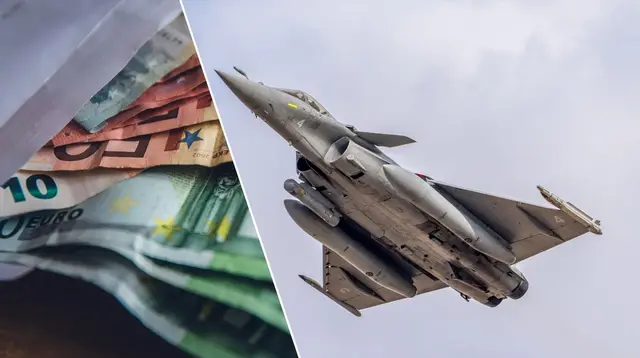
However, beyond simple rhetoric, the material dimension of Romania’s European engagement has never been larger. Romania is the second-largest beneficiary of the EU’s SAFE defence instrument after Poland, with €16.6 billion allocated, roughly half earmarked for procurement. A contract list worth €8.3 billion published in April 2026 showed that the majority of the funding will go to German industry, with Rheinmetall alone expected to receive around 70%, including an order for 232 Lynx infantry fighting vehicles; a further 66 Lynx vehicles are being purchased outside SAFE for €700–750 million (Całus, 2026). During Prime Minister Bolojan’s visit to Berlin in January 2026, the two governments signed a bilateral defence declaration covering military logistics, joint procurement and defence research. Romania participates in three of the twenty-one SAFE programmes involving France, worth a combined €1.74 billion, covering Airbus H225M helicopters, Mistral missile systems and Thales radar (Całus, 2026).
The scale of these commitments is significant. But numbers measure procurement, not influence. There is a difference between receiving European money and exercising European power. Romania’s SAFE contracts were designed in Brussels; Bucharest only signed them. It did not draft the criteria, lobby for their shape, or attempt to steer the programme toward the south-eastern flank priorities that its own geography would justify. Within the European institutional framework, Romania has a vote in the Council, a Commissioner, MEPs, and the geographical exposure that ought to make it a natural leader on south-eastern flank security. It sits on the stretch of NATO territory most directly exposed to the threat that European defence spending is supposed to address. It has used almost none of this institutional weight to become a voice on European security rather than a recipient of it. The contrast with Poland — which is both the largest SAFE beneficiary and one of the most assertive voices on European defence — is instructive.
The Domestic Feedback Loop
The tilt toward Washington does not occur in a domestic vacuum. Romania is navigating several overlapping crises simultaneously. The fiscal deficit reached approximately 7.65% of GDP in 2025, forcing unpopular austerity that consumed the coalition’s political capital (Ministry of Finance of Romania, 2026). The coalition itself collapsed this May after the Social Democratic Party (PSD), despite sitting inside the government, joined the opposition party Alliance for the Union of Romanians (AUR) in a no-confidence vote against Prime Minister Bolojan. The judiciary has faced what many describe as its deepest institutional crisis since 1989, triggered by an investigative documentary alleging a pyramidal concentration of power within the courts and a months-long standoff over the reform of magistrates’ special pensions, which is a condition attached to Romania’s EU recovery funds (Recorder, 2026).
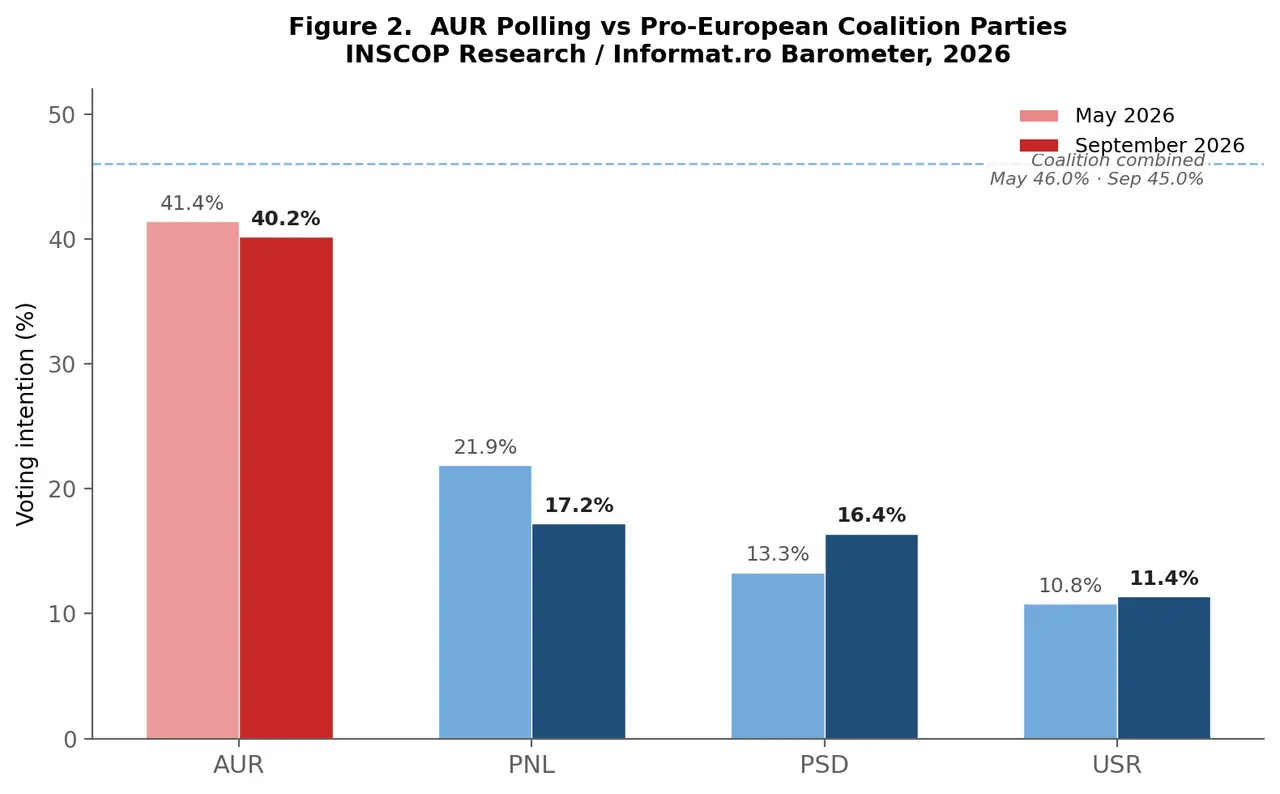
Against this backdrop, AUR’s polling strength, consistently around 40%, represents not a spike but a structural plateau (INSCOP Research, 2026; Całus, 2026). The party’s leader, George Simion, has built his narrative around two claims: that Dan’s centrist establishment damaged Romania’s relationship with the United States, which is the most important partner, and that he, not Dan, is the natural interlocutor for MAGA America. Around the time of the Davos conference Dan chose to skip, Simion was filmed in Washington cutting a Greenland-shaped cake decorated with the American flag (Romania Insider, 2026). The relationship between the presidential tilt and the far-right rise is not causal in any simple sense, but it is structural. By accepting the premise that the American relationship is the central axis of Romanian foreign policy, the government has moved the competition onto ground where Simion seems stronger, as Dan competes with AUR for Washington’s attention. The centre’s attempt to absorb the far right’s agenda has not contained it, but it has confirmed its relevance.
In September, the Wall Street Journal reported that Kimberly Guilfoyle, the US ambassador to Greece, told the Greek energy minister that the United States had been involved in the fall of the Bolojan government and could do the same to “any country we want.” Her lawyer disputes this account. PSD and AUR both deny any American role in the no-confidence vote, and PSD said its contacts with her concerned solely the gas corridor. Guilfoyle has promoted the Vertical Gas Corridor, and Bolojan reportedly did not act on requests from the US-Greek consortium behind it to buy American gas at above-market prices (Romania Insider, 2026). Whether or not the remark was meant literally, it records how a senior American envoy reportedly speaks about a NATO ally’s government.
Conclusion
Romania’s repositioning under President Dan is intelligible. It follows a logic rooted in genuine threat perception, in the institutional shock of the annulled election, and in the gravitational pull of a domestic far right that has made the American relationship one of its central issues. But it carries costs that are structural rather than episodic, and that may outlast the circumstances that produced the tilt.
The first is the cost of leverage. Within the transatlantic relationship, Romania is a supplicant: it can offer gestures, but it cannot influence the decisions that determine whether these will be reciprocated. The Visa Waiver revocation demonstrated this. Within the European Union, Romania possesses formal decision-making power: votes, institutional seats, geographic centrality on a flank Europe will need to defend regardless of Washington’s priorities. A Romania that invests its political energy in reassuring Washington but remains passive within European defence-policy debates is depleting the asset it can compound while chasing one it cannot control.
The second cost is domestic. The logic of the tilt requires Bucharest to treat American approval as the benchmark of foreign-policy success, which means competing with AUR on AUR’s preferred terrain. This has not contained the far right; it has validated the framing within which it operates.
The third cost is reputational. What Brussels sees is a country that signs European defence contracts but rhetorically directs its political energy and its most prominent public communications toward Washington. In other words, the hardware is European and the courtship is American. This may not matter as long as Romania needs nothing from Europe beyond procurement. But the next time Bucharest requires something from Brussels that cannot be bought, such as political support during a crisis, favourable terms in a negotiation or solidarity on a matter where Romania’s interests diverge from the majority, it may discover that its credit in the room has been marked down.
References
Antena 3. (2026). «România e solidară cu ambele poziții». Marius Lazurca explică mesajul lui Nicușor Dan în scandalul Trump–Europa pentru Groenlanda [«Romania is in solidarity with both positions»]. https://www.antena3.ro/politica/romania-e-solidara-cu-ambele-pozitii-marius-lazurca-explica-mesajul-lui-nicusor-dan-in-scandalul-trump-europa-pentru-groenlanda-773928.html
Całus, K. (2026, May 19). Balancing and appeasing: Bucharest’s foreign policy amid transatlantic disputes. OSW Centre for Eastern Studies. https://www.osw.waw.pl/en/publikacje/analyses/2026-05-19/balancing-and-appeasing-bucharests-foreign-policy-amid-transatlantic
Dan, N. [@NicusorDanRO]. (2026a). Declarație privind amenințările lui Donald Trump [Statement regarding Donald Trump’s threats] [Post]. X. https://x.com/NicusorDanRO/status/2012898741720670522
Dan, N. (2026b, August 27). I’m president of one of America’s most reliable allies. Here’s how we stand up to Russia. Fox News. https://www.foxnews.com/opinion/president-americas-reliable-allies-stand-up-russia
EUalive. (2026, May 12). Analysis: Is the Romanian president embracing the sovereigntist rhetoric? https://eualive.net/analysis-is-the-romanian-president-embracing-the-sovereigntist-rhetoric/
Euronews România. (2026). Nicușor Dan: prezența la Consiliul de Pace, necesară după anularea alegerilor [Nicușor Dan: attendance at the Board of Peace, necessary after the annulment of the elections]. https://www.euronews.ro/articole/nicusor-dan-prezenta-la-consiliul-de-pace-necesara-dupa-anularea-alegerilor
Gorun, H. (2025). Continuity and discontinuity in Nicolae Ceaușescu’s policy: Quasi non-alignment, anti-Sovietism and neo-Stalinism. Anuarul Institutului de Istorie „A. D. Xenopol”, 62, 401–409.
Havel, V. (1985). The power of the powerless (P. Wilson, Trans.). In J. Keane (Ed.), The power of the powerless: Citizens against the state in Central-Eastern Europe. Routledge. (Original work published 1978)
Hitchins, K. (2014). A concise history of Romania. Cambridge University Press.
INSCOP Research. (2026, September 10). Barometrul Informat.ro – INSCOP Research, ediția a XIV-a, Capitolul al III-lea: Intenție vot alegeri parlamentare [Informat.ro Barometer – INSCOP Research, 14th edition, Chapter 3: Parliamentary voting intention].https://www.inscop.ro/septembrie-2026-barometrul-informat-ro-inscop-research-editia-a-xiv-a-capitolul-al-iii-lea-intentie-vot-alegeri-parlamentare/
Ministry of Finance of Romania. (2026). Execuția bugetului general consolidat în 2025: deficit cash 7,65% din PIB [Execution of the 2025 general consolidated budget: 7.65% of GDP cash deficit].https://mfinante.gov.ro/despre-minister/-/asset_publisher/uwgr/content/ministerul-finan-c8-9belor-public-c4-83-execu-c8-9bia-bugetului-general-consolidat-c3-aen-2025-deficit-cash-7-65-c3-aen-sc-c4-83dere-cu-un-punct-procentual-fa-c8-9b-c4-83-de-anul-anterior-c8-99i-investi-c8-9bii-publice-de-7-2-din-pib
Observator News. (2026). Analist despre absența lui Nicușor Dan de la Davos și jocul dublu al României în scandalul SUA–UE [Analyst on Nicușor Dan’s absence from Davos and Romania’s double game in the US–EU dispute]. https://observatornews.ro/interviurile-lui-marius-pancu/analist-despre-absenta-lui-nicusor-dan-de-la-davos-si-jocul-dublu-al-romaniei-in-scandalul-suaue-643280.html
Presidency of Romania. (2026). Declarațiile de presă susținute de Președintele României, Nicușor Dan, după participarea la reuniunea inaugurală a Consiliului Păcii (Board of Peace) [Press statements by the President of Romania following his participation in the inaugural meeting of the Board of Peace]. https://www.presidency.ro/ro/media/declaratii-de-presa/declaratiile-de-presa-sustinute-de-presedintele-romaniei-nicusor-dan-dupa-participarea-la-reuniunea-inaugurala-a-consiliului-pacii-board-of-peace
Recorder. (2026). Justiție capturată [Captured justice] [Documentary]. https://recorder.ro/documentar-recorder-justitie-capturata/
Romania Insider. (2026). George Simion cuts Greenland-shaped cake during US visit. https://www.romania-insider.com/george-simion-greeland-cake-usa-january-2026
Romania Insider. (2026). US ambassador’s alleged remarks on Ilie Bolojan government trigger reactions in Bucharest. https://www.romania-insider.com/society/us-ambassadors-alleged-remarks-ilie-bolojan-government-trigger
Spector, S. D. (1962). Rumania at the Paris Peace Conference: A study of the diplomacy of Ioan I. C. Brătianu. Bookman Associates.
Torrey, G. E. (1998). Romania and World War I: A collection of studies. Center for Romanian Studies.
Tudoroiu, T. (2008). From spheres of influence to energy wars: Russian influence in post-communist Romania. Journal of Communist Studies and Transition Politics, 24(3), 386–414.
World Economic Forum. (2026). Davos 2026: Special address by Mark Carney, Prime Minister of Canada. https://www.weforum.org/stories/2026/01/davos-2026-special-address-by-mark-carney-prime-minister-of-canada/